


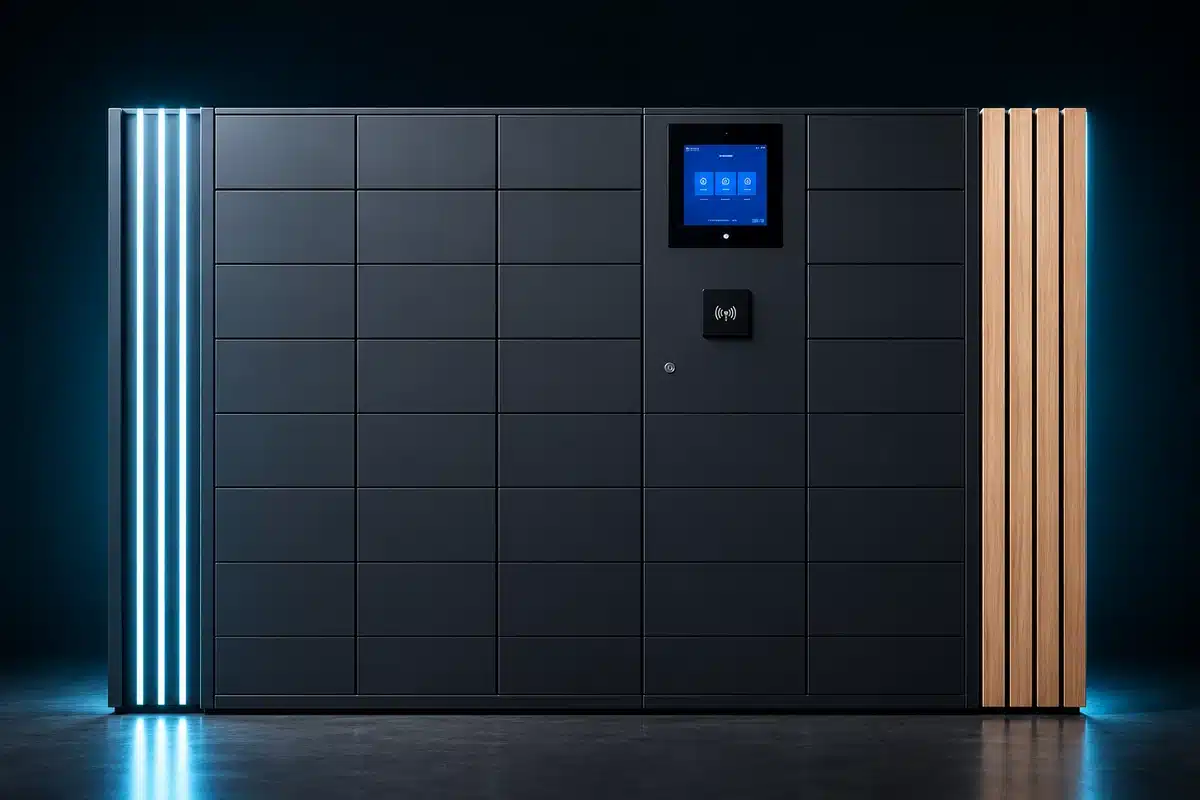





What Is Perimeter Security Crowd Risk?
Perimeter security crowd risk refers to the danger created when large numbers of people gather outside controlled access points, typically due to:
- Security checks
- Bag inspections
- Ticket validation delays
- Entry bottlenecks
These entry stress points are:
- Unscreened
- Densely packed
- Difficult to manage
Why Perimeter Risk Increases at Scale
1. Security Creates Queues
To improve safety, venues introduce:
- Bag checks
- Screening lanes
- Controlled entry points
But each of these slows throughput.
This leads to:
Queue formation outside the secure perimeter.
2. Arrival Patterns Are Compressed
At most events:
– 60–80% of attendees arrive within a short pre-event window
This creates a surge that overwhelms perimeter capacity.
Result:
- Rapid crowd buildup
- High-density crowded areas
3. Throughput Cannot Match Demand
Even well-designed entry systems have limits:
- Process Throughput Impact
- Ticket scanning Minimal delay
- Security screening Moderate delay
- Bag checks Severe delay
The slowest process — typically bag handling — dictates how fast people move through the perimeter.
4. Queues Expand Beyond Control
As demand exceeds capacity:
- Queues grow rapidly
- Spill into public spaces
- Extend beyond managed zones
This creates:
- Reduced visibility
- Limited control
- Increased exposure
5. Static Perimeters vs Dynamic Crowds
Perimeter layouts are fixed.
Crowd behaviour is not.
This mismatch leads to:
- Overcrowding at specific gates
- Underutilised entry points elsewhere
- Poor crowd distribution

The Critical Security Problem
Crowd Gathering Points Outside Security Zones
Real-World Impact - Increased Threat Exposure
Visitor Experience Breakdown
Compliance Pressure (Martyn’s Law)
Why Traditional Perimeter Strategies Fail
Add More Barriers
- Controls crowd shape, not size
- Does not reduce queue volume
Increase Security Checks
- Slows throughput further
- Increases queue growth
Expand Waiting Areas
- Moves the problem
- Does not reduce risk
Deploy More Staff
- Reactive
- Expensive
- Limited scalability
The Core Problem: Too Many People Outside, Not Enough Flow Inside
The rate of arrival exceeds the rate of entry.
Perimeter security fails when:
The rate of arrival exceeds the rate of entry.
This leads to:
- Accumulation outside
- Delayed movement inside
- Increased exposure time
The system becomes backlogged at the perimeter.
The Biggest Driver of Perimeter Risk: Bag Handling
Across events, one factor consistently slows entry:
Bags.
They:
- Increase screening time
- Create secondary queues
- Reduce throughput per lane
This directly contributes to:
- Longer external queues
- Higher crowd density outside
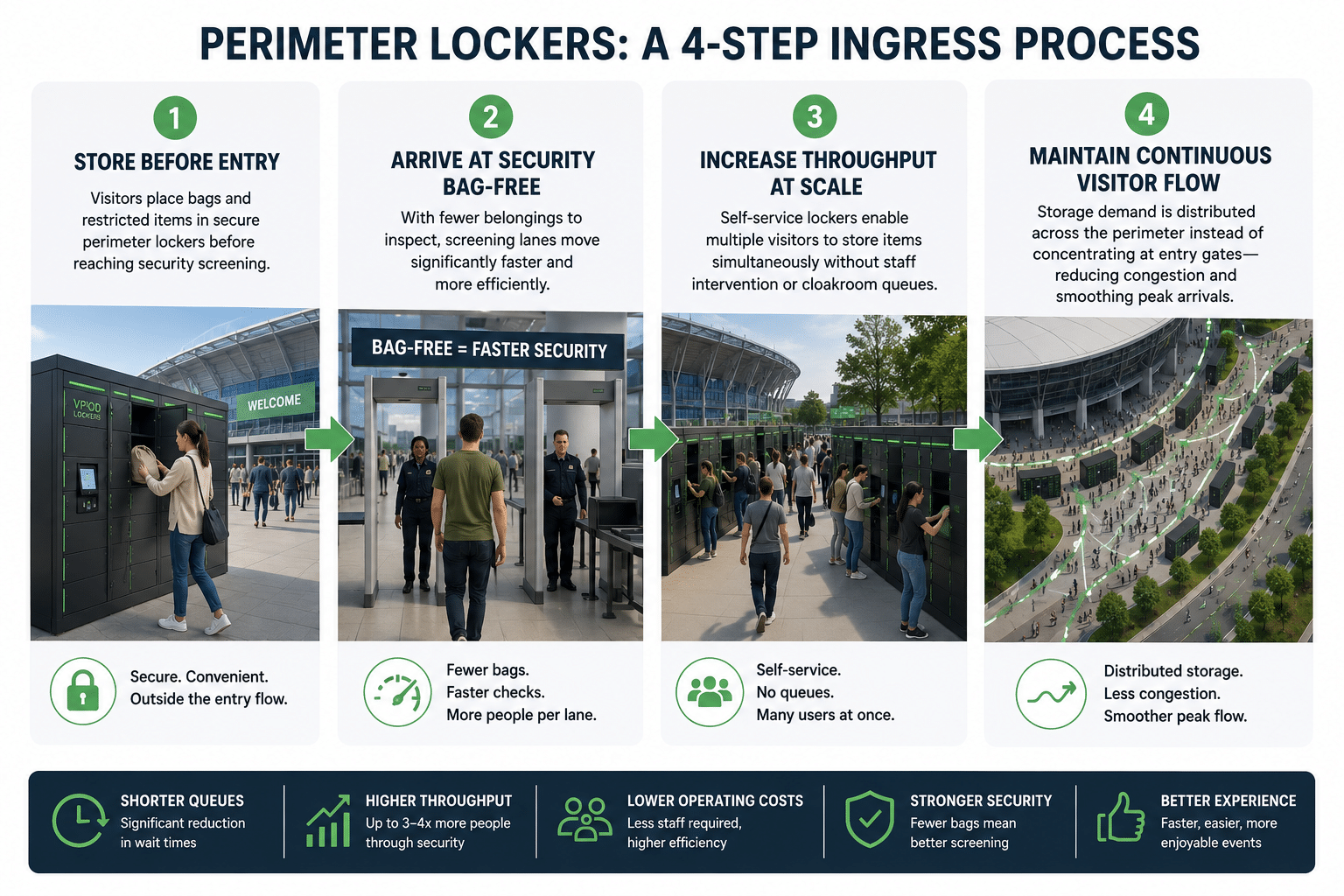
Pre Entry Smart Storage Lockers
To reduce perimeter crowd risk, venues must:
- Increase entry speed
- Reduce friction
- Minimise external gathering points
This requires removing bottlenecks before they reach security.
Pre-Entry Smart Locker Systems
Smart lockers reduce perimeter risk by:
Eliminating bags before security
- Faster screening
- Higher throughput
Reducing queue formation
- Less delay at entry points
- Faster movement into secure zones
Distributing storage away from entry gates
- Prevents crowd buildup at perimeter
Enabling self-service at scale
- No dependency on staff
- Parallel processing
Operational Impact
With optimised perimeter flow:
- External queue sizes reduce significantly
- Entry speeds increase
- Crowd density outside decreases
- Security risk is mitigated
- Compliance improves
See: /solutions/event-smart-lockers/
Compare: /bag-searches-vs-pre-entry-locker-storage/
Explore: /martyns-law-event-compliance/
The Bottom Line
Perimeter security is not just about controlling access.
It’s about managing flow and reducing exposure.
At scale:
- Queues become stress/pinch point
- Queues become high risk areas
- Risk increases outside the venue
The solution is not to tighten the perimeter.
It’s to reduce the number of people waiting at it.
Perimeter Smart Bag Lockers
Reduce Perimeter Crowd Risk Before It Becomes a Security Threat
Reduced Security Exposure & Safer Events
Understanding perimeter risk helps venues prevent large unscreened crowds from forming outside entry points.
By improving flow and reducing congestion, organisers lower the likelihood of crowd-related incidents, security vulnerabilities, and unmanaged high-density gathering zones.
Faster Entry & Better Visitor Experience
Managing perimeter flow at scale reduces long waits, confusion, and entry bottlenecks.
Attendees move into secure zones faster, creating a smoother arrival experience, improving satisfaction, and reducing frustration before events even begin.
Improved Operational Efficiency & Compliance
Addressing perimeter crowd risk helps venues reduce dependency on reactive measures like extra staffing, temporary barriers, and overflow queue systems.
It also supports compliance requirements such as Martyn’s Law by demonstrating proactive risk mitigation and crowd safety management.
Perimeter Smart Bag Lockers V Manual Storage




Proven in High-Turnover Event Environments
AFAS
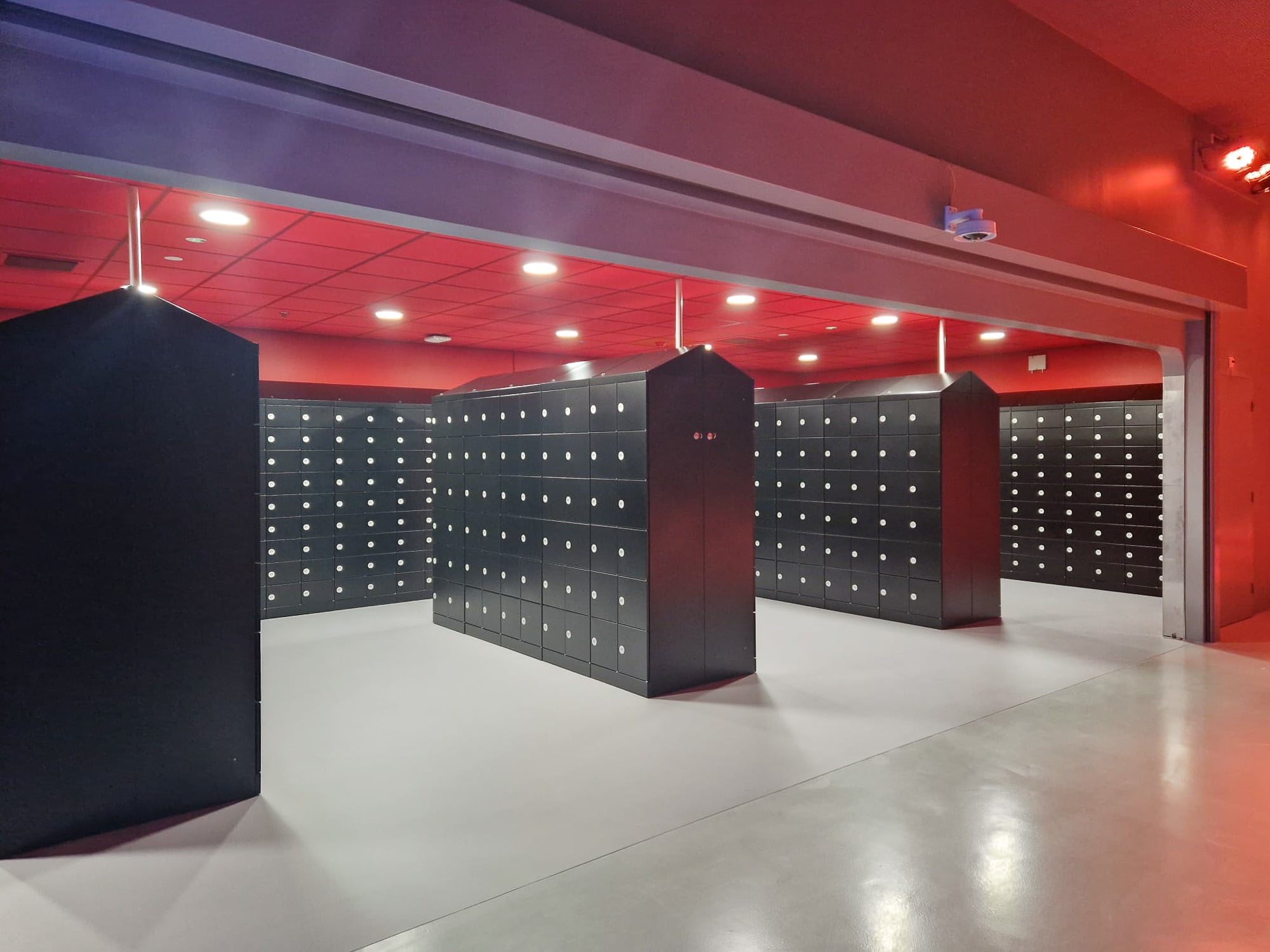
AFAS Live — Scalable Event Locker Deployment
AFAS Live deployed CrowdStor lockers to manage high visitor volumes efficiently during concerts and large-scale events. The system improved entry and exit flow, reduced staff intervention, and delivered a seamless, cashless storage experience for guests.
Related Solutions
Who This Is For
Venue & Stadium Operations Directors / Head of Security
Venue Operations Director
Area of Responsibility
Overall event operations
Ingress and egress management
Crowd flow coordination
Venue efficiency and staffing
Operational compliance delivery
Primary Goals
Keep people moving safely through the venue
Reduce queue congestion at peak ingress times
Maintain smooth event operations under high attendance
Deliver compliance without damaging visitor experience
Reduce operational overhead and staffing pressure
Pain Points They Need to Overcome
Long entry queues creating operational risk
Bottlenecks caused by bag searches and cloakrooms
High staffing requirements during major events
Delayed ingress affecting event timings
Legacy systems that cannot scale efficiently
Pressure to improve both security and throughput simultaneously