




What Is Locker Maintenance?
Locker maintenance refers to the ongoing inspection, repair and servicing required to keep lockers safe, secure and operational.
This typically includes:
- Replacing damaged locks
- Repairing doors and hinges
- Fixing locker mechanisms
- Managing lost keys
- Inspecting locker safety
- Cleaning and maintaining locker areas
- Replacing worn components
As lockers age, maintenance becomes more frequent and more expensive.
Why Locker Maintenance Costs Keep Rising
1. Lockers Wear Out Over Time
Daily use gradually wears down locks, hinges, doors and internal components.
This results in:
- More repairs
- Higher maintenance costs
- Reduced locker reliability
2. Lost Keys Create Ongoing Costs
Traditional lockers rely on physical keys that are frequently lost or damaged.
This means:
- Key replacements
- Lock changes
- Administration time
- Member inconvenience
3. Damage Increases with Heavy Usage
Busy leisure facilities experience constant locker use.
Doors become damaged.
Locks fail.
Handles loosen.
Small repairs quickly become major maintenance projects.
4. Lost Property Storage Quickly Fills Up
Without clear processes:
- Unclaimed items accumulate
- Storage areas become overcrowded
- Organisation becomes more difficult
Finding individual belongings takes longer.
5. Members Expect Faster Resolution
Today’s members expect quick answers.
Delays in locating lost belongings often lead to:
- Frustration
- Complaints
- Poor customer reviews
6. Manual Processes Don’t Scale
As facilities grow, lost property enquiries increase alongside visitor numbers.
Adding more staff doesn’t solve the underlying operational problem.

The Hidden Impact of Locker Maintenance
Rising Maintenance Costs
Reduced Locker Availability
More Staff Time
Poor Member Experience
Locker Maintenance: The Key Issues
The Core Problem: Traditional Lockers Require Constant Maintenance
Traditional lockers rely on mechanical locks, keys and moving parts that wear over time. As usage increases, repairs become more frequent, creating additional work for facilities teams.
1. Mechanical Locks Wear Out
Mechanical locks are one of the most common causes of locker failures.
Impact
Higher repair costs, reduced reliability and increased downtime.
2. Lost Keys Increase Administration
Managing replacement keys and changing locks consumes valuable staff time.
Impact
Higher labour costs and more reception interruptions.
3. Damaged Doors Reduce Availability
Broken hinges, doors and handles quickly take lockers out of service.
Impact
Lower locker availability and reduced customer satisfaction.
→ Compare gym lockers vs smart lockers
4. Reactive Repairs Create Downtime
Unexpected failures interrupt planned maintenance schedules.
Impact
Emergency repairs and higher operational costs.
5. Limited Visibility Delays Maintenance
Traditional lockers provide no information about locker condition or usage.
Managers only discover problems after members report them.
Impact
Reactive maintenance and reduced operational efficiency.
→ Compare staff cost vs locker automation ROI
Why Traditional Locker Maintenance Creates Operational Bottlenecks
Reactive Repairs Consume Valuable Time
Facilities teams spend a significant amount of time responding to individual locker issues instead of carrying out planned maintenance.
Typical maintenance tasks include:
- Replacing worn locks and hinges
- Repairing damaged doors and handles
- Managing lost keys and lock changes
- Responding to emergency repair requests
- Inspecting lockers reported by members
Each repair diverts valuable resources away from preventative maintenance and other facility priorities.
Impact: Higher labour costs, reactive working practices and increased operational disruption.
Downtime Reduces Locker Availability
Every locker taken out of service reduces the number available for members. During busy periods, even a small number of faulty lockers can lead to congestion, longer waiting times and member complaints.
Without visibility into locker condition, faults often remain unresolved until they are reported.
Impact: Lower locker availability, reduced member satisfaction and unnecessary pressure on reception staff.
Limited Visibility Increases Maintenance Costs
Traditional lockers provide very little operational insight. Managers cannot easily see which lockers are used most frequently, which require repeated repairs or where maintenance resources should be prioritised.
Without reliable data, maintenance schedules are based on guesswork rather than actual locker performance.
Impact: Repeated repairs, inefficient maintenance planning and higher whole-life ownership costs.
How Smart Leisure Lockers Reduce Maintenance
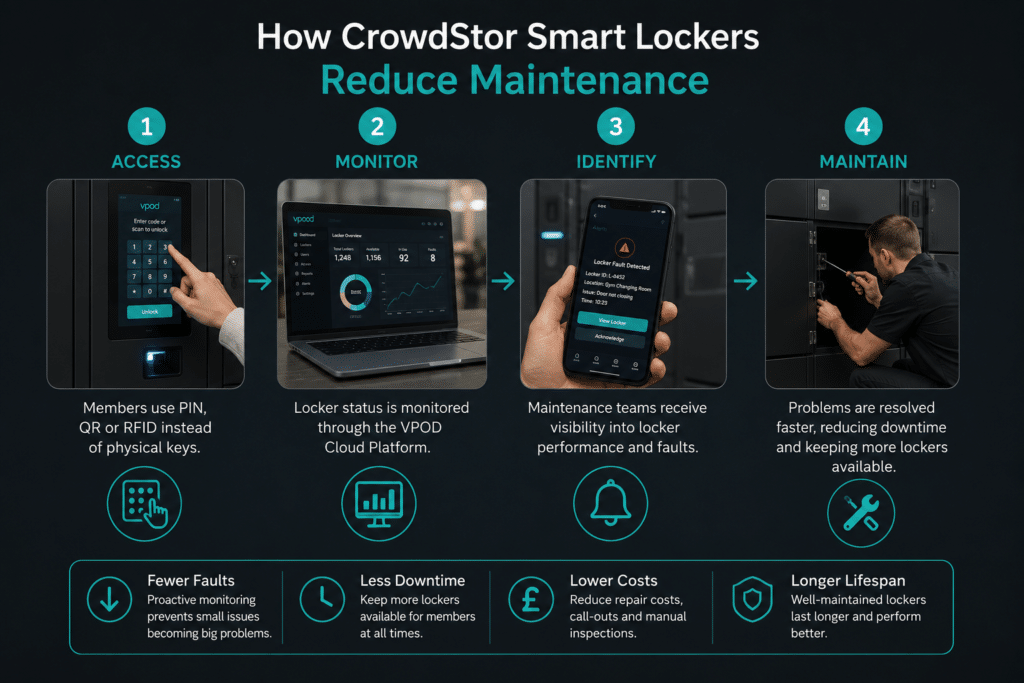
Smart leisure lockers replace reactive maintenance with a more proactive and efficient approach. By removing common failure points and providing real-time operational visibility, leisure centres can reduce repairs, minimise downtime and improve locker reliability.
Key Benefits
- Keyless access eliminates lost keys and lock replacements.
- Fewer moving parts reduce wear and ongoing maintenance.
- Cloud monitoring provides live visibility of locker status.
- Real-time alerts help identify issues before they become major repairs.
- Usage analytics support smarter maintenance planning.
- Centralised management allows multiple locker locations to be managed from one platform.
The result is lower maintenance costs, improved locker availability and a longer-lasting locker investment.
→ Compare staff cost vs locker automation ROI
How CrowdStor Smart Lockers Reduce Maintenance
Traditional Lockers vs Smart Lockers




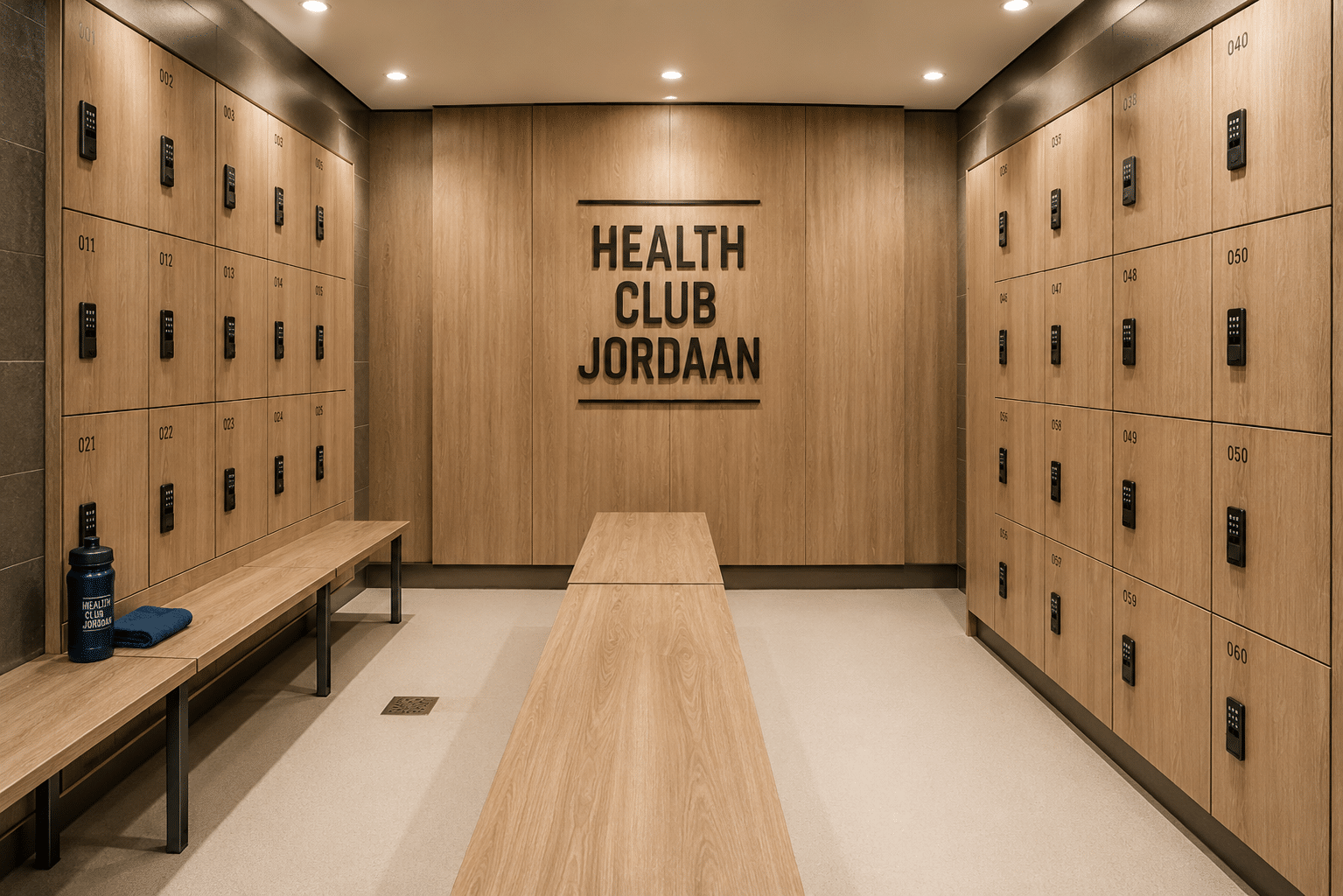
Case Study: Healthclub Jordaan & VPOD
Healthclub Jordaan Reduced Lost Property Enquiries with Digital Lockers
Healthclub Jordaan wanted to provide members with a more reliable and convenient locker experience while reducing the day-to-day maintenance associated with traditional locker systems.
By installing 188 VPOD smart lockers, the club replaced physical keys and coin-operated locks with secure digital access. This eliminated many of the common causes of maintenance, reduced reception involvement and improved the overall reliability of the locker operation
Results:
- 188 digital lockers
- No keys or coins
- Automatic PIN reset
- Reduced reception involvement
- Better member convenience
- More secure storage
Discover how Healthclub Jordaan created a more efficient, low-maintenance locker operation with VPOD Smart Lockers.
Who Is Affected by Lost Property?
Facilities Managers & Operations Teams
Facilities Managers
Key Challenges
- Repair costs
- Preventative maintenance
- Downtime
- Budget control
- Asset management
Pain Points
- Broken locks
- Damaged doors
- Lost keys
- Reactive repairs
- Increasing maintenance costs