







What Is Inventory Inefficiency?
Inventory inefficiency occurs when organisations cannot:
- Locate items quickly
- Track stock accurately
- Optimise storage space
- Process inventory movement efficiently
This leads to:
-
- Lost or misplaced items
- Delayed operations
- Overstocking or stockouts
- Increased labour costs
Outcome:
- Explore workplace locker solutions
- Compare smart lockers vs mobile storage
- Workplace lockers → support hybrid working and optimise office space
- Asset lockers → improve IT control and equipment management
- Parcel lockers → streamline workplace deliveries and reduce manual handling
Why Inventory Inefficiency Increases at Scale
1. Volume Outpaces Systems
As inventory grows:
- More items are stored
- More transactions occur
- More movement is required
But systems often remain:
- Manual
- Static
- Fragmented
When volume increases without system evolution, inefficiency is inevitable.
2. Lack Of Real Time Visibility
Many organisations rely on:
- Periodic stock checks
- Manual updates
- Delayed reporting
This results in:
- Inaccurate inventory data
- Unknown stock locations
- Time spent searching
Why Asset Tracking Problems Break at Scale (And Why Visibility Disappears)
3. Storage Becomes Unstructured
Inventory is often stored in:
- Shelving systems
- Backrooms
- Shared spaces
At scale, this leads to:
- Poor organisation
- Inefficient use of space
- Increased retrieval time
4. Movement Creates Tracking Gaps
Inventory moves through multiple stages:
- Receipt
- Storage
- Picking
- Distribution
Each step introduces risk:
- Items not recorded
- Locations not updated
- Ownership unclear
Guide:Why Asset Audit Trails Break at Scale and how to fix it
5. Manual Processes Create Bottlenecks
Inventory handling often requires:
- Staff locating items
- Manual updates
- Sequential processing
This leads to:
- Slower operations
- Increased labour dependency
- Reduced throughput
Explore:

How Inventory Delays Impact Daily Operations
Increased Operating Costs
Reduced Workplace Productivity
Slower Operations
Inventory Visibility & Stock Control Problems
Why Inventory Systems Fail at Scale
Why Inventory Retrieval Speed Impacts Operations
1. Delayed Access Slows Daily Workflows
As inventory activity increases, employees spend more time locating, collecting, and returning shared equipment across operational environments.
This can delay internal workflows, reduce responsiveness, and slow day-to-day operations across teams.
A connected
asset locker management system
can help streamline equipment access, returns and tracking.
2.Unstructured Storage Reduces Retrieval Efficiency
When inventory is stored across unmanaged shelving, backrooms, or shared storage areas, retrieval processes become increasingly inefficient at scale.
Without defined storage locations, organisations often experience longer retrieval times, misplaced inventory, and reduced operational organisation.
Compare reception parcel handling vs lockers
Why Asset Audit Trails Break at Scale (And Why Manual Tracking Fails)
The Core Problem: Manual Inventory Coordination
Managing Inventory
As inventory operations expand, organisations must manage larger inventory volumes, more storage locations, and increasing operational activity across teams.
Processes that work efficiently at smaller scale often become harder to coordinate across larger operational environments.
Inventory operations typically involve:
- higher inventory movement volumes
- increased demand for shared storage access
- more frequent retrieval and returns
- growing coordination across departments
- greater pressure on operational turnaround times
Fragmented Processes Reduce Inventory Consistency
In many organisations, inventory movement is managed across separate systems, departments, and storage environments.
This often leads to:
- inconsistent inventory records
- duplicate administrative work
- tracking gaps across workflows
- delays resolving inventory discrepancies
As inventory operations scale, maintaining accurate inventory data becomes increasingly difficult through fragmented processes alone.
Traditional Inventory Processes Struggle to Scale Efficiently
As inventory activity increases:
- more users require access
- stock movement becomes more frequent
- operational coordination becomes more complex
Consequently, workflows that rely heavily on manual coordination create growing administrative pressure and reduced operational consistency.
Smart Inventory Systems Create Scalable Operational Control
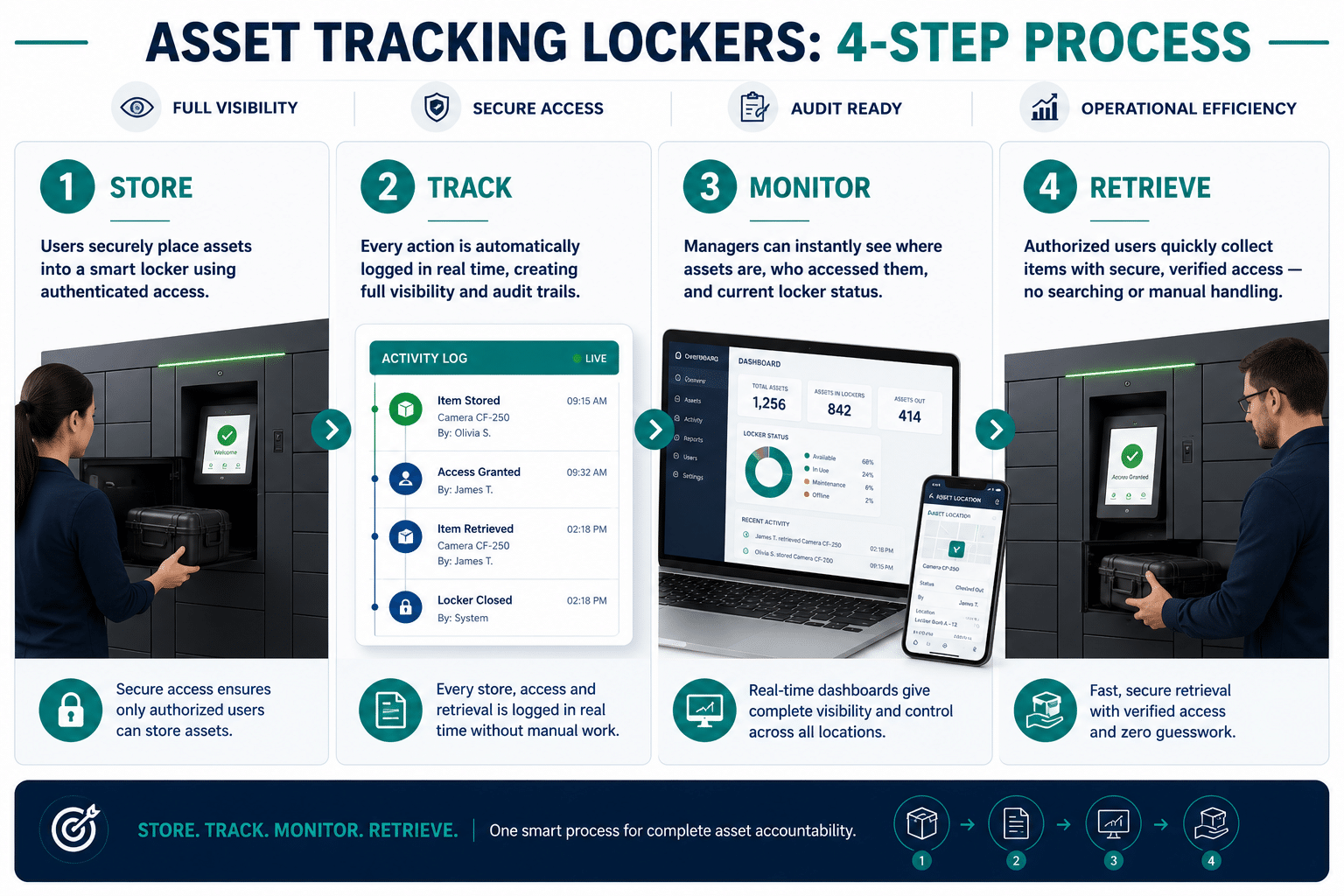
Inventory Inefficiency Reduction Process
Traditional Inventory Systems vs Smart Locker Inventory Solutions





Case Study: Sodexo
Improving Inventory Visibility & Workplace Operational Efficiency
Who Experiences Inventory Inefficiency Challenges?
Workplace & Inventory Control Teams
Workplace
Areas of Responsibility
- Workplace inventory management
- Asset tracking and storage organisation
- Shared storage coordination
- Operational workflow improvement
- Storage space optimisation
Key Challenges
- Lost or misplaced inventory
- Manual inventory processes
- Disorganised storage environments
- Delays locating assets and equipment
- Difficulty scaling inventory operations