


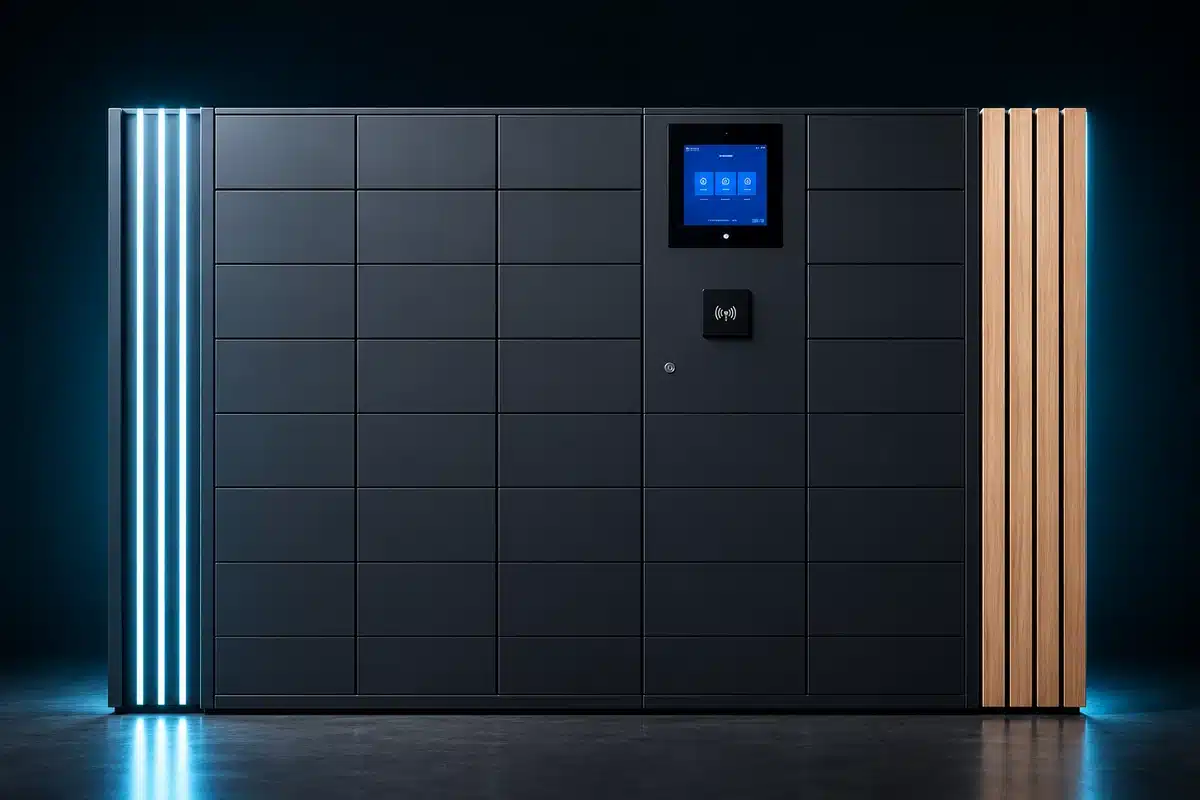





What Are Shared Equipment Issues?
Shared equipment issues occur when organisations cannot:
- Track who has an item
- Locate equipment quickly
- Ensure availability when needed
- Maintain accountability
This leads to:
- Lost or misplaced items
- Delays in operations
- Increased costs
- Frustrated teams
Common environments include:
- Offices and workplaces
- IT departments
- Healthcare settings
- Warehouses and logistics
- Engineering and field teams
Why Manual Asset Logging Breaks at Scale
Why Shared Equipment Problems Increase at Scale
1. More Users, Less Accountability
As the number of users increases:
- Responsibility becomes unclear
- Items are passed between people
- Ownership is diluted
This leads to:
- “No one knows who has it”
- Equipment not being returned
- Lack of accountability
Shared ownership often becomes no ownership.
Explore workplace locker solutions
Compare smart lockers vs mobile storage
2. No Real Time Visibility
Many organisations lack:
- Live tracking of equipment
- Visibility of asset location
- Status of availability
This results in:
- Time spent searching
- Uncertainty
- Delays in use
Why Asset Tracking Problems Break at Scale (And Why Visibility Disappears)
3. Manual Logging Breaks Down
Shared equipment is often tracked using:
- Spreadsheets
- Sign-out sheets
- Informal processes
At scale:
- Logs are incomplete
- Entries are missed
- Data becomes unreliable
Why Asset Management Costs Spiral at Scale
Compare equipment rental desk vs locker-based systems
Compare capex vs opex locker model
4. Equipment Is Not Stored in Defined Locations
Items are often:
- Left on desks
- Stored in drawers
- Moved between locations
This creates:
- Inconsistent storage
- Lost equipment
- Difficulty locating items
5. Demand Peaks Create Availability Issues
Shared equipment demand is not constant.
It spikes:
- At shift changes
- During peak operational periods
- For specific projects
This leads to:
- Equipment shortages
- Delays in work
- Conflict between teams
For more controlled storage and availability, explore
asset lockers for shared equipment
.
Why Asset Audit Trails Break at Scale (And Why Manual Tracking Fails)
6. No Controlled Access to Equipment
Without access control:
- Anyone can take equipment
- No verification of user
- No record of usage
This results in:
- Misuse
- Loss
- Lack of accountability

The Hidden Impact of Shared Equipment Issues
Lost Productivity
Increased Costs
Operational Delays
Security & Compliance Risks
Shared Equipment Issues at Scale: The Key Issue
The Core Problem: Shared Equipment Depends on Visibility and Accountability
Shared equipment issues rarely occur because of a single missing item.
They happen when increasing numbers of users, assets, and locations make it difficult to track equipment, maintain accountability, and ensure availability when needed.
1. Equipment Availability Becomes Unpredictable
As more teams share laptops, tools, devices, and keys, it becomes harder to know what is available and where it is located.
Impact: Delays, reduced productivity, and equipment shortages.
2. Equipment Volumes Create Complexity
As organisations grow, managing larger numbers of shared assets becomes increasingly difficult without real-time visibility.
Impact: Time spent searching, inefficient utilisation, and increased operational costs.
Compare staff cost vs locker automation ROI
3. Manual Tracking Becomes Unreliable
Many organisations rely on spreadsheets, sign-out sheets, or informal processes to manage shared equipment.
Impact: Missing records, reduced accountability, and inaccurate asset information.
4. Control and Accountability Are Lost
Without controlled access and automated tracking, organisations cannot easily verify who has equipment or when it will be returned.
Impact: Lost assets, security risks, compliance challenges, and operational disruption.
Why Traditional Equipment Management Fails at Scale
Lack of Visibility Creates Equipment Issues
Many organisations still rely on manual processes to manage shared equipment. As the number of users and assets grows, maintaining visibility becomes increasingly difficult.
Common issues include:
- Difficulty locating equipment
- Unclear asset ownership
- Missing or misplaced items
- Reduced equipment availability
Manual Tracking Creates Delays
Spreadsheets, sign-out sheets, and informal processes cannot keep pace with growing equipment usage and movement.
Challenges include:
- Time spent searching for assets
- Inaccurate equipment records
- Delayed access to critical equipment
- Reduced operational efficiency
Shared Usage Reduces Accountability
As more employees use the same equipment, responsibility becomes less clear and tracking becomes more difficult.
This results in:
- Equipment not being returned
- Lack of accountability
- Increased asset loss
- Security and compliance concerns
Compare staff cost vs locker automation ROI
How Smart Lockers Eliminate Shared Equipment Issues at Scale
Smart equipment lockers provide a secure, controlled, and trackable solution for managing shared assets.
Benefits include:
- Controlled user access
- Real-time equipment visibility
- Automated usage tracking
- Defined storage locations
- Secure equipment storage
- Improved asset availability
By replacing manual equipment management processes with smart lockers, organisations can improve visibility, increase accountability, reduce equipment loss, and create a more scalable equipment management operation.
Automate asset handling with lockers
The Automated Shared Equipment Process
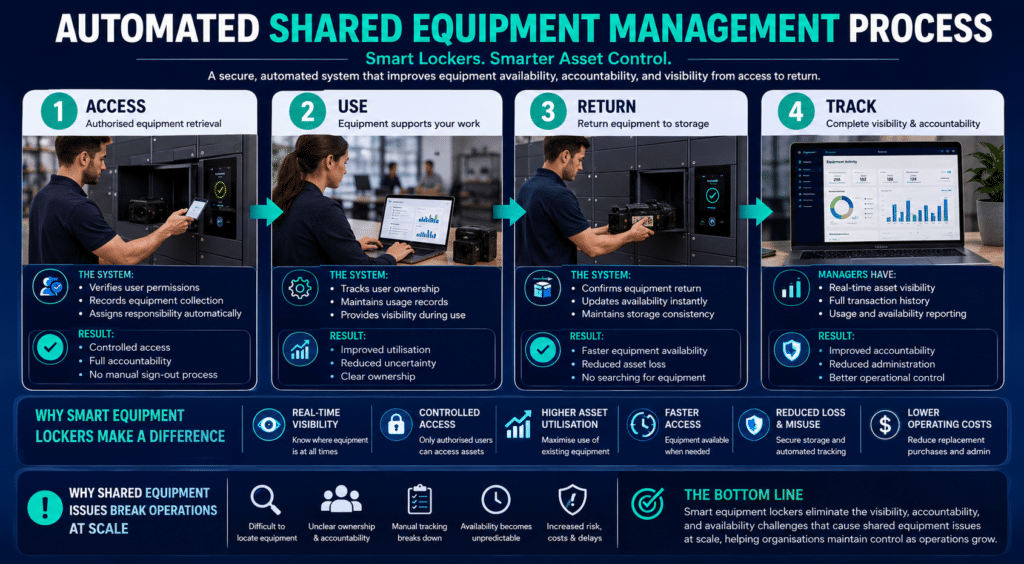
Traditional Shared Equipment Management vs Smart Equipment Locker Systems





Case Study: ADP & VPOD
Improving Visibility and Control Across a Global Workplace
ADP implemented Vflex smart lockers across multiple workplace locations to support a flexible workforce and improve the management of shared workplace resources. The solution provided a connected platform for storage, access, and workplace operations, helping improve visibility, productivity, and operational consistency.
Results Included:
- Improved visibility across workplace resources
- Enhanced operational efficiency
- Better utilisation of shared assets
- Reduced reliance on manual processes
- Increased workplace productivity
- Scalable workplace infrastructure
Who Is Affected by Shared Equipment Issues?
IT & Asset Management Teams / Facilities & Workplace Operations Teams
IT & Asset Management Teams
Key Challenges
- Tracking shared equipment across multiple users
- Maintaining asset visibility and accountability
- Ensuring equipment availability when needed
- Reducing equipment loss and misuse
- Managing growing asset inventories
Operational Pain Points
- Time spent locating equipment
- Inaccurate asset records
- Equipment not being returned
- Increased replacement costs
- Limited visibility into asset usage