Receive
Who accepts or scans the parcel? Is delivery attended, unattended or mixed?


We design and deliver integrated systems for streamlined check-ins, secure storage, and enhanced visitor management. Our trusted partner network and focus on sustainability, data security, and customer success drives us to provide the most effective and user-friendly solutions.


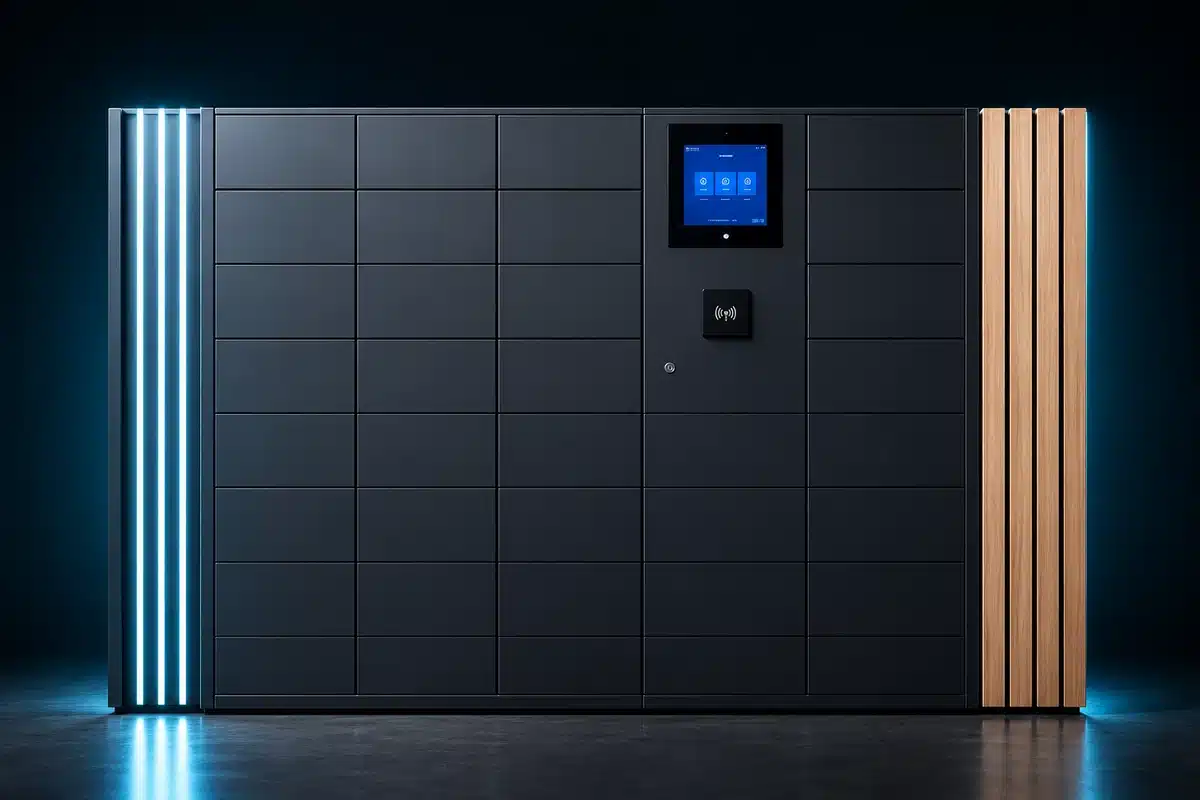

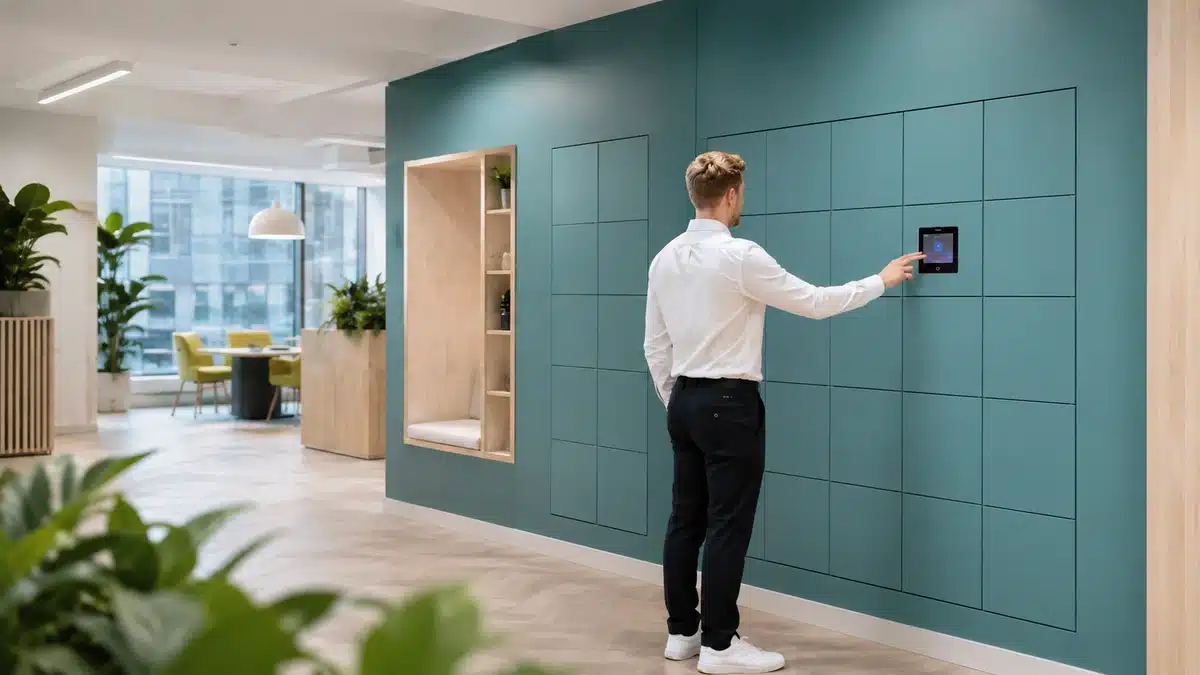

We design and deliver integrated systems for streamlined check-ins, secure storage, and enhanced visitor management. Our trusted partner network and focus on sustainability, data security, and customer success drives us to provide the most effective and user-friendly solutions.
We design and deliver integrated systems for streamlined check-ins, secure storage, and enhanced visitor management. Our trusted partner network and focus on sustainability, data security, and customer success drives us to provide the most effective and user-friendly solutions.
2026 UK BUYER'S GUIDE
A practical framework for comparing parcel locker systems in the UK—from parcel volumes and compartment sizing to software, integrations, security, installation, supplier support and whole-life cost.
EXECUTIVE SUMMARY
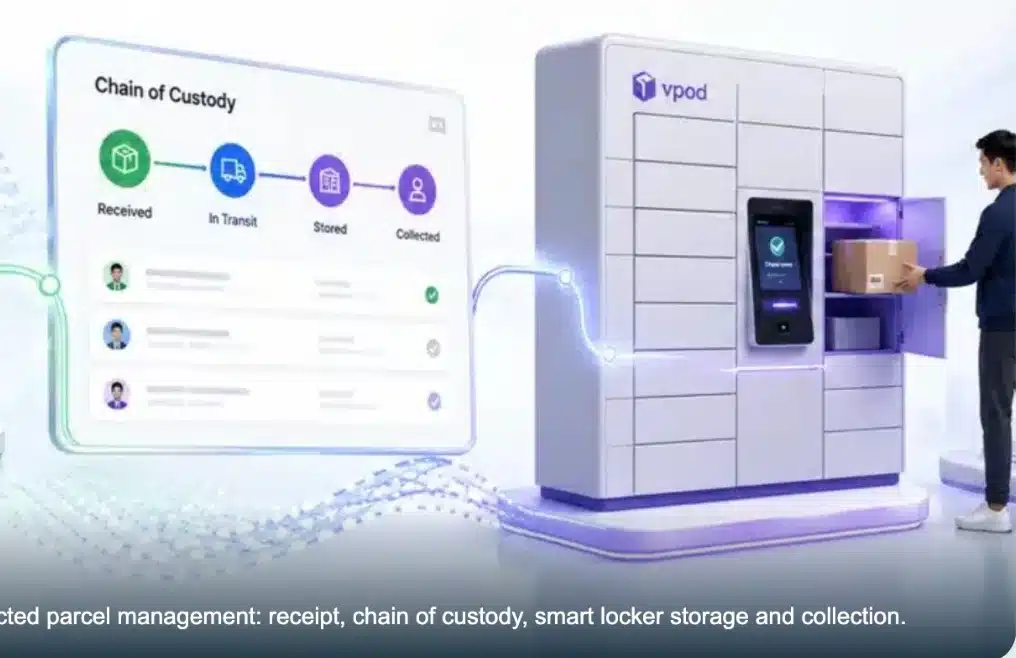
A strong parcel locker system should fit the delivery process it is intended to automate. Compare the complete operating model: daily and peak parcel volumes, recipient identification, compartment mix, locker construction, access credentials, management software, integrations, audit trail, installation, service and whole-life cost.
The commercial parcel solution should remain the destination for product selection and deployment. This guide exists to help buyers define requirements and compare options before moving to the Vpod parcel locker solution .
01 · REQUIREMENTS
The most important specification decision is not the door count. It is the operating journey the system needs to support.
Who accepts or scans the parcel? Is delivery attended, unattended or mixed?
How is the recipient matched—directory, parcel platform, barcode, manual search or integration?
How is the best compartment assigned and how is a successful deposit confirmed?
How is the recipient notified, authenticated and how is collection recorded?
02 · CAPACITY PLANNING
Capacity planning should combine daily parcel volume, peak-day uplift, dwell time, parcel-size mix, operating hours, available footprint and planned growth. A system that looks adequate on average can fail at the exact moments when users need it most.

03 · PARCEL LOCKER SPECIFICATION
A useful tender or RFP separates mandatory requirements from optional features and asks each supplier to state what is standard, configurable, integrated, third-party or excluded.
Door sizes, materials, finishes, ventilation, accessibility, indoor/outdoor suitability and service access.
Lock type, release logic, door status, resilience, override and failure behaviour.
PIN, QR, barcode, cards, mobile credentials or integrated identity depending on the workflow.
Users, permissions, occupancy, activity, audit, alerts, reporting and multi-site administration.
Parcel platforms, identity, workplace tools, access control and APIs with clear ownership and support.
Survey, power/network, installation, testing, training, SLA, warranty, maintenance and lifecycle ownership.

04 · SOFTWARE & TRACKING
Parcel locker software should make the operation visible. Ask suppliers how the system records receipt, allocation, door events, notifications, authentication, collection, dwell time, exceptions and multi-site performance.
05 · SECURITY & INTEGRATION
Define how recipients, couriers, operators and administrators are authenticated and what each role may do.
Document the system of record, API events, retry/error handling, monitoring and operational support.
Specify which events must be time-stamped, retained, searchable and available for dispute resolution.
06 · PARCEL LOCKER COST
There is no useful universal UK parcel-locker price because the total depends on the cabinet configuration, software, integrations, site works, rollout model and service requirement.
Cabinets, locks, controllers, screens, access readers, finishes and accessories.
Survey, design, power/network, delivery, installation, testing and project management.
Licensing, cloud management, notifications, reporting and integrations.
Warranty, maintenance, service levels, parts, upgrades and lifecycle management.
Ask every parcel locker supplier to separate one-off project cost, recurring software/service cost, optional integrations and assumptions. Then compare the operating savings and risk reduction against the same period.
07 · PARCEL LOCKER SUPPLIERS UK
Do not compare suppliers only on cabinet appearance. Compare responsibility: who designs the workflow, supplies the hardware, configures software, handles integrations, installs the system and owns support after go-live?
| Evaluation area | Questions to ask | Evidence to request |
|---|---|---|
| Parcel experience | How many comparable workplace/building deployments? | Relevant case studies and references |
| Specification | Can hardware, compartments, finishes and workflows be configured? | Technical schedules and drawings |
| Software | Is the management platform proven at the required scale? | Live demonstration and reporting examples |
| Integration | Who owns the API design, testing, monitoring and support? | Architecture and support responsibilities |
| UK delivery | Who surveys, installs, commissions and trains? | Project plan and rollout methodology |
| Support | What happens when a locker, network or workflow fails? | SLA, escalation route and service coverage |
08 · IMPLEMENTATION
Workflow, users, parcel volume, estate and objectives.
Space, access, power, network, fire routes and installation constraints.
Compartment mix, finishes, access, software, integrations and support model.
Configuration, interfaces, acceptance criteria and operational testing.
Install, commission, train, communicate and measure adoption.
Review capacity, dwell time, exceptions and site performance.
PROCUREMENT CHECKLIST
Ask suppliers to answer every point in writing. Gaps here often become project cost, delay or operational friction later.
QUICK ANSWERS
Start with the delivery workflow, parcel volumes, dwell time, compartment-size profile, users, access methods, integrations and support requirements. Compare suppliers against that operating model rather than choosing by door count alone.
Cost varies with cabinet configuration, number and size of compartments, software, access technology, integrations, installation and support. Compare total project and whole-life cost rather than a simple price per door.
Include workflow, capacity, cabinet and lock requirements, access methods, software, reporting, integrations, audit trail, power/network, installation, testing, support and service levels.
Ask for comparable deployment evidence, a clear responsibility matrix, technical specification, software demonstration, integration approach, rollout plan, SLA and a transparent multi-year cost model.
The answer depends on average and peak delivery volume, collection dwell time, parcel-size mix, delivery timing and growth. Capacity should be modelled against peak operating conditions.
Yes. Enterprise parcel lockers can connect allocation, recipient notifications and collection events with parcel, facilities, identity and workplace platforms where suitable interfaces are available.
READY TO MOVE FROM GUIDE TO SOLUTION?
Bring Vpod your parcel volumes, users, sites, integration requirements and operating constraints. The commercial solution can then be configured around the real workflow.