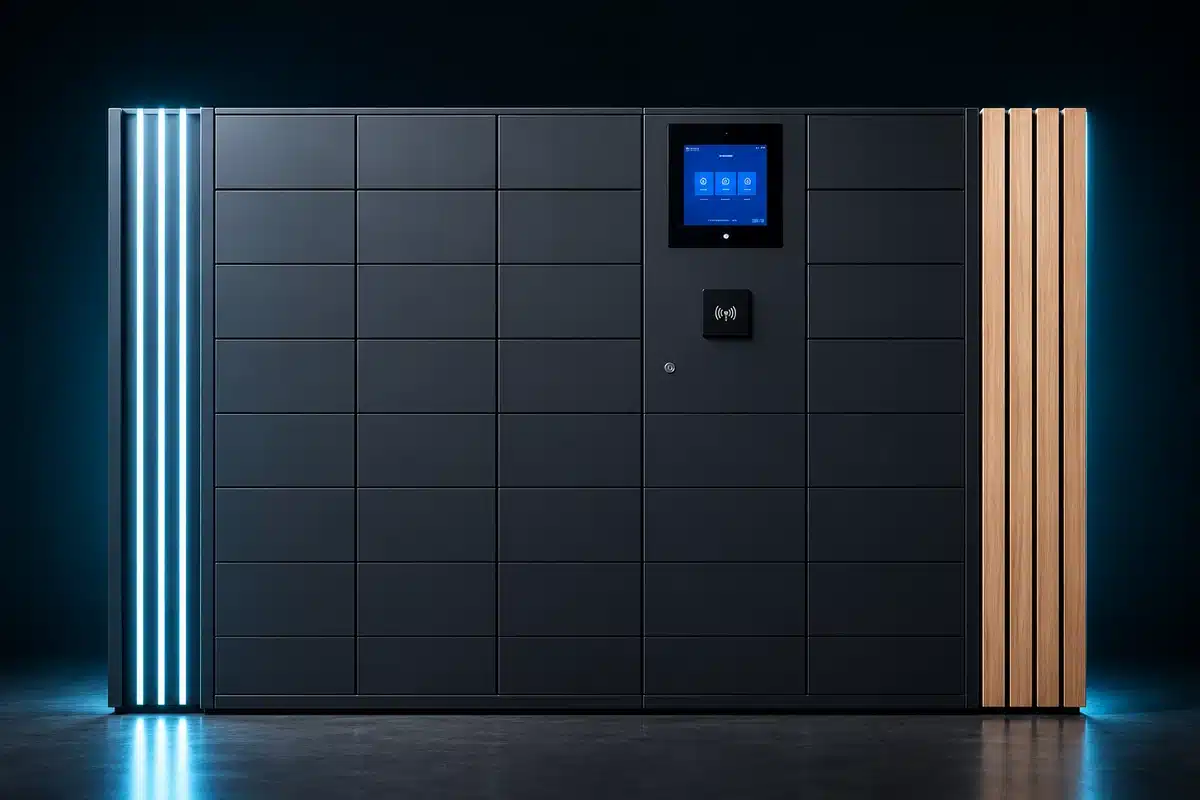
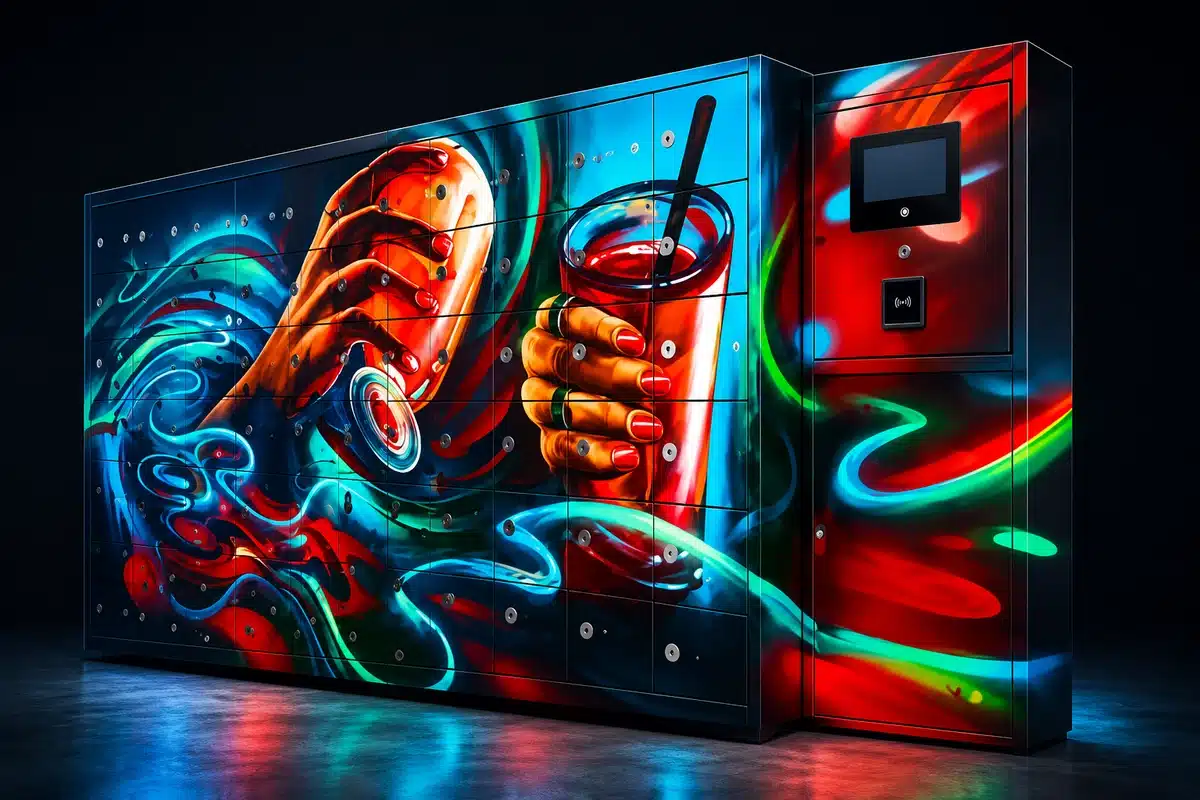
Vflex Smart Lockers, Powered by Keynius, are a state-of-the-art product with quality in-house manufacturing, intelligent design, and a cloud-based platform that can support multiple locker workflows in one smart locker wall.
Vflex Smart Lockers, Powered by Keynius, are a state-of-the-art product with quality in-house manufacturing, intelligent design, and a cloud-based platform that can support multiple locker workflows in one smart locker wall.
Vflex Smart Lockers, Powered by Keynius, are a state-of-the-art product with quality in-house manufacturing, intelligent design, and a cloud-based platform that can support multiple locker workflows in one smart locker wall.
Vflex Smart Lockers, Powered by Keynius, are a state-of-the-art product with quality in-house manufacturing, intelligent design, and a cloud-based platform that can support multiple locker workflows in one smart locker wall.
Global leaders in Smart Lockers & Smart Experiences
We design and deliver integrated systems for streamlined check-ins, secure storage, and enhanced visitor management. Our trusted partner network and focus on sustainability, data security, and customer success drives us to provide the most effective and user-friendly solutions.
Global leaders in Smart Lockers & Smart Experiences
We design and deliver integrated systems for streamlined check-ins, secure storage, and enhanced visitor management. Our trusted partner network and focus on sustainability, data security, and customer success drives us to provide the most effective and user-friendly solutions.
Global leaders in Smart Lockers & Smart Experiences
We design and deliver integrated systems for streamlined check-ins, secure storage, and enhanced visitor management. Our trusted partner network and focus on sustainability, data security, and customer success drives us to provide the most effective and user-friendly solutions.
Connect your parcel system to the physical handover.
Design a custom workflow that turns an inbound parcel record into a secure locker deposit, recipient notification, verified collection and useful final status—without assuming an endpoint or data flow before discovery.
Create or accept the parcel record once, then identify the intended recipient.
Deposit securely
Request a suitable compartment and confirm that the parcel is safely stored.
Close the loop
Return collection, timeout or exception status to the system that owns the journey.
Capability page—not a partner profile
This page describes integration patterns and solution-design decisions. It does not publish an API specification, promise a connector or imply that named endpoints, payloads, notifications or bidirectional data flows already exist.
Start with the operating model
Agree who owns each decision before defining the interface.
A parcel platform may own booking, inbound scan and recipient matching; the locker service may own compartment availability, door control and collection evidence. The actual division depends on the chosen systems and project scope.
The courier needs a quick deposit. The recipient needs an unambiguous instruction. Facilities needs overflow handled. IT needs authentication, retry and monitoring rules that can be operated safely.
⇄
Request and response
Define identifiers, allowed actions, rejection reasons and the system of record.
!
Failure is part of the design
Timeouts, duplicates, retries and partial completion need named outcomes.
The visual integration journey
From inbound parcel PX-78421 to “collection confirmed”.
This is an illustrative workflow, not a published endpoint contract or evidence of deployed functionality.
SECURE DEPOSIT READYCompartment P-18 allocatedReception lobby · medium door · hold for 24 hours
▤
01 · CREATE
Record the inbound parcel
Tracking reference PX-78421, courier, arrival time and parcel size enter the agreed workflow.
♙
02 · MATCH
Confirm the recipient and rules
Name, site, department and collection eligibility are resolved before allocation.
▦
03 · ALLOCATE
Reserve and confirm a compartment
Size, available capacity, location and access policy lead to Compartment P-18.
✉
04 · NOTIFY
Send the collection instruction
The agreed channel supplies the locker location, collection window and secure access method.
◈
05 · COLLECT
Verify and release the parcel
The recipient presents the supported code, barcode, credential or other confirmed method.
✓
06 · RETURN
Send proof and final status
Collection time, compartment and outcome return to the agreed system of record.
!
Exceptions and changed circumstances
If the recipient is unknown, the parcel is oversized, no door is free, a deposit fails, notification cannot be delivered or collection expires, keep the parcel secure and route the case to a named owner.
◎
Governance and multi-site operation
Keep identifiers, statuses, retry rules and evidence consistent while documenting each building’s locker bank, directory, opening hours, courier point, overflow route, retention and support team.
Names, tracking references, dates and compartments are illustrative. Availability, authentication, supported triggers, payloads, endpoints, notifications, data direction, event delivery and exception handling must be confirmed during solution design.
What the interface must agree
Define the information exchange without inventing the implementation.
Parcel creation
Reference, courier, arrival time, size, source and duplicate-handling rule.
Recipient matching
Authoritative directory, location, ambiguous matches, visitors and leavers.
Allocation
Door size, zone, capacity, reservation expiry and rejected-request outcome.
Deposit
Courier identity, door opening, closure confirmation and abandoned transactions.
Notification and access
Channel owner, delivery result, reminder, credential and delegated collection.
Proof and exceptions
Collection evidence, timeout, retry, fault, overflow and operational escalation.
Decisions by team
One parcel journey with clear ownership.
IT
Own architecture, authentication, system records, security, monitoring, retries and support boundaries.
Agree authentication, authorisation, secrets, personal data and audit access.
Reliability
Define availability, retries, idempotency, duplicate control and reconciliation.
Operational response
Name owners for full lockers, faults, unknown recipients and expired collections.
Multi-site rollout
Document local directories, zones, capacity, hours, couriers and support.
Integration availability, supported triggers, data direction and delivery scope must be confirmed during solution design. No endpoint, payload, event, authentication method, notification channel, service level, certification, native functionality or existing customer deployment should be inferred from this capability page.
Start with one real delivery
Show us what happens from courier arrival to collection today.
Bring the parcel system, recipient source, parcel volumes and sizes, notification route, required evidence, site differences and common exceptions.