


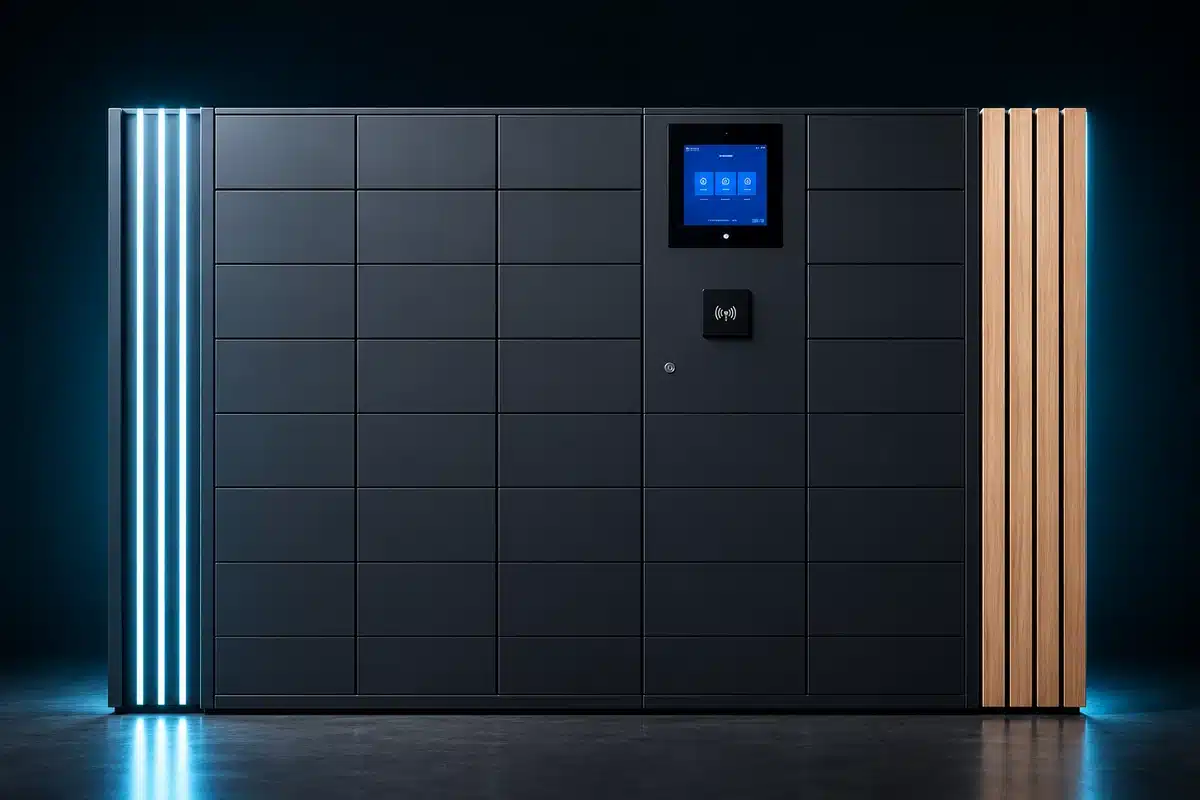





What Are Luggage Storage Queue Problems?
Luggage storage queues occur when guests must wait to:
- Drop off bags before check-in
- Store luggage after check-out
- Retrieve stored items
These queues typically form at:
- Reception desks
- Concierge areas
- Luggage rooms
The result:
- Delays
- Congestion
- Frustration
- Reduced service quality
Why Luggage Storage Queues Get Worse at Scale
1. Demand Is Highly Concentrated
Luggage activity peaks at predictable times:
- Morning check-out (storage demand spike)
- Early arrivals (pre-check-in storage)
- Afternoon check-in
This creates:
- Sudden surges in demand
- Immediate queue formation
2. Manual Bag Handling Limits Throughput
Each bag requires:
- Staff interaction
- Tagging
- Physical handling
- Storage
This creates a linear system:
- One staff member
- One guest at a time
At scale:
Throughput is capped — queues are inevitable.
3. Double Handling Creates Multiple Queues
Luggage is handled twice:
- Drop-off
- Collection
This means:
- Two separate queue events per guest
- Double the operational pressure
Automated luggage locker systems
→ Compare hotel concierge storage vs lockers
4. Retrieval Is Slower Than Drop-Off
Drop-off is quick.
Retrieval is not.
At collection:
- Guests arrive simultaneously
- Staff must locate specific bags
- Storage areas are disorganised
This leads to:
- Longer wait times
- Queue buildup
5. Storage Inefficiency Slows the System
Unstructured storage leads to:
- Bags stacked or moved frequently
- No fixed location per item
- Time spent searching
The fuller the room, the slower the queue moves.
6. Reception Becomes the Bottleneck
Luggage handling often happens at:
- The front desk
This creates:
- Congestion at the most critical service point
- Delays in check-in and check-out
- Reduced service efficiency

The Hidden Impact of Luggage Queues
Guest Experience Breakdown
Operational Pressure Increases
Check-In and Check-Out Slow Down
Scaling Becomes More Difficult
Why Guest Experience Is Changing Hotel Luggage Storage
The Core Problem: Why Luggage Queues Keep Growing
Luggage storage queues are not caused by a lack of staff.
They happen because traditional hotel luggage storage relies on manual handling, staff interaction, and sequential processing that cannot scale during peak demand.
1. Throughput Is Limited by Staff Capacity
Every bag requires tagging, handling, storage, and retrieval by a team member. This limits throughput and creates luggage storage queues during busy check-in and check-out periods.
Explore: Secure luggage lockers with audit trails | Compare hotel concierge storage vs lockers
Manual Luggage Storage Vs Self-Service Lockers
2. Waiting Times Increase During Peak Demand
As guest volumes rise, reception teams struggle to process luggage quickly enough. Long waiting times develop as guests queue to drop off and collect belongings.
Impact: Slower guest flow, reception congestion, and reduced service efficiency.
Explore: Luggage lockers for hotels | Automated luggage locker systems
3. Queue Pressure Impacts Hotel Operations
Without self-service luggage storage and real-time visibility, queues place additional pressure on reception teams and hotel operations.
Impact: Delayed check-in and check-out, increased workload, and reduced guest satisfaction.
Related Links
Why Traditional Luggage Storage Systems Create Queues
Manual Luggage Handling Limits Throughput
Traditional luggage storage depends on staff interaction for every bag. During busy periods, manual handling slows processing and creates luggage storage queues.
Challenges include:
- Staff-dependent processes
- Longer waiting times
- Reception bottlenecks
- Reduced guest flow
Retrieval Delays Increase Waiting Times
Collecting luggage is often slower than storing it. Staff must locate specific bags, increasing queue build-up during peak check-out periods.
Challenges include:
- Time spent searching for luggage
- Delayed bag collection
- Guest frustration
- Reduced service efficiency
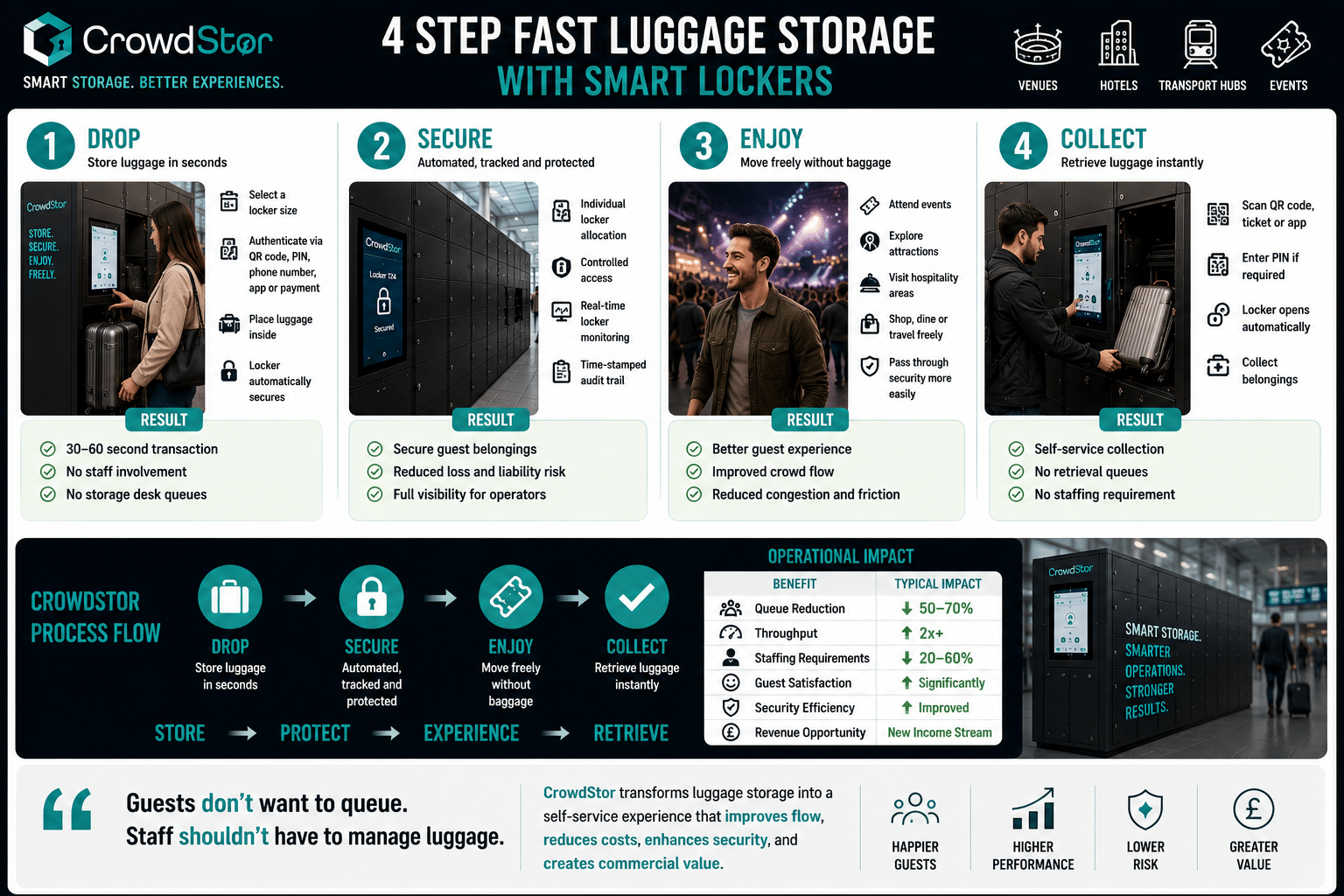
Self-service smart locker systems can help hotels reduce luggage-storage queues by allowing guests to securely store and retrieve bags without waiting for reception staff.
Peak Demand Overwhelms Operations
Check-in, check-out, and group arrivals create concentrated luggage demand. Manual systems struggle to handle high volumes efficiently.
Challenges include:
- Queue formation
- Operational pressure
- Slower guest processing
- Increased workload for hotel teams
Smart Luggage Lockers Eliminate Bottlenecks
Self-service luggage storage allows guests to store and retrieve bags independently. This removes queues, improves guest flow, and supports scalable hotel operations.
Benefits include:
- Faster luggage storage and retrieval
- Reduced waiting times
- Improved check-in and check-out efficiency
- Better guest experience and operational control
Fast Smart Locker Luggage Storage Process - 4 Steps
Traditional Hotel Luggage Storage vs Smart Luggage Storage Solutions




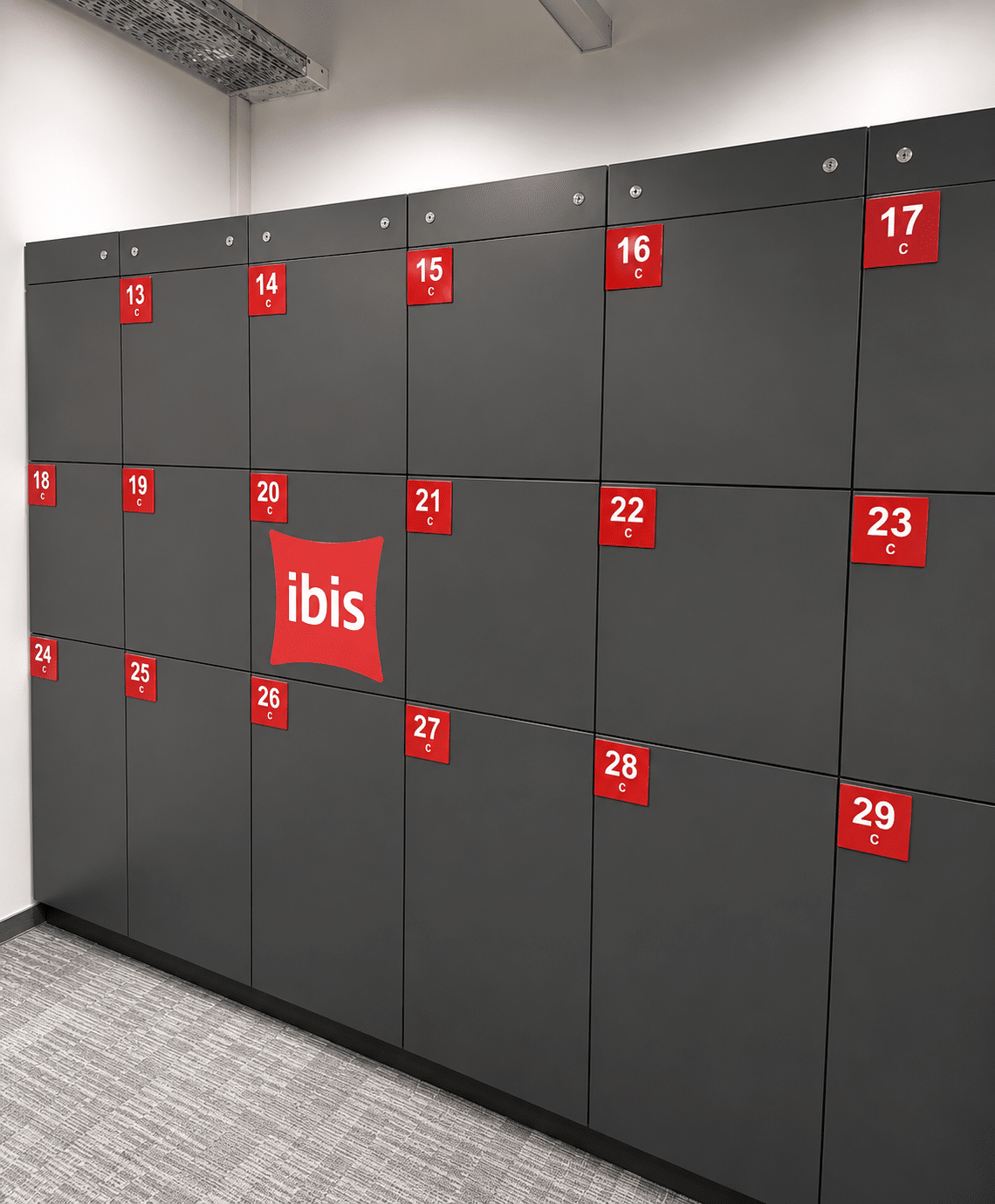
Case Study: Ibis Geneva & VPOD
How Ibis Geneva Reduced Hotel Luggage Storage Queues
Who Is Affected by Luggage Storage Queues?
Hotel Operations Managers & Front Desk & Guest Services Teams
Hotel Operations Managers
Key Challenges
- Luggage storage queues during peak check-in and check-out
- Long waiting times affecting guest flow
- Reception congestion caused by luggage handling
- Limited throughput during busy periods
- Maintaining service levels as occupancy increases
Operational Pain Points
- Staff managing queues instead of guest service
- Delays in luggage storage and retrieval
- Queue build-up spreading into reception areas
- Increased operational pressure on hotel teams
- Difficulty scaling operations without increasing wait times