








What Is Martyn’s Law (And Why It Matters for Events)?
Martyn’s Law (Protect Duty) requires venues to take proportionate steps to:
- Protect the public from terrorist threats
- Prepare for potential incidents
- Reduce vulnerability at crowded places
It introduces a tiered framework based on capacity:
Standard Tier (200–799 people)
- Basic security procedures
- Staff awareness training
- Emergency planning
Enhanced Tier (800+ people)
- Formal risk assessments
- Detailed security planning
- Crowd management strategies
- Protective security measures
For most stadiums, arenas, and large events…
Enhanced Tier compliance is mandatory.
Why Compliance Becomes Difficult at Scale
1. Crowd Size Magnifies Risk
Larger events mean:
- Higher density crowd areas
- More complex evacuation scenarios
- Increased exposure at entry points
What works for 500 people does not scale to 10,000+.
2. Entry Queues Become Security Vulnerabilities
Security checks are required…
But they create:
- Long external queues
- Pressure points outside controlled zones
- Delays in moving people into safe areas
This creates a contradiction:
The very process designed to improve security can increase risk.
3. Throughput vs Security Trade-Off
Venues face a constant tension:
- Increase security checks → slower entry
- Increase speed → reduced screening depth
At scale, this becomes unsustainable.
4. Legacy Systems Cannot Meet New Requirements
Most venues rely on:
- Manual bag checks
- Temporary cloakrooms
- Staff-heavy processes
These systems:
- Do not scale efficiently
- Increase queue times
- Introduce human error
5. Compliance Requires Operational Redesign
Martyn’s Law is not just about:
- Policies
- Documentation
- Training
It requires:
Fundamental changes to how people enter and move through venues.

The Hidden Risks of Non-Scalable Compliance
Failure to Protect People - Lands on the accountable persons desk as fines/sentences
Incomplete Risk Mitigation
Financial & Operational Pressure
Visitor Experience Impact
Why Traditional Approaches Fall Short
“Add More Security Staff”
- Expensive
- Limited scalability
- Does not remove bottlenecks
Increase Screening Intensity
- Slows entry further
- Increases queue risk
Expand Entry Infrastructure
- High capital cost
- Limited by physical space
Rely on Procedures Alone
- Policies don’t fix operational constraints
- Real-world pressure exposes system weaknesses
The Core Problem: Security Without Flow
Martyn’s Law requires stronger security.
But most venues try to implement it on top of inefficient systems.
This creates:
Security processes that restrict flow instead of enabling safe movement.
At scale, this leads to:
- Congestion
- Delays
- Increased risk
The Critical Bottleneck: Bag Handling
Across large events, one factor consistently undermines compliance:
Bags.
They:
- Slow down security checks
- Increase queue times
- Require manual handling
- Create secondary congestion (cloakrooms)
Bags amplify both operational inefficiency and security risk.
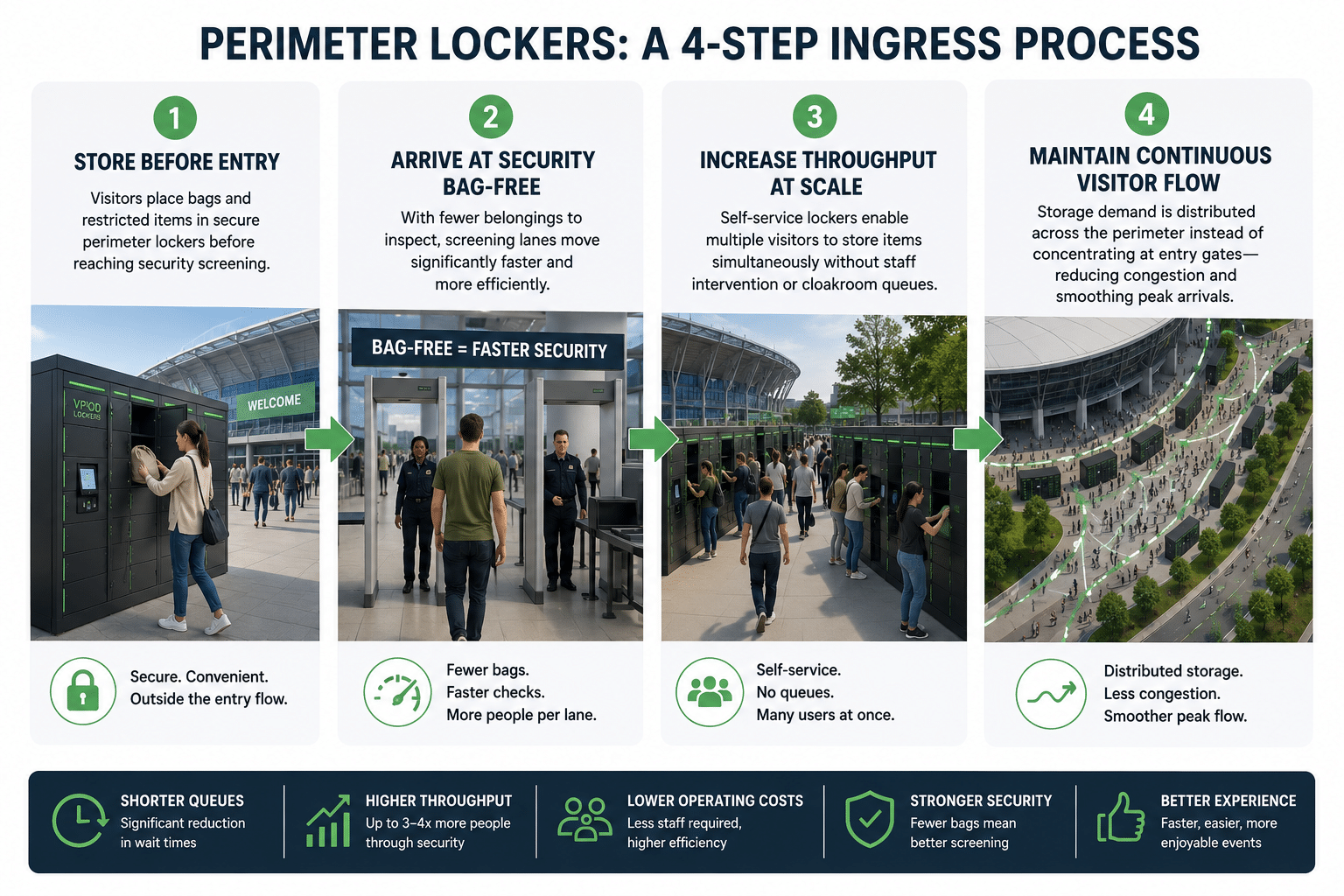
Pre Entry Smart Storage Lockers
To meet Martyn’s Law effectively, venues must:
- Reduce external crowd pressure points
- Increase ingress speed
- Minimise friction at security
This requires pre-entry solutions, not just better checks.
Pre-Entry Smart Locker Systems
Smart lockers enable:
Removal of bags before security
- Faster screening
- Reduced queue buildup
Elimination of cloakroom congestion
- No manual handling
- No secondary queues
Reduced external crowd density
- Faster movement into secure zones
Improved compliance alignment
- Lower vulnerability at entry points
Operational Impact
With a redesigned ingress model:
- Security throughput increases
- Queue lengths reduce
- External risk decreases
- Staff requirements decrease
- Compliance becomes achievable in practice
See: /solutions/event-smart-lockers/
Compare: /bag-searches-vs-pre-entry-locker-storage/
Explore: /martyns-law-event-compliance/
The Bottom Line
Martyn’s Law doesn’t just require better security.
It requires better systems.
At scale:
- Queues become risks
- Bottlenecks undermine compliance
- Legacy operations fail
The solution is not to add more controls.
It’s to redesign entry so security and flow work together.
Perimeter Smart Bag Lockers
Key Benefits of Understanding Why Martyn’s Law Compliance Breaks at Scale
Reduce Security Vulnerabilities Before They Form
Large external queues are one of the biggest hidden risks under Martyn’s Law. Understanding how compliance fails at scale helps venues redesign ingress before congestion becomes a security issue.
Benefits include:
- Reduced crowd density outside venues
- Faster movement into controlled zones
- Lower exposure at entry points
- Improved real-world risk mitigation
Improve Throughput Without Weakening Security
Most venues face a trade-off between speed and screening depth. Identifying the operational bottlenecks behind compliance failure allows venues to increase throughput while maintaining stronger protective measures.
This leads to:
- Shorter entry queues
- Faster security processing
- More efficient screening operations
- Better balance between safety and visitor experience
Lower Operational Costs and Staff Pressure
Traditional compliance methods often rely on adding more staff, temporary infrastructure, and manual processes. At scale, this becomes expensive and difficult to sustain.
A redesigned compliance model helps venues:
- Reduce manual bag handling
- Minimise cloakroom staffing
- Eliminate secondary congestion points
- Improve operational efficiency
Perimeter Smart Bag Lockers V Manual Storage




Proven in High-Turnover Event Environments
AFAS
AFAS Live — Scalable Event Locker Deployment
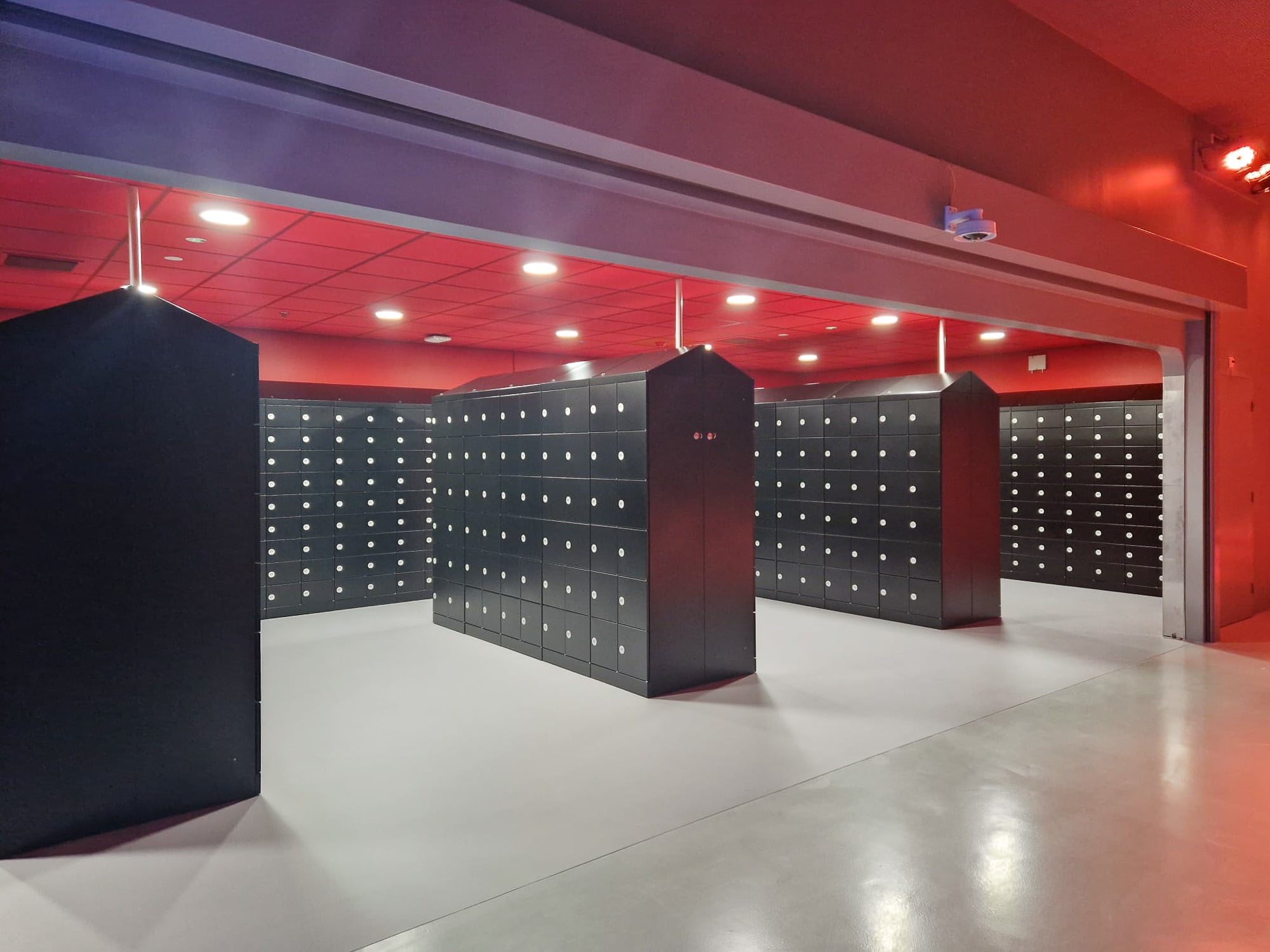
AFAS Live deployed CrowdStor lockers to manage high visitor volumes efficiently during concerts and large-scale events. The system improved entry and exit flow, reduced staff intervention, and delivered a seamless, cashless storage experience for guests.
Related Solutions
Who This Is For
Venue & Stadium Operations Directors / Event Security & Crowd Management Teams
Venue Operations Director
Area of Responsibility
- Overall event operations
- Ingress and egress management
- Crowd flow coordination
- Venue efficiency and staffing
- Operational compliance delivery
Primary Goals
- Keep people moving safely through the venue
- Reduce queue congestion at peak ingress times
- Maintain smooth event operations under high attendance
- Deliver compliance without damaging visitor experience
- Reduce operational overhead and staffing pressure
Pain Points They Need to Overcome
- Long entry queues creating operational risk
- Bottlenecks caused by bag searches and cloakrooms
- High staffing requirements during major events
- Delayed ingress affecting event timings
- Legacy systems that cannot scale efficiently
- Pressure to improve both security and throughput simultaneously