







What Are Order Handover Errors?
Order handover errors occur when:
- The wrong item is given to a customer
- The correct item cannot be found
- An order is handed to the wrong person
- Items are duplicated or missed
This is common in:
- Click & collect retail
- Food and beverage pickup
- Event merchandise stands
- Parcel and workplace collection
- Hotel and service environments
Why Order Handover Errors Increase at Scale
1. Volume Overwhelms Accuracy
As order volume increases:
- More items are processed
- More customers arrive simultaneously
- More handovers occur in a short time
This leads to:
- Reduced attention per transaction
- Increased likelihood of mistakes
The faster the system moves, the less accurate it becomes.
2. Manual matching is error prone
Most systems rely on:
- Order numbers
- Names
- Verbal confirmation
- Visual identification
At scale:
- Names are similar
- Numbers are misread
- Staff rush verification
This creates:
- Incorrect matches
- Wrong handovers
3. Retrieval Errors Lead to Wrong Items
When staff retrieve items:
- Storage may be disorganised
- Items may be moved
- Labels may be unclear
This results in:
- Wrong item selected
- Delays in finding correct orders
Related Links
4. Queue Pressure Reduces Verification
When queues build:
- Staff prioritise speed
- Verification steps are skipped
- Checks become inconsistent
Queues force speed — and speed reduces accuracy.
5. No System-Enforced Identity Control
In many environments:
- Anyone with basic information can collect
- Verification is informal
- Identity is not enforced
This leads to:
- Unauthorised collection
- Fraud risk
- Disputes
6. Multiple Orders Increase Complexity
Customers may:
- Collect multiple items
- Have split orders
- Return or exchange items
This increases:
- Handling complexity
- Error probability
- Processing time
Related Links
Compare event lockers vs cloakrooms

The Hidden Impact of Handover Errors
Customer Experience Suffers
Financial Loss Increases
Operational Efficiency Reduces
Security & Accountability Risks
Order Handover Errors: The Key Issues
The Core Problem: Accuracy Depends on Manual Processes
Order handover errors rarely happen because of a single mistake.
They occur when increasing order volumes, manual verification, and operational pressure make accurate handovers more difficult to maintain.
1. High Volumes Increase Error Risk
As more orders are processed, staff must complete more handovers in less time.
Impact: Increased likelihood of incorrect collections and processing mistakes.
Related Links
2. Manual Verification Creates Inconsistency
Many collection processes rely on names, order numbers, or verbal confirmation.
Impact: Higher risk of incorrect customer-to-order matching.
3. Queue Pressure Reduces Accuracy
Busy collection periods force staff to prioritise speed over verification.
Impact: More handover errors, disputes, and customer complaints.
4. Retrieval Complexity Slows Operations
Orders stored across multiple locations are harder to locate and verify.
Impact: Delays, incorrect item retrieval, and reduced operational efficiency.
Related Links
Compare staff cost vs locker automation ROI
Why Traditional Order Handover Processes Fail
Manual Matching Creates Errors
Most collection processes rely on staff matching orders to customers using names, order numbers, or verbal confirmation. As collection volumes increase, mistakes become more likely.
Common issues include:
- Incorrect order handovers
- Customer identification errors
- Misread order details
- Reduced collection accuracy
Queue Pressure Reduces Verification
During busy periods, staff are under pressure to process customers quickly. Verification steps are often rushed or inconsistently applied.
Challenges include:
- Skipped verification checks
- Increased handover mistakes
- Reduced accountability
- Greater fraud risk
Retrieval Processes Increase Complexity
Staff must locate, verify, and retrieve orders before completing each handover. As storage areas become busier, the risk of errors increases.
This results in:
- Wrong items being selected
- Delays finding orders
- Increased customer complaints
- Reduced operational efficiency
Compare equipment rental desk vs locker-based systems
Compare capex vs opex locker model
How Smart Lockers Eliminate Handover Errors
Smart lockers replace manual handovers with automated, system-controlled collection.
Benefits include:
- Verified customer-only access
- No manual order matching
- Defined storage locations
- Automated audit trails
- Improved collection accuracy
- Reduced operational risk
By replacing manual handovers with automated smart lockers, organisations can eliminate order handover errors, improve accountability, and create a faster, more accurate collection process.
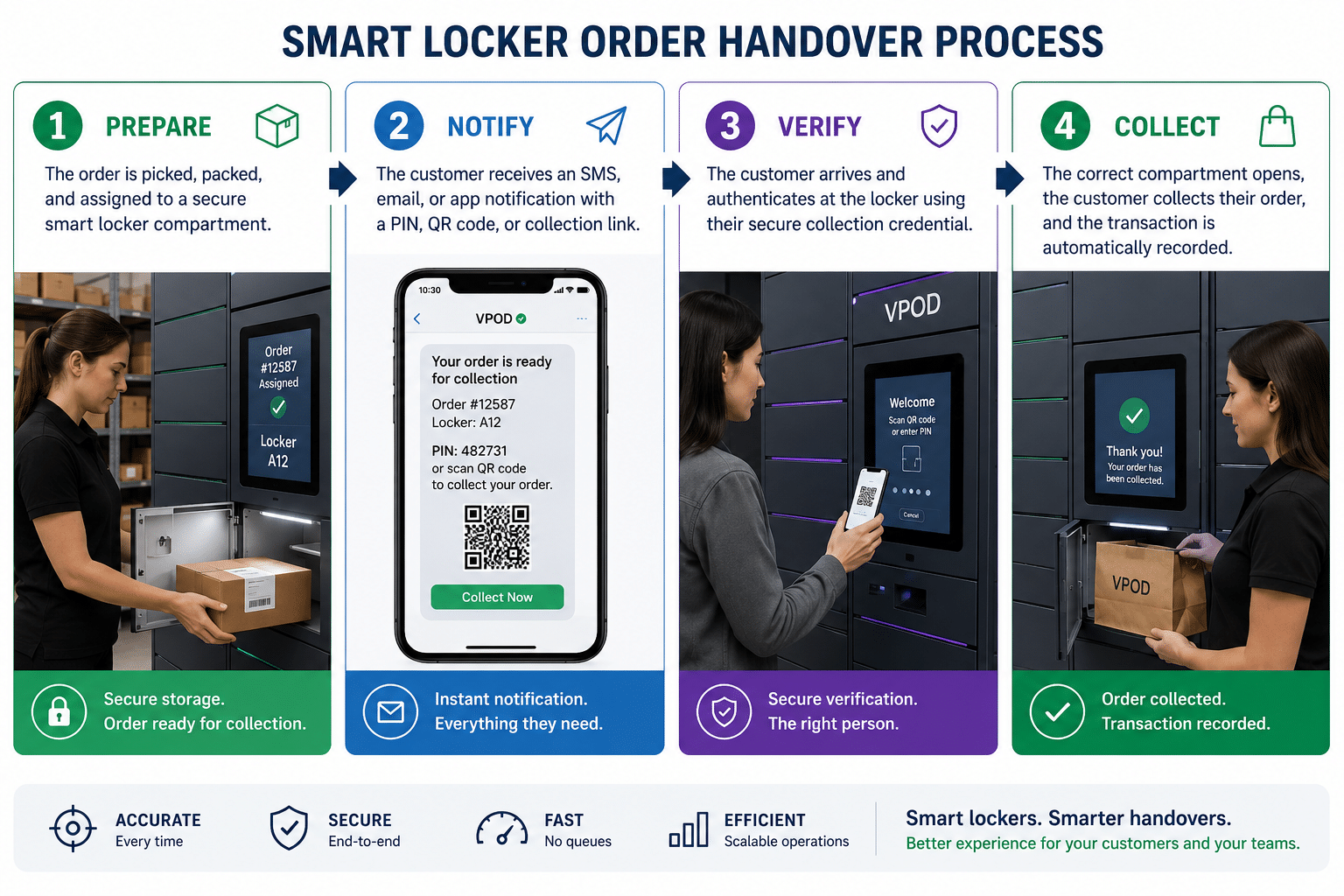
Smart Locker Order Handover Process
Manual Order Handover vs Smart Locker Collection Systems




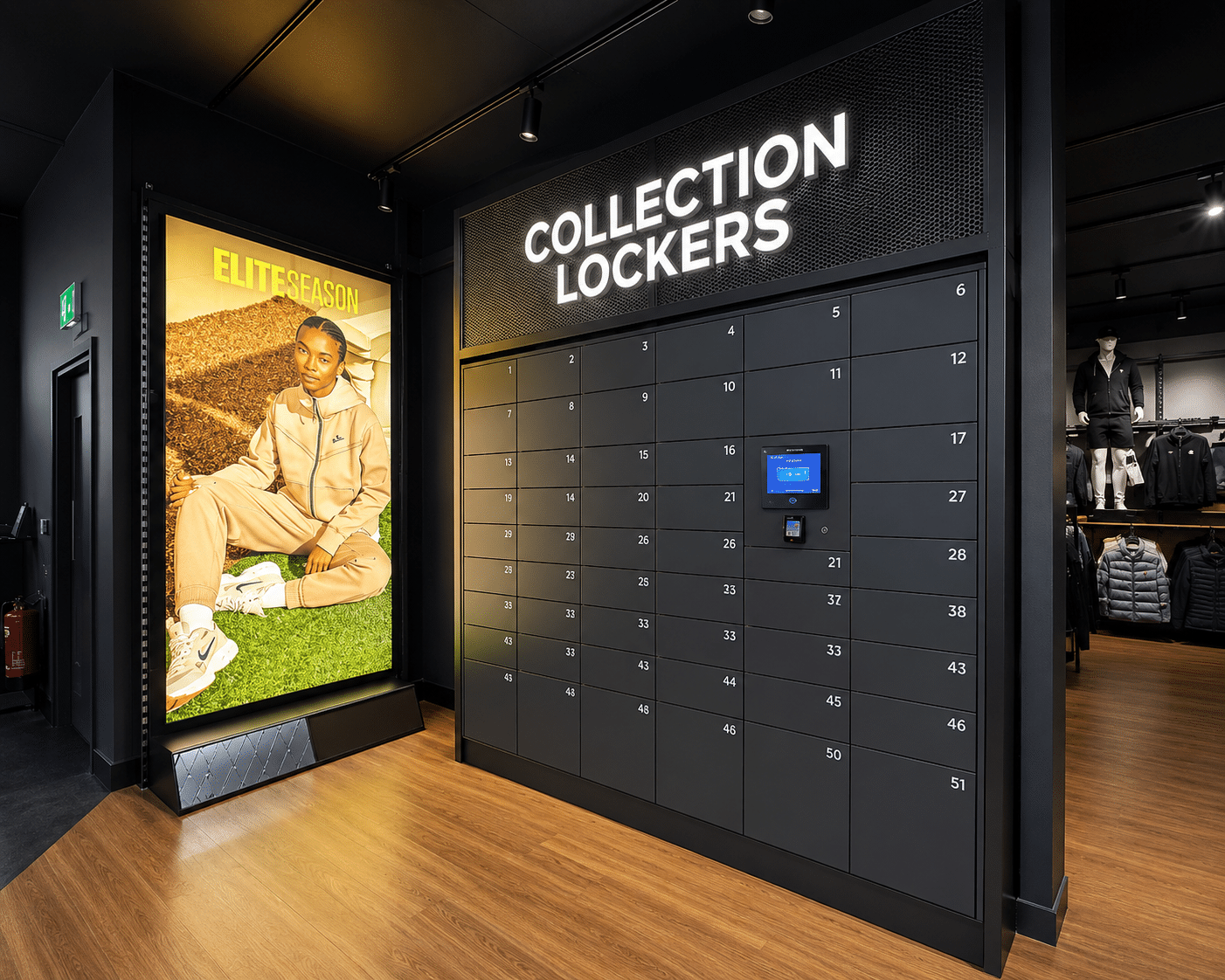
Case Study: Leading Footwear Retailer & VPOD
How Smart Lockers Eliminated Order Handover Errors
A leading UK footwear retailer implemented 51 smart locker compartments to automate click & collect collections and returns. By replacing manual customer handovers with a secure self-service process, the retailer improved collection accuracy, reduced operational pressure, and created a more scalable collection experience.
Key Results:
- 78% reduction in collection handling time
- Reduced reliance on manual handovers
- Improved collection accuracy and control
- Faster customer collections
- Enhanced customer experience
Who Is Affected by Order Handover Errors?
Store Operations / Collection Teams
Store Operations & Collection Teams
Key Challenges
- Maintaining collection accuracy
- Managing high collection volumes
- Verifying customer collections
- Reducing collection errors
- Improving operational efficiency
Operational Pain Points
- Time spent correcting mistakes
- Managing customer complaints
- Resolving collection disputes
- Increased operational pressure
- Reduced team productivity