Business outcome
What must improve: administration, utilisation, access, asset control, customer service, revenue or another measurable outcome?


We design and deliver integrated systems for streamlined check-ins, secure storage, and enhanced visitor management. Our trusted partner network and focus on sustainability, data security, and customer success drives us to provide the most effective and user-friendly solutions.


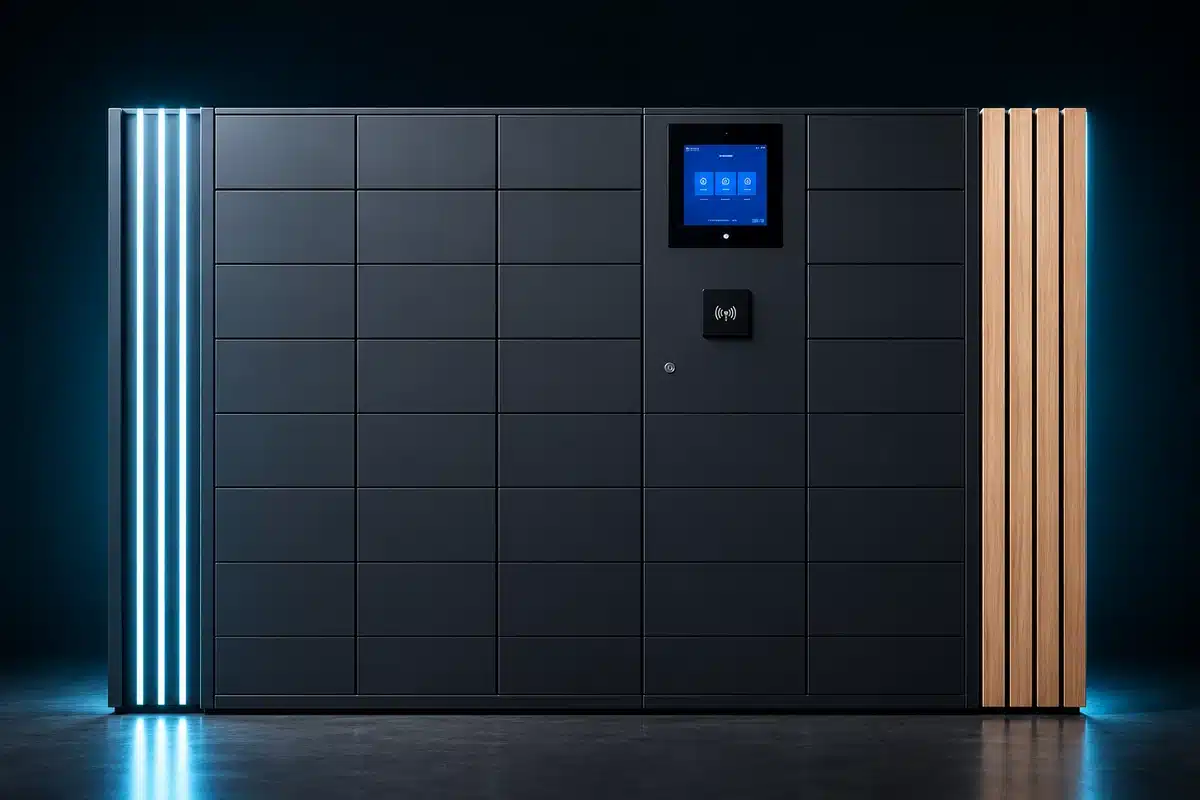
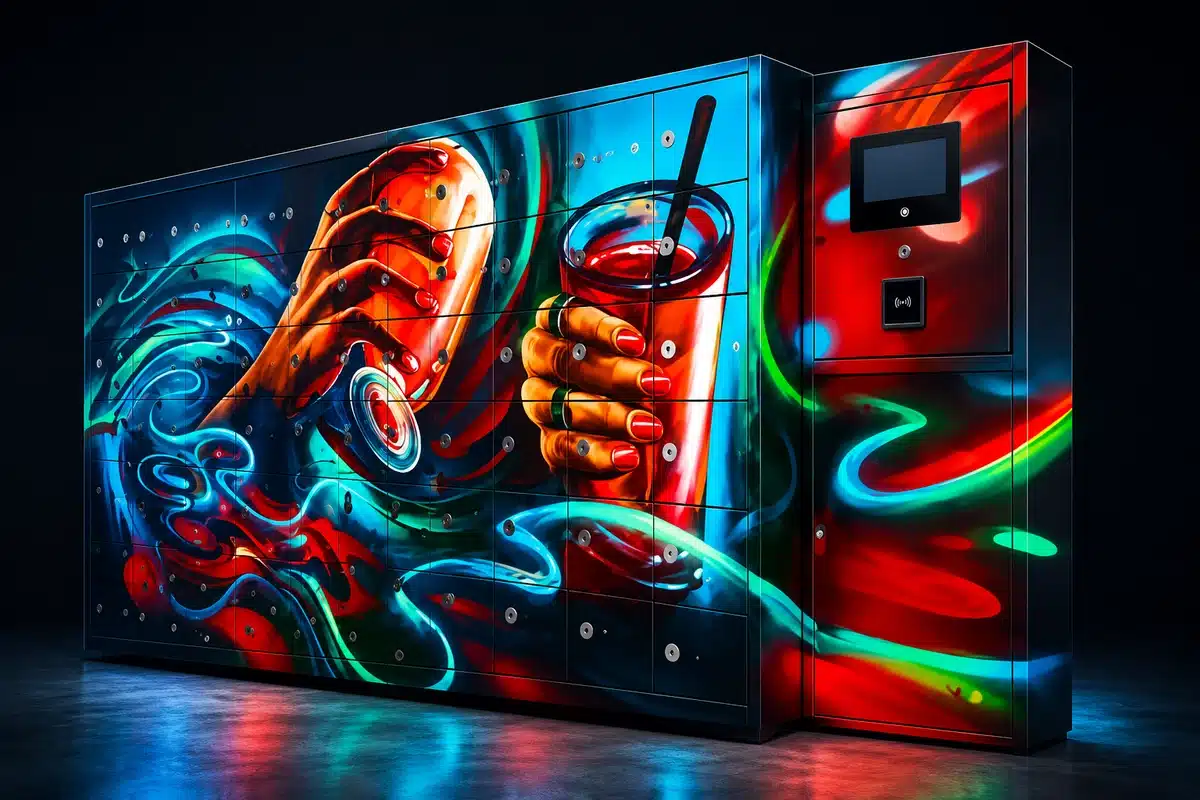



We design and deliver integrated systems for streamlined check-ins, secure storage, and enhanced visitor management. Our trusted partner network and focus on sustainability, data security, and customer success drives us to provide the most effective and user-friendly solutions.
We design and deliver integrated systems for streamlined check-ins, secure storage, and enhanced visitor management. Our trusted partner network and focus on sustainability, data security, and customer success drives us to provide the most effective and user-friendly solutions.
Enterprise procurement guide
Turn operational needs into clear, testable requirements for smart locker hardware, software, access, integration, security, deployment and support.
The specification principle
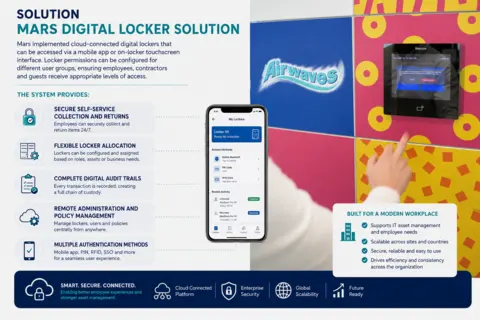
A strong enterprise smart locker specification begins with the transaction to be controlled: who deposits or stores an item, who retrieves it, how identity is confirmed, what information is recorded and what happens when the normal journey fails.
Only then should the buyer define cabinet construction, compartment mix, access devices, locker management software, integrations and service levels. This order gives suppliers room to propose an appropriate design while keeping the required outcome unambiguous.
If the organisation has not yet confirmed the category or budget, first review smart lockers versus traditional lockers, smart locker pricing factors and the ROI and total-cost framework.
Before writing requirements
What must improve: administration, utilisation, access, asset control, customer service, revenue or another measurable outcome?
Which storage, issue, return, delivery or collection journeys are included—and explicitly excluded?
Employees, visitors, customers, couriers, contractors and administrators may require different credentials and permissions.
Which locations are in the first phase, what differs between them and what future scale should the platform accommodate?
Identify the operational owner plus facilities, IT, security, procurement, finance and accessibility stakeholders.
Requirements architecture
Purpose, workflows, locations, volumes, constraints, success measures and exclusions.
User groups, deposit and collection steps, credentials, notifications, exceptions and accessibility.
Demand basis, peak concurrency, door quantities, compartment sizes, banks, growth and space constraints.
Materials, dimensions, locks, finishes, environment, power, ventilation, charging and specialist accessories.
Authentication methods, permissions, fixed or flexible use, reservation, time limits, release and overrides.
Roles, configuration, estate view, live status, reporting, alerts, audit records and data export.
Connected systems, use cases, data ownership, interfaces, events, error handling, testing and support boundaries.
Physical access, identity, permissions, logging, privacy, hosting, retention, assurance and incident responsibilities.
Surveys, dependencies, logistics, installation, configuration, testing, training, pilot, handover and acceptance.
Availability, support hours, response targets, maintenance, parts, updates, pricing basis and contract exit.
Operational workflow
Describe the normal journey and the important exceptions. A feature matters only when it supports one of these steps.
Physical specification
Define the smallest, largest and most common items, then size the compartment mix around actual demand. Include door clear opening, internal usable dimensions and any charging, ventilation or weight requirement that affects safe operation.
The environment determines whether steel, compact laminate, wood-based or outdoor construction is appropriate. Record moisture, cleaning, temperature, impact, fire strategy, accessibility, floor loading, power, network and surrounding-furniture constraints for each site.
Review Vflex cabinet and configuration options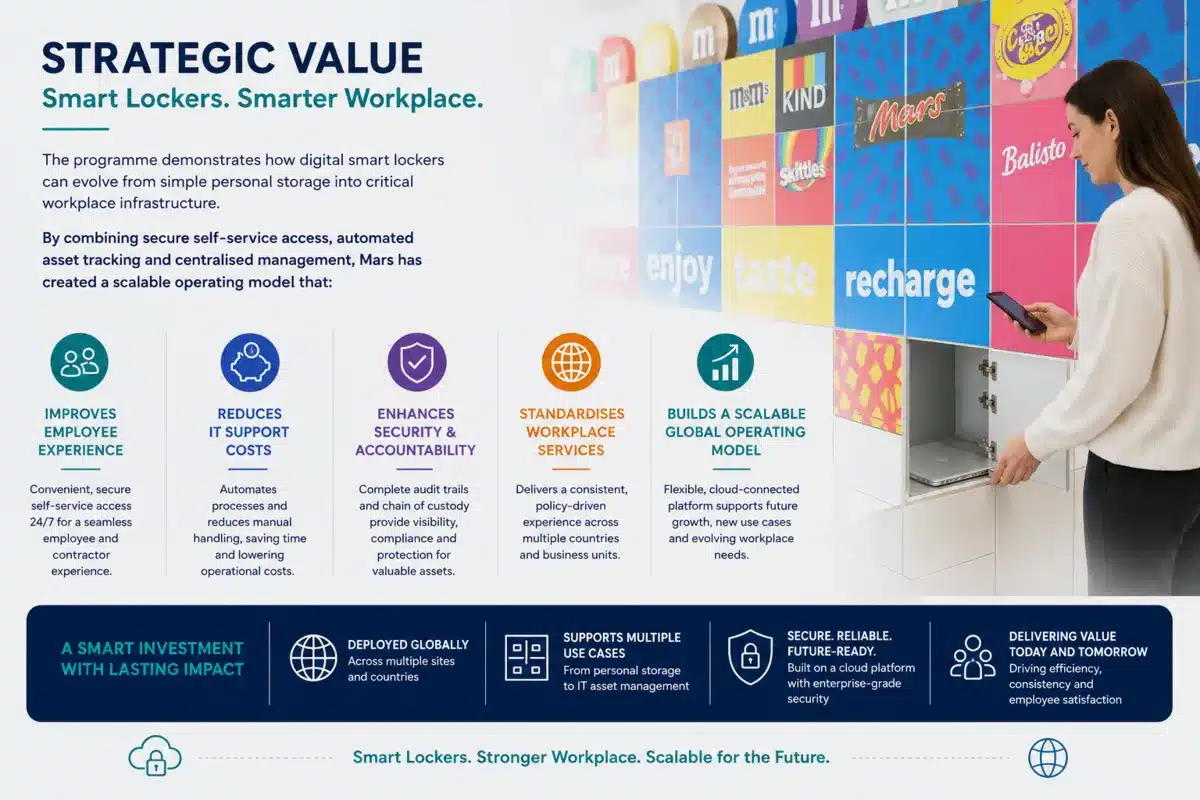
Technical and operational requirements
| Area | Requirement questions | Evidence to request |
|---|---|---|
| Access | Which credentials, identity sources, time rules, offline behaviours and override paths are required? | Live demonstration, supported-device list and documented exception behaviour. |
| Allocation | Fixed, flexible, temporary, reserved, team, asset-led or mixed? When is a locker released? | Configured workflow demonstration using representative users and rules. |
| Administration | Which roles can view, assign, open, override, configure and report across which sites? | Role-and-permission matrix plus administrator interface demonstration. |
| Reporting | Which live states, historic events, utilisation measures, exports and retention periods are needed? | Sample reports, field definitions, filters, export formats and retention statement. |
| Integration | Which system initiates each event, what data is exchanged and who owns failures? | Architecture, interface documentation, test approach and responsibility matrix. |
| Security | How are access, administration, data, updates, vulnerabilities and incidents controlled? | Security responses, certifications or assurance evidence, policies and data-flow detail. |
| Availability | What service availability, monitoring, backup, recovery and local continuity are required? | Service description, availability commitment, recovery approach and escalation route. |
| Support | Who supports users, hardware, software and integrations, during which hours and to what targets? | Service-level schedule, support boundaries, escalation model and parts coverage. |
Writing requirements
Assign every requirement a unique identifier, priority, response format and acceptance method. Separate mandatory requirements from scored preferences so that suppliers know which conditions determine compliance.
Avoid words such as “easy”, “robust”, “real time” or “seamless” unless the specification defines how they will be assessed.
Supplier evaluation
The example weighting below is illustrative. Procurement should agree weights and pass/fail requirements before supplier responses are opened.
Apply mandatory legal, security, site, interoperability or service requirements before weighted scoring where appropriate.
Differentiate a stated capability from a demonstrated workflow, reference deployment or contractually committed service.
Give shortlisted suppliers the same representative user journeys, exception cases and integration assumptions.
Procurement risks
Quantity without demand, item dimensions and allocation rules can over- or under-size the system.
A named reader, app or terminal may constrain the design without explaining the user or security requirement.
“Must integrate” does not define the systems, events, data, ownership, testing or operational support needed.
Normal journeys may demo well while lost credentials, faults, uncollected items and outages remain unresolved.
Software, integration, internal administration, maintenance and change belong in the total-cost comparison.
If success is not defined in the procurement documents, disagreement is more likely during commissioning.
Supplier brief checklist
Problem, objectives, sponsor, stakeholders and target timescale.
Normal and exception flows for every in-scope user group.
Users, items, transactions, peaks, concurrency, growth and seasonality.
Locations, drawings, photographs, dimensions, access, power and environment.
Identity, access, workplace, service, parcel, payment and other relevant systems.
Security, privacy, accessibility, legal, data and internal approval requirements.
Pilot, rollout, testing, training, acceptance, support and change control.
Compliance matrix, assumptions, exclusions, evidence, timescale and complete commercial schedule.
Bring the requirement before the product list
Share your workflows, users, demand, sites, access methods and connected systems. Vpod can help translate them into an appropriate locker, software, integration and deployment scope.