








Trusted by these customers






- Reduce Asset Management Labour by 30–70% Asset lockers automate issue, return, tracking and audit processes, reducing manual administration and freeing operational teams for higher-value activities.
- Reduce Asset Loss by 70–95% Every transaction is linked to a user, time and location, creating full accountability and significantly reducing misplaced, unreturned or lost equipment.
- Improve Asset Availability by 20–50% Real-time visibility ensures assets can be located, accessed and returned faster, reducing downtime and improving utilisation across teams and sites.
- Deliver 100% Auditable Asset Tracking Automated digital audit trails provide complete visibility of asset movement, supporting compliance, governance, investigations and operational reporting.
Common Persona Challenges

Rising Labour Costs
- Increasing operational headcount to manage growth
- Manual administration consuming valuable staff time
- Difficulty scaling without adding resources
- Pressure to improve productivity and efficiency
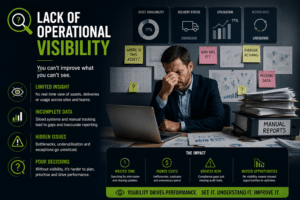
Lack of Operational Visibility
- Limited insight into asset usage and availability
- Poor visibility of deliveries, equipment and workflows
- Inconsistent reporting across sites
- Difficulty identifying inefficiencies and bottlenecks
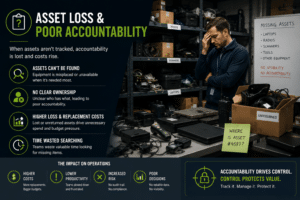
Asset Loss and Poor Accountability
- Equipment cannot be located when needed
- Lost, misplaced or unreturned assets
- No clear ownership or chain of custody

Operational Bottlenecks
- Reception teams handling deliveries manually
- Staff interruptions caused by parcel collections
- Queues and congestion during peak periods
- Delays accessing equipment or resources
The Issue At small scale, asset tracking is manageable. At large scale, it becomes a control failure.
Why Asset Availability Issues Break at Scale
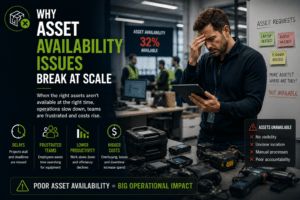
Asset management appears simple at small scale.
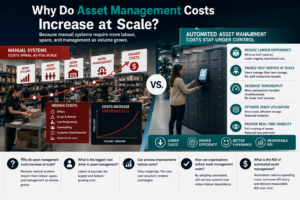
At scale, asset management doesn’t just become expensive — it becomes inefficient by design.And most organisations don’t realise the true cost until it’s already embedded in operations.
Why Manual Asset Logging Breaks at Scale
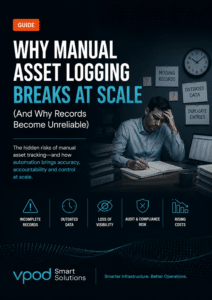
Manual asset logging is often seen as a low-risk process.
But as organisations track more assets, maintaining accurate asset records becomes increasingly difficult.
Why Asset Management Becomes an Operational Risk
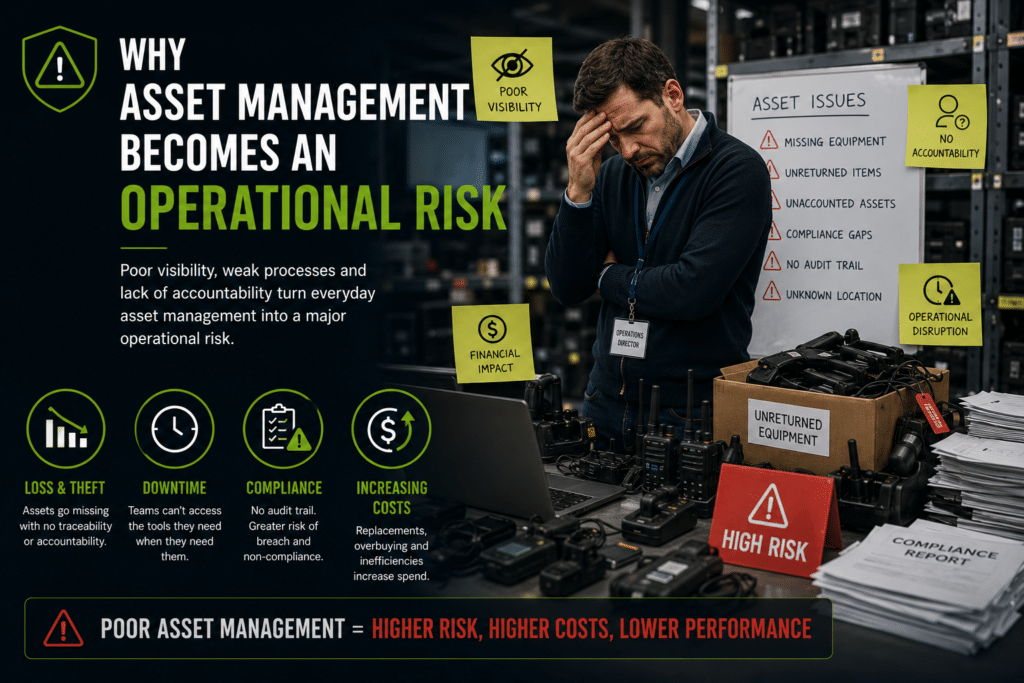
Operations teams encounter problems when:
- Equipment is shared across shifts or teams
- Manual sign-out processes are ignored or bypassed
- Assets are returned late or not at all
- There is no visibility into usage patterns
Over time, this leads to loss, downtime, and frustration.


How Asset Lockers for Operations Directors Improve Control
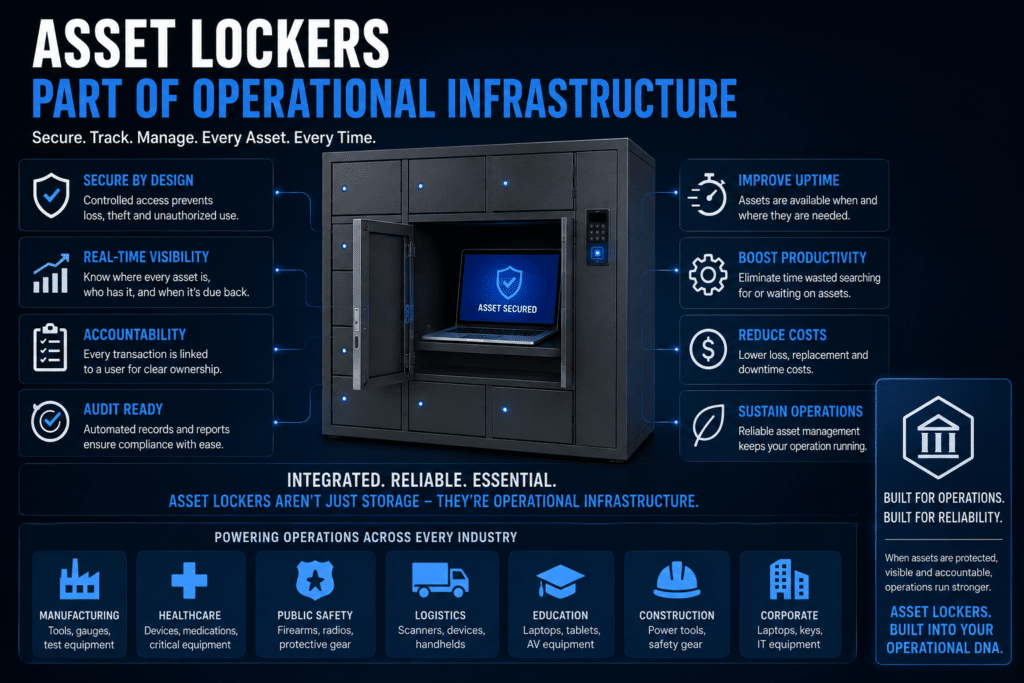
Access is restricted to authorised users
Every pickup and return is logged automatically
Availability is visible in real time
Policies are enforced without supervision
Locker Systems as Part of An Operational Strategy
Manual Asset Tracking v Asset Lockers
Managing Assets Across Shifts & Sites
Guide : Asset Tracking Challenges at Scale
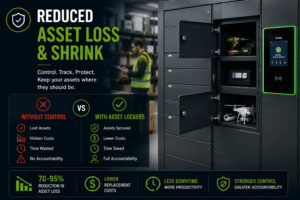
Reduced Asset Loss & Shrink
Every transaction is linked to a user, time and location, creating complete accountability and significantly reducing lost or unreturned equipment.
Higher Equipment Availability
Real-time visibility ensures assets can be located, returned and redeployed faster, increasing availability across teams and locations.
Less Downtime Caused by Missing Assets
Employees spend less time searching for equipment and more time performing productive work.
More Predictable Daily Operations
Standardised workflows remove uncertainty, helping teams plan and execute operations more consistently.
Lower Operational Workload
Automated issue, return and reporting processes reduce manual administration and free staff for higher-value tasks.
Improved Compliance & Audit Readiness
Automatic digital audit trails provide complete traceability for governance, security and compliance requirements.
70–95% reduction in asset loss
30–70% reduction in manual administration
20–50% increase in asset availability
30–70% reduction in equipment downtime
100% auditable asset transactions
Real-time visibility across assets, users and locations
Find out more →
Outcomes Operations Directors Care About
Reduced asset loss and shrink
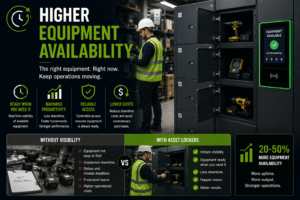
Higher equipment availability
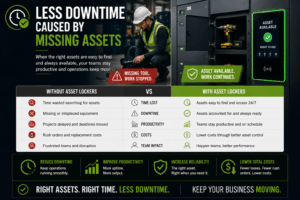
Less downtime caused by missing assets
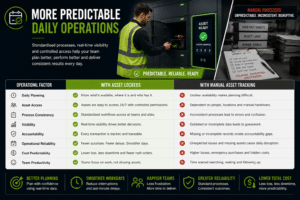
More predictable daily operations
Measurable Accountability & Utilisation Control

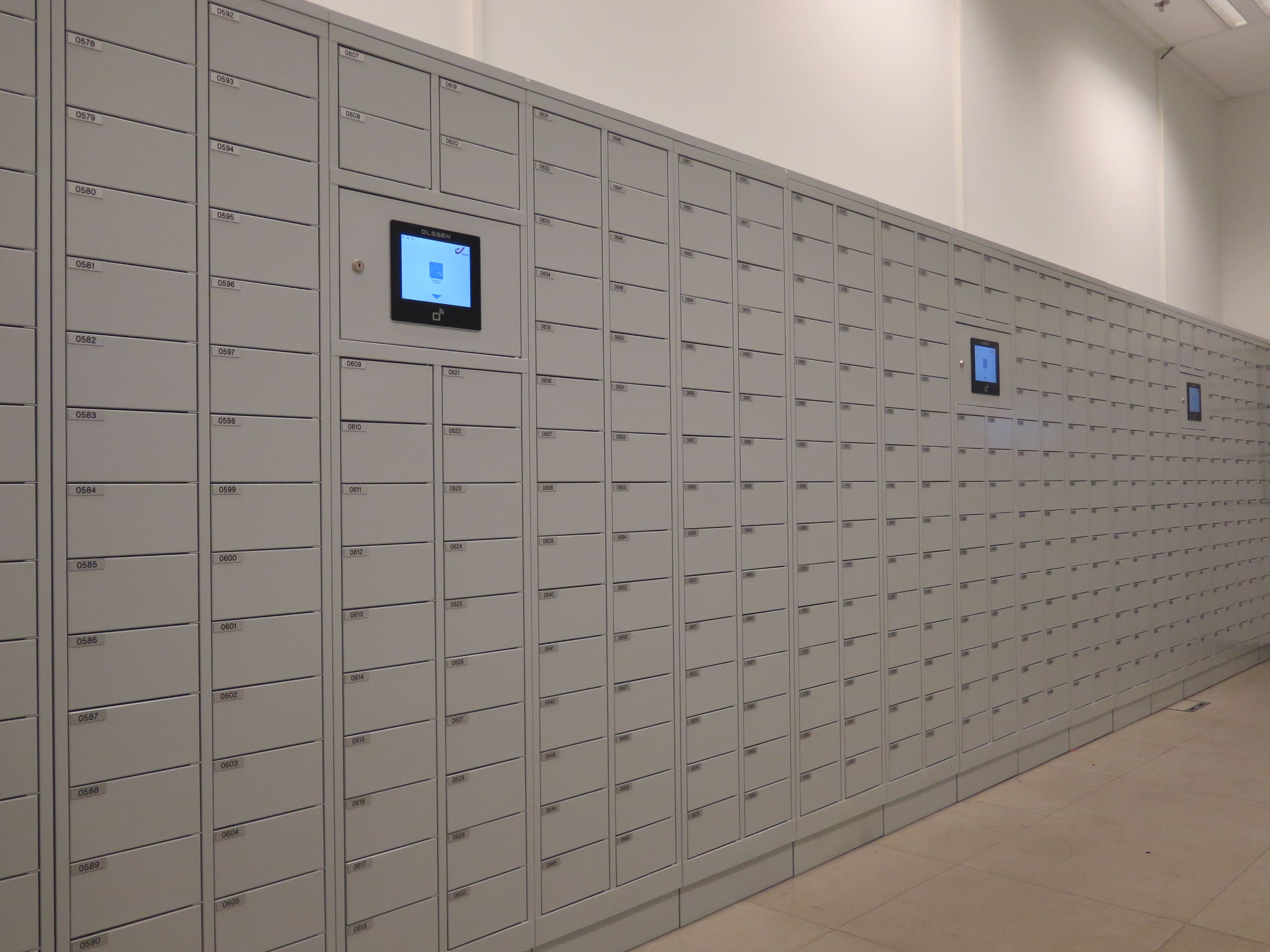
See How Asset Lockers Operate in Practice
Explore Operational Challenges
-
Reduce asset loss
-
Improve equipment availability
-
Enforce asset accountability
-
Gain visibility into asset usage
Asset Locker Efficiency Summary
Asset lockers automate the issue, return, tracking and control of shared equipment, tools, devices and operational assets. By replacing manual asset management processes, organisations gain greater visibility, accountability and operational efficiency.
Typical Efficiency Improvements
| Area | Typical Improvement |
|---|---|
| Asset Loss Reduction | ↓ 70–95% |
| Manual Administration | ↓ 30–70% |
| Asset Availability | ↑ 20–50% |
| Asset Search Time | ↓ 80–95% |
| Equipment Downtime | ↓ 30–70% |
| Compliance Reporting Effort | ↓ 70–95% |
| Audit Trail Accuracy | 100% Transaction Tracking |
| Asset Utilisation | ↑ 20–40% |
| Equipment Retrieval Time | ↓ 70–95% |
| Operational Visibility | Real-Time |