

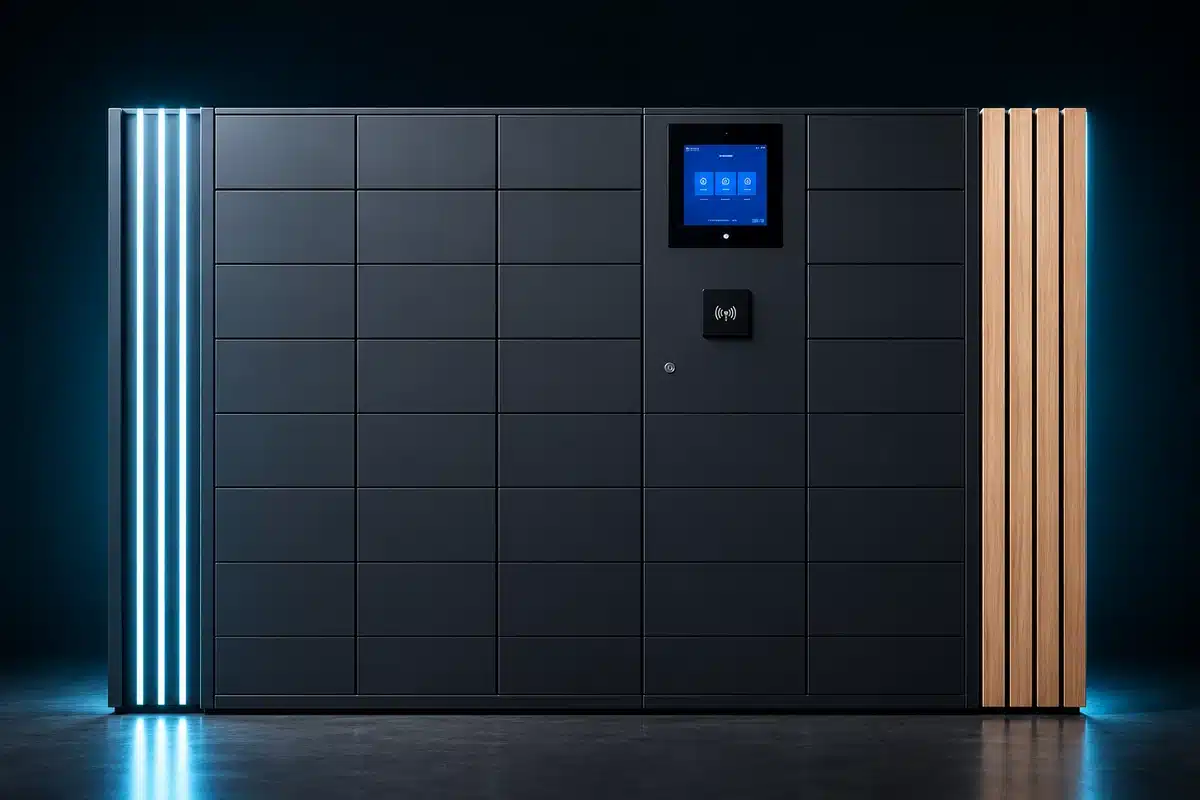
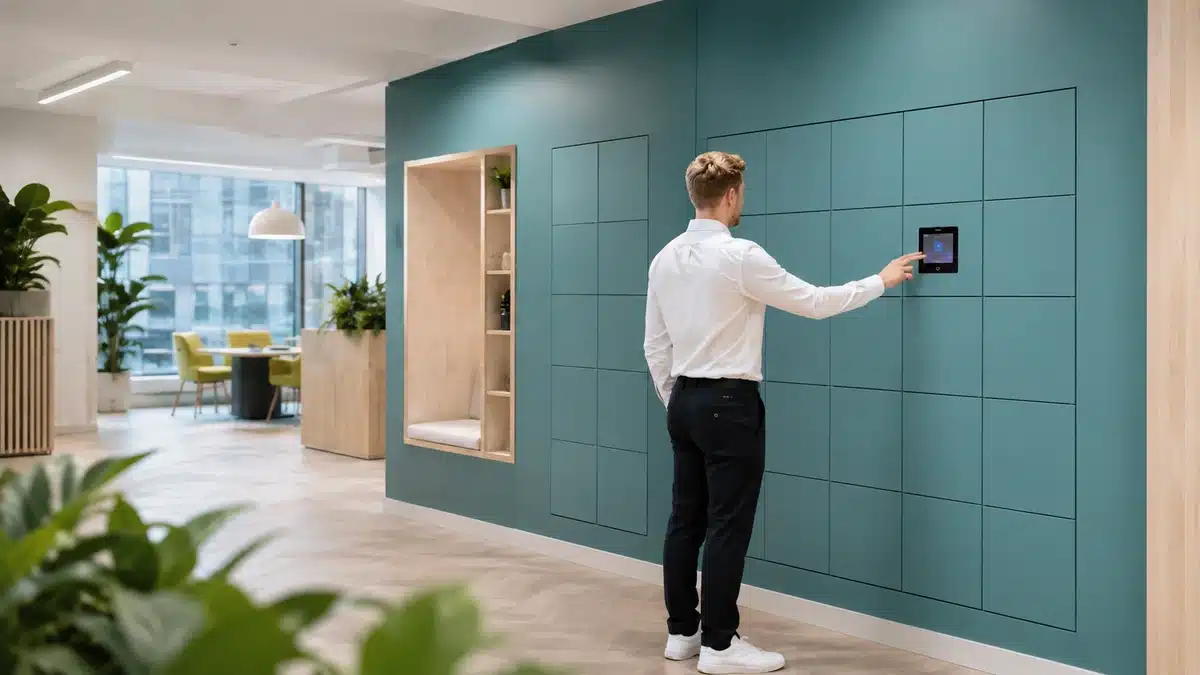


Visitor storage is a common challenge for venues, attractions and leisure destinations. Guests may arrive with bags, coats, luggage or personal belongings they do not want — or are not permitted — to carry throughout their visit.
Smart lockers provide a self-service alternative to traditional cloakrooms, but introducing new locker infrastructure normally requires upfront investment.
Vpod GainShare offers another option.
It is a revenue-share model that allows suitable venues to introduce paid visitor storage without making a conventional upfront locker purchase. Vpod funds and manages the agreed deployment, visitors pay to use the lockers, and eligible revenue is shared under an agreed commercial model.
A Different Approach to Paid Visitor Storage
The model is designed for locations where there is genuine demand for paid short-term storage.
Rather than purchasing the smart locker infrastructure upfront, qualifying venues can work with Vpod under a funded arrangement covering the agreed locker system, software and support.
Visitors use the lockers as a self-service storage service, paying digitally before receiving access to their allocated locker.
The exact commercial structure depends on the venue, expected demand, locker capacity, pricing and operating requirements.
How the Model Works
A project starts by understanding how visitors would actually use the service.
Vpod looks at factors including:
- visitor numbers and footfall patterns;
- event frequency or operating days;
- existing cloakroom or storage demand;
- potential locker locations;
- expected pricing;
- realistic utilisation.
Once the opportunity has been assessed, locker capacity and the customer journey can be planned around the venue.
Visitors can then select and pay for storage digitally, while connected smart locker software provides visibility of usage, transactions and system performance.
Eligible revenue generated through the service is then shared according to the agreed commercial terms.
A Funded Route to Smart Locker Deployment
For approved deployments, Vpod can fund the agreed smart locker infrastructure instead of requiring the venue to purchase the system upfront.
However, a revenue-share approach is not automatically suitable for every location.
A successful paid storage service depends on real visitor demand. A venue may have high footfall but limited need for storage, while another location may experience much stronger demand because of its audience, bag policy or visitor journey.
This is why the process starts with the business case rather than simply looking at available floor space.
Where Can It Work?
A funded smart locker model can be suitable for arenas, stadiums, attractions, entertainment venues, leisure destinations and other high-footfall environments where visitors regularly need temporary secure storage.
Useful signs of existing demand can include:
- busy cloakrooms;
- regular luggage or storage enquiries;
- oversized bags arriving at security;
- visitors carrying coats or belongings throughout their visit;
- limited existing storage options.
Locker location also plays an important role. Storage positioned naturally within the visitor journey is more likely to be used than lockers placed simply where spare floor space is available.
The Vpod GainShare Buyer’s Guide explores these considerations in more detail, including demand, placement, pricing and commercial responsibilities.
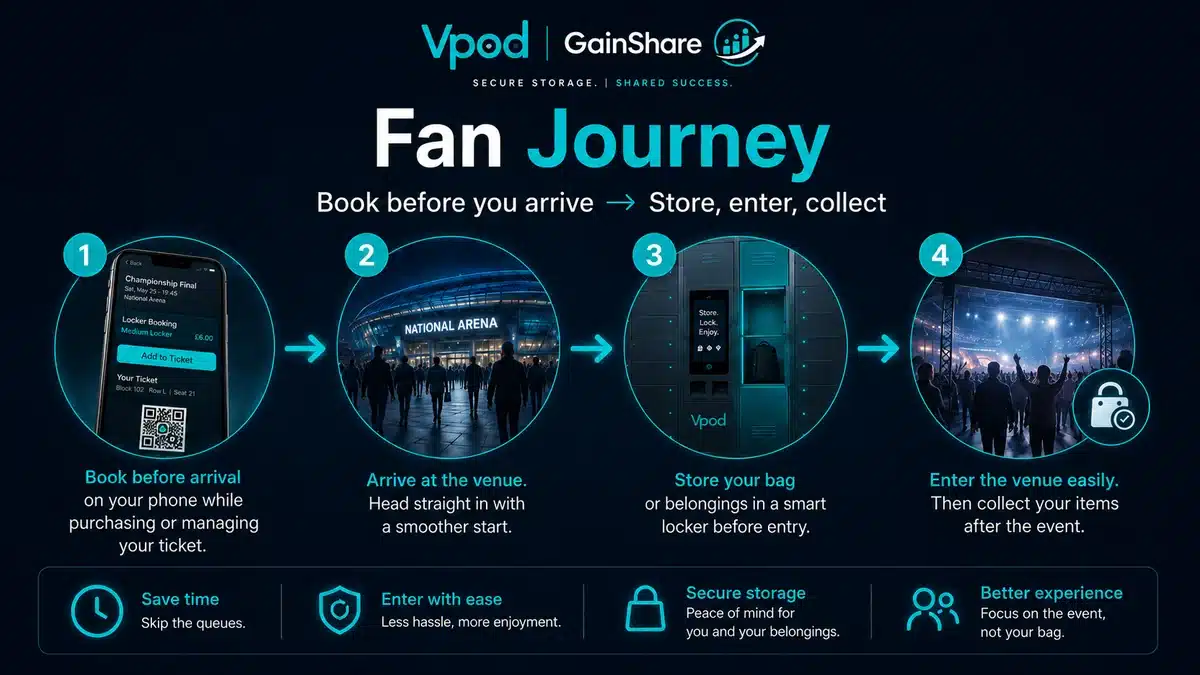
A Simple Self-Service Visitor Journey
The aim is to make temporary storage as straightforward as possible.
Depending on the deployment, visitors can select a locker, make a digital payment and receive the credentials needed to access it. The service can operate through options including a mobile browser or locker touchscreen.
This reduces the need for staff to manage every successful storage transaction manually.
For operators, connected locker software provides data on usage, occupancy and transactions, making it easier to understand how the service is performing.
In Practice: Flip Out Lakeside
Flip Out Lakeside provides a practical example of the approach.
Vpod deployed 105 smart lockers as part of a six-month proof of concept, with the published case study showing £0 upfront capital from Flip Out.
The deployment gave visitors a self-service storage option while allowing the venue to test both the customer experience and commercial opportunity without purchasing the locker infrastructure upfront.
It demonstrates the principle behind Vpod GainShare: solve an existing visitor-storage need first, then build a commercial model around genuine demand.
Turning Visitor Storage Into Revenue
Smart lockers can generate revenue when visitors pay to use them for temporary storage.
The amount generated depends on several factors, including the number of lockers available, price per use, operating frequency and the percentage of capacity that is actually used.
Placement and promotion also matter. A storage service that visitors know about before arriving may perform very differently from one they only discover once inside the venue.
Estimating the Revenue Opportunity
There is no single revenue figure that applies to every venue.
Performance depends on factors including:
- number of locker doors;
- events or operating days;
- visitor price per use;
- expected utilisation;
- locker placement;
- visitor awareness and promotion.
A venue operating frequent events with strong storage demand will have a very different revenue profile from a seasonal attraction with occasional peaks.
The Vpod GainShare Calculator allows venues to model locker quantity, event frequency, price and expected utilisation to create an indicative commercial scenario.
This provides a more useful starting point than relying on another venue’s results.
Choosing the Right Commercial Model
Revenue sharing is only one way to introduce smart lockers.
For some venues, purchasing or leasing the system may provide a better long-term fit. Others may find that visitor demand does not justify a paid locker service at all.
The right approach depends on visitor behaviour, available capital, commercial priorities, expected utilisation and how the service fits within the wider customer journey.
Venues considering smart lockers should therefore compare buying, leasing and revenue-share models before deciding which approach makes the strongest commercial and operational sense.