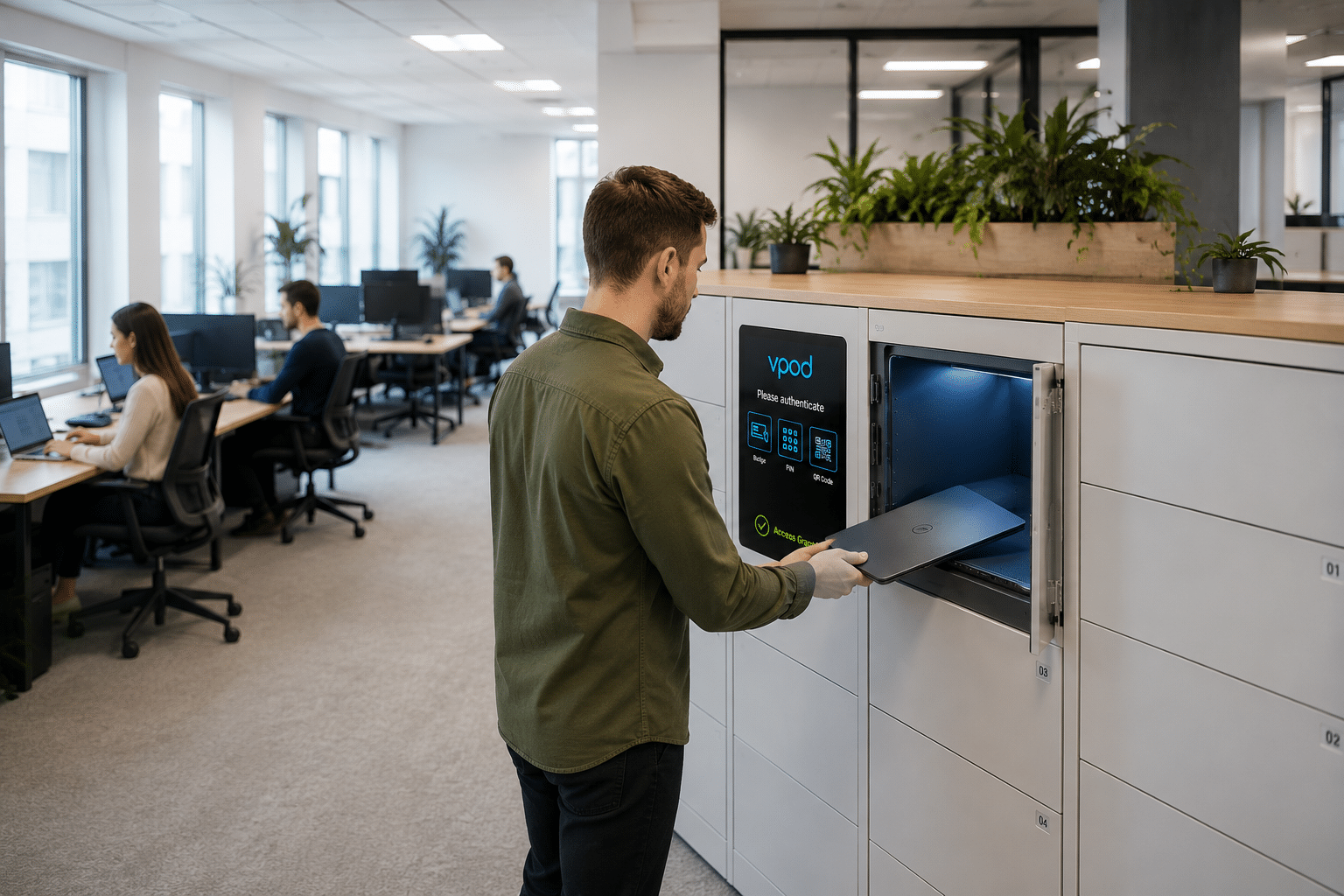


What Is Visitor Belongings Security Risk?
Visitor belongings security risk refers to:
- Items entering a venue without control or visibility
- Lack of secure storage for those items
- Inability to track or manage belongings once inside
This affects:
- Stadiums and arenas
- Events and festivals
- Attractions and leisure venues
- Corporate offices
- Public buildings
Why Belongings Become a Security Risk at Scale
1. Items Enter Without Screening or Control
In many environments:
- Bags are not consistently checked
- Belongings are brought in freely
- Security teams are under pressure
At scale:
- Screening becomes slower
- Checks become inconsistent
- Risk increases
The more items entering, the harder it is to control them.
2. No Secure Storage Infrastructure
When venues lack proper storage:
- Visitors keep belongings with them
- Items are left unattended
- Informal storage areas emerge
This leads to:
- Security blind spots
- Increased risk of suspicious items
- Reduced control over the environment
Cloakroom vs Locker for Event Security
3. Cloakrooms Create New Vulnerabilities
Traditional cloakrooms:
- Rely on manual processes
- Handle high volumes of items
- Lack real-time tracking
At scale, this results in:
- Lost or misplaced items
- Unverified handovers
- No audit trail
Manual storage does not provide security — it creates uncertainty.
4. No Visibility of Stored Items
Most venues cannot answer:
- What items are stored?
- Who owns them?
- When were they stored or collected?
Without visibility:
- Risk cannot be assessed
- Incidents cannot be traced
- Security teams operate blind
5. Unattended Items Increase Risk
When storage fails:
- Bags are left in public areas
- Items are abandoned
- Security teams must respond to unknown risks
This creates:
- Disruption
- Evacuation risk
- Increased operational pressure
6. Peak Entry Periods Overwhelm Security
At peak times:
- High volumes of visitors arrive simultaneously
- Bag checks slow entry
- Security teams prioritise throughput
This results in:
- Reduced screening effectiveness
- Increased risk exposure
Why Cloakroom Inefficiency Breaks Events at Scale (And What Replaces It)
7. No Audit Trail or Accountability
In many systems:
- No record of who stored what
- No tracking of item movement
- No accountability
This means:
- Incidents cannot be investigated
- Responsibility is unclear
Event Storage Solutions | Cloakrooms vs Lockers vs Bag Policies

The Hidden Impact of Belongings Security Risks
Increased Security Risks
Operational Disruption
Poor Visitor Experience
Increased Liability
Visitor Belongings Security Risk: The Key Issues
The Core Problem: Venue Security Depends on Controlled Storage
Visitor belongings security risks rarely occur because of a single unattended item.
They happen when increasing visitor numbers, unsecured belongings, and limited storage controls reduce visibility and create security vulnerabilities across the venue.
1. Unsecured Belongings Increase Security Risk
Many visitors carry bags, luggage, and personal items throughout the venue without secure storage options.
2. Manual Cloakrooms Create Accountability Gaps
Traditional cloakrooms rely on manual handovers, paper tickets, and staff-managed processes.
Impact: Lost items, collection disputes, and limited auditability.
3. Limited Storage Capacity Creates Operational Challenges
During busy periods, storage facilities can quickly reach capacity.
Impact: Overflowing storage areas, longer queues, and increased pressure on staff.
Why Perimeter Security Crowd Risk Breaks at Scale | Event Security Flow
Why Visitor Belongings Security Risk Increases at Scale
Unsecured Belongings Reduce Venue Control
Many venues allow visitors to carry bags, luggage, and personal belongings throughout the site without secure storage options.
Common issues include:
- Unattended items
- Limited visibility of belongings
- Increased security exposure
- Reduced operational control
Explore venue locker systems for recurring events
Calculate long-term storage ROI for venues
Limited Visibility Increases Security Risk
Most venues lack real-time visibility into what items are being stored, who owns them, and where they are located.
Challenges include:
- Unknown item ownership
- No tracking of stored belongings
- Reduced accountability
- Difficult incident investigations
Peak Visitor Volumes Create Operational Pressure
Large numbers of visitors often arrive within short periods, bringing bags and personal belongings that require screening or storage.
This results in:
- Longer security queues
- Slower venue entry
- Increased pressure on staff
- Reduced screening effectiveness
See how Martyn’s Law explains crowd flow, queue exposure, and operational risk
How Smart Lockers Reduce Visitor Belongings Security Risk
Smart locker systems transform visitor belongings from a security concern into a controlled and trackable process.
Benefits Include:
- Secure pre-entry storage
- Reduced bag volume inside venues
- Real-time item tracking
- Full audit trail
- Improved accountability
- Faster visitor entry
By providing secure storage before entry, smart lockers help venues improve security, reduce operational risk, and enhance the visitor experience without increasing staffing requirements.
See the full comparison between event lockers and cloakrooms
How Smart Event Lockers Reduce Visitor Belongings Security Risk
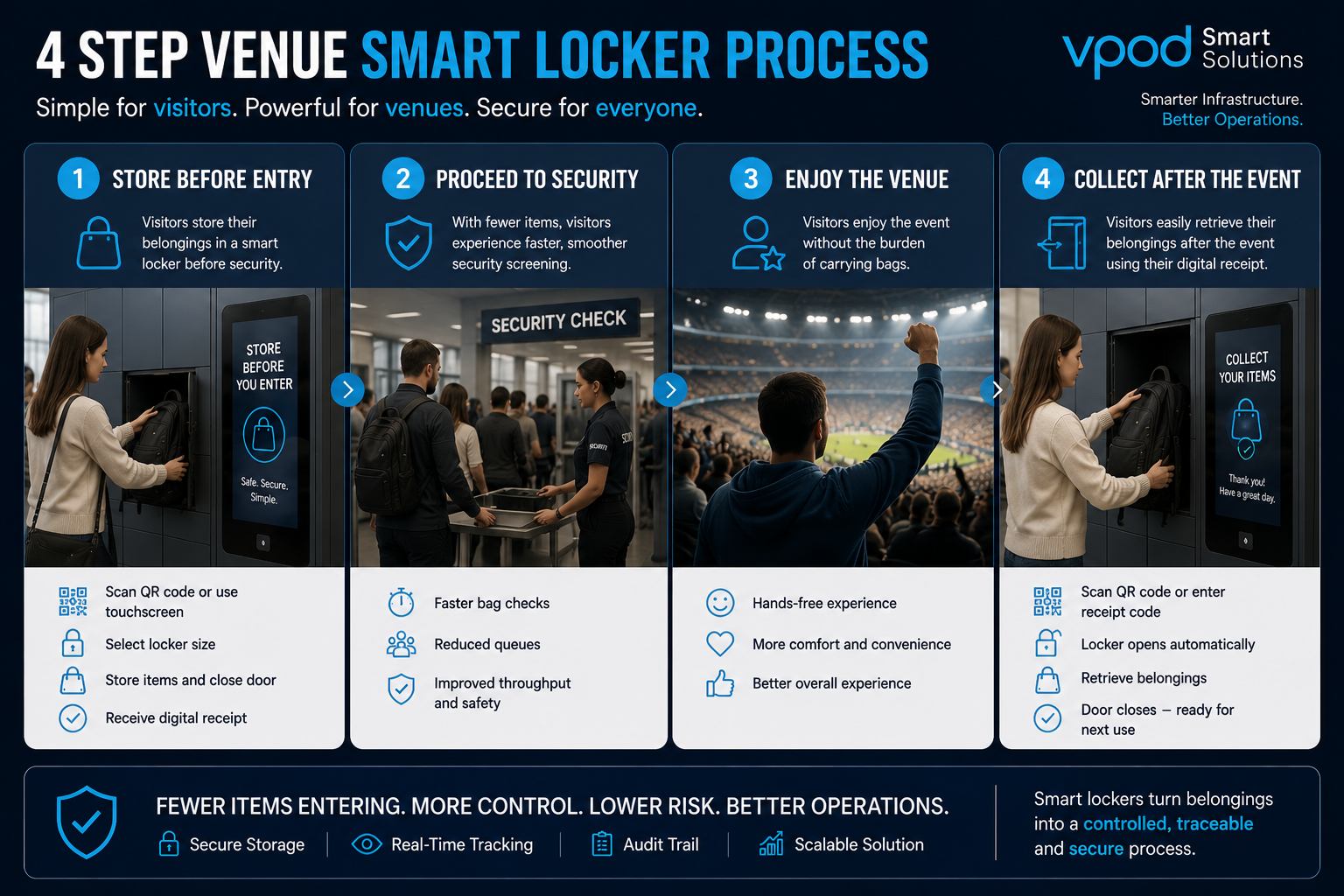
Traditional Cloakrooms & Bag Storage vs Smart Event Lockers





Case Study: Ziggo Dome & CrowdStor
How Ziggo Dome Improved Visitor Storage Security at Scale
Amsterdam’s Ziggo Dome deployed 4,608 CrowdStor smart lockers to provide secure visitor storage and support high-volume event operations. The cashless locker system improved visitor flow, reduced operational pressure, and delivered a more controlled belongings management process.
Results Include:
• Secure visitor belongings storage
• Improved visitor flow
• Reduced operational workload
• Faster venue entry and exit
• Enhanced visitor experience
• Scalable event-day operations
Who Is Affected by Visitor Belongings Security Risk?
Venue Security & Operations Teams / Visitors & Venue Guests
Venue Security & Operations Teams
Key Challenges
- Managing visitor belongings securely
- Reducing security risks and incidents
- Maintaining efficient venue entry
- Controlling storage and bag management
- Supporting venue safety at scale
Operational Pain Points
- Unattended belongings
- Limited visibility of stored items
- Increased security workload
- Incident investigation challenges
- Higher operational costs

Security Manager
Persona Name