







What Is Unauthorised Equipment Access?
Unauthorised equipment access occurs when:
- Someone uses equipment without permission
- Assets are accessed without verification
- Items are taken without being logged
- Ownership or responsibility is unclear
This is common in:
- Offices and workplaces
- IT asset environments
- Healthcare and secure facilities
- Warehouses and operational sites
- Education and shared environments
Why Unauthorised Access Increases at Scale
1. More Users = More Access Points
As organisations grow:
- More employees need access
- More teams share equipment
- More interactions occur daily
This leads to:
- Increased exposure
- Reduced oversight
The more users, the harder it is to control access manually.
→ Compare equipment rental desk vs locker-based systems
→ Compare staff cost vs locker automation ROI
2. Shared Storage Creates Open Access
Equipment is often stored in:
- Cupboards
- Storage rooms
- Drawers
- Open shelves
These environments:
- Are accessible to multiple users
- Lack access control
- Provide no visibility
Why Manual Asset Logging Breaks at Scale
3. No Identity Verification at Point of Access
In many systems:
- Equipment can be taken without authentication
- No user verification is required
- Access is based on trust
This results in:
- Untracked usage
- Unauthorised access
- Increased risk
4. Manual Logging Is Inconsistent
Where logging exists, it is often:
- Manual
- Optional
- Incomplete
At scale:
- Logs are missed
- Entries are inaccurate
- Data becomes unreliable
If access is not enforced, it will not be recorded.
Why Asset Management Costs Spiral at Scale
5. No Real-Time Visibility of Equipment
Without tracking systems:
- Equipment location is unknown
- Usage is not monitored
- Availability is unclear
This leads to:
- Time spent searching
- Misuse going unnoticed
- Increased operational friction
Controlled-access asset lockers
help organisations control who can access shared equipment while creating a traceable record of issue and return activity.
Why Asset Tracking Problems Break at Scale (And Why Visibility Disappears)
6. High Usage Increases Risk Exposure
As usage increases:
- Equipment changes hands frequently
- Responsibility becomes unclear
- Opportunities for misuse increase
→
Track assets with smart lockers
→ Compare
staff cost vs locker automation ROI

The Hidden Cost Multipliers
Cost Per Collection Increases
Operational Pressure Grows
Time Becomes a Bottleneck
ustomer Experience Suffers
Unauthorised Equipment Access Risks: The Key Issues
The Core Problem: Equipment Control Depends on Access Management
Unauthorised equipment access rarely happens because of a single incident.
It occurs when increasing numbers of users, shared storage locations, and limited access controls create opportunities for equipment to be accessed without permission.
1. Shared Storage Creates Open Access
Equipment stored in cupboards, storage rooms, or shared locations is often accessible to multiple users.
Impact: Increased risk of unauthorised use, loss, and reduced accountability.
2. Missing Verification Makes Access Difficult to Control
Without user authentication or access validation, organisations cannot verify who accessed equipment and when.
Impact: Increased security risk and limited accountability.
3. Limited Visibility Hides Equipment Usage
Manual systems often provide little visibility into equipment location, availability, or usage history.
Impact: Equipment can be misplaced, misused, or unavailable when needed.
4. Poor Tracking Delays Issue Resolution
Unauthorised access is often discovered long after equipment has been used, moved, or removed.
Impact: Investigations take longer and accountability becomes harder to establish.
→ Optimise space with smart lockers
→ Compare reception parcel handling vs lockers
Why Traditional Equipment Access Processes Fail
Shared Storage Creates Access Control Gaps
Many organisations still store equipment in cupboards, storage rooms, drawers, or shared locations. As equipment usage increases, these spaces become harder to monitor and control.
Common issues include:
- Unauthorised equipment access
- Missing or misplaced assets
- Limited accountability
- Increased security risk
Manual Access Processes Lack Verification
Traditional equipment access often relies on trust-based processes, shared keys, or manual sign-out procedures.
Challenges include:
- No user authentication
- Untracked equipment usage
- Access disputes
- Difficulty investigating incidents
Limited Tracking Reduces Visibility
Without automated tracking, organisations have little visibility into equipment location, usage history, or user activity.
This results in:
- Missing audit trails
- Reduced accountability
- Increased operational risk
- Difficult issue resolution
How Smart Lockers Control Equipment Access
Smart locker systems provide secure, controlled access and real-time visibility for equipment management.
Benefits include:
- Verified user authentication
- Controlled access permissions
- Real-time equipment tracking
- Complete audit trails
- Secure individual compartments
- Improved accountability and security
By replacing shared storage and manual access processes with smart lockers, organisations can eliminate unauthorised equipment access, improve accountability, and create a more secure equipment management operation.
→ Compare staff cost vs locker automation ROI
→ Explore workplace locker solutions
Secure smart locker systems help workplaces control access to valuable equipment through digital authentication, permissions and centrally managed locker access.
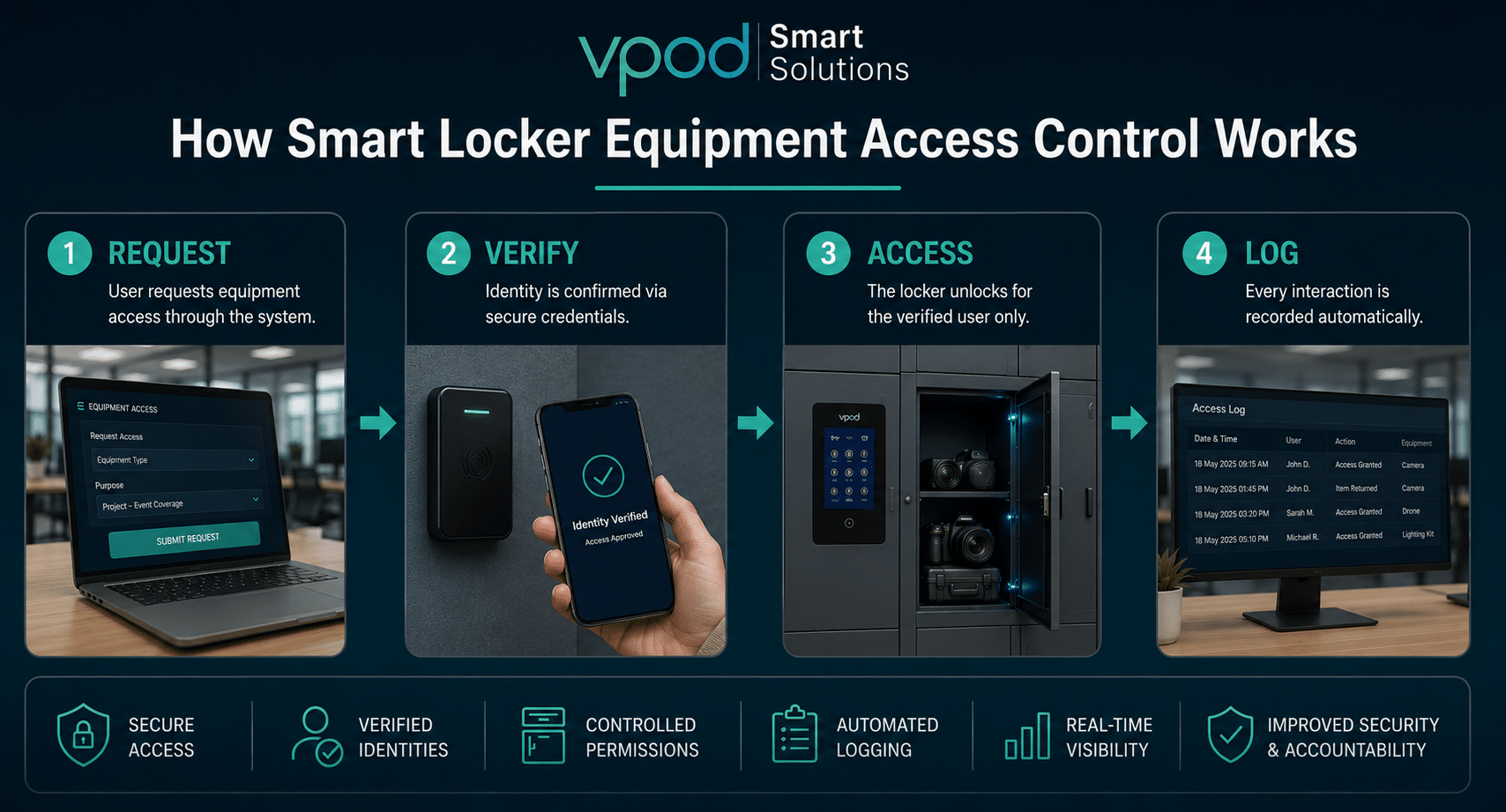
How Smart Locker Equipment Access Control Works
Traditional Equipment Storage vs Smart Locker Access Systems




Case Study: Ziggo Dome & VPOD
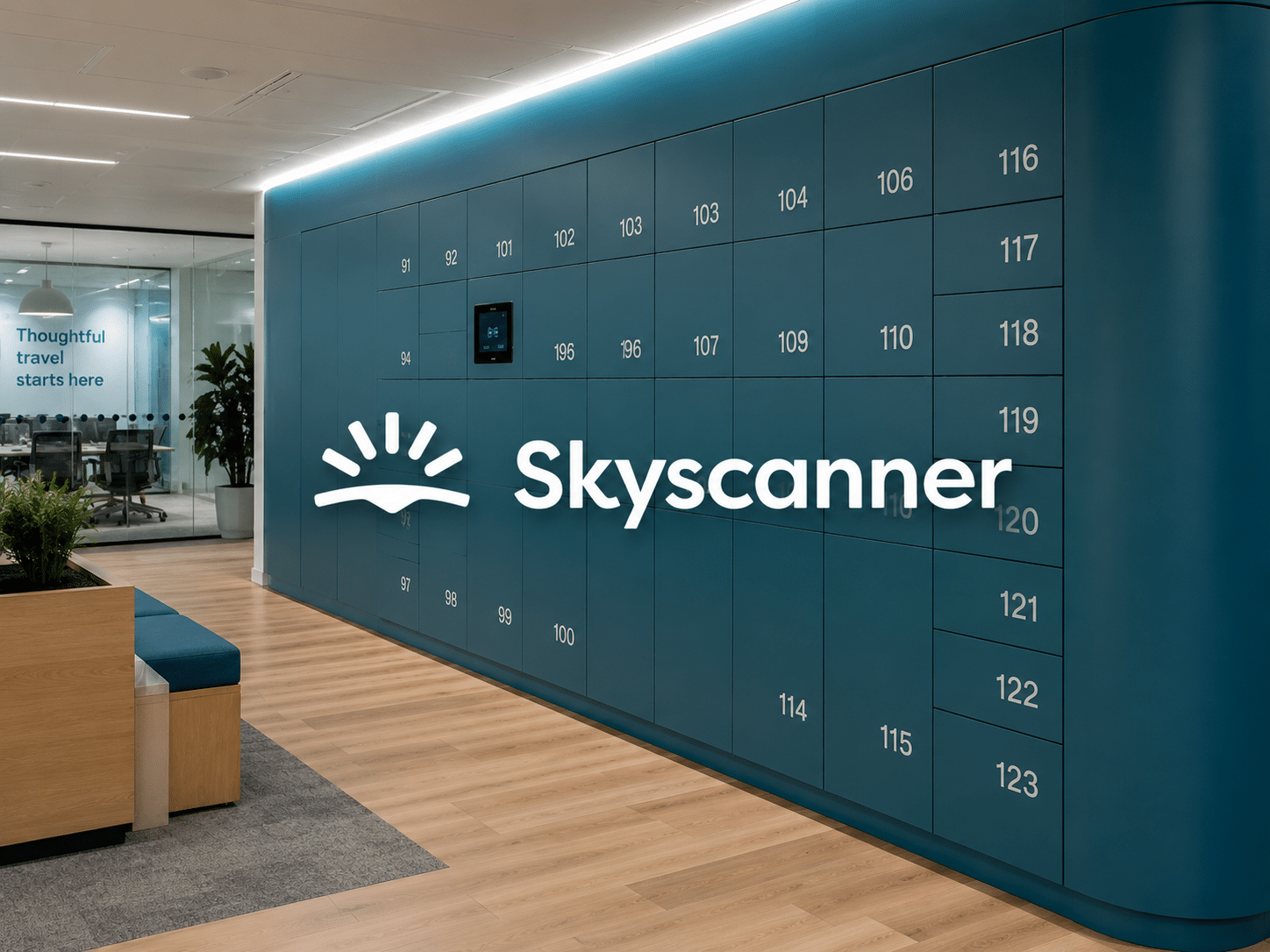
How Skyscanner Eliminated Unauthorised Equipment Access Across Multiple Sites
Skyscanner deployed Vpod smart lockers across its Edinburgh and Glasgow offices to replace uncontrolled, open-access storage. The system introduced verified, identity-based access control — eliminating unauthorised access, reducing administrative burden, and providing real-time visibility across all locations.
Results Include:
- Unauthorised equipment access eliminated
- Verified user access enforced at every locker
- Remote locker management across multiple sites
- Reduced administrative workload for workplace teams
- Improved space utilisation and equipment visibility
- Scalable access control aligned to hybrid working
Who Is Affected by Unauthorised Equipment Access?
Facilities, IT & Operations Teams / Employees & Equipment Users
Facilities, IT & Operations Teams
Key Challenges
- Controlling equipment access
- Managing shared assets across teams
- Maintaining visibility and accountability
- Reducing equipment misuse and loss
- Enforcing access control policies
Operational Pain Points
- Time spent locating equipment
- Investigating missing assets
- Limited visibility into equipment usage
- Difficulty tracking responsibility
- Increased security and compliance risk