
Why Last Mile Delivery Fails at Scale

The last mile is the final – and most operationally demanding – stage of the delivery journey. It’s where parcels reach the recipient, customer expectations are met, and delivery performance is ultimately judged.

But as parcel volumes increase, traditional delivery systems begin to break down. Failed deliveries, manual handovers, reception bottlenecks, and building congestion create operational friction that becomes increasingly difficult to manage at scale.

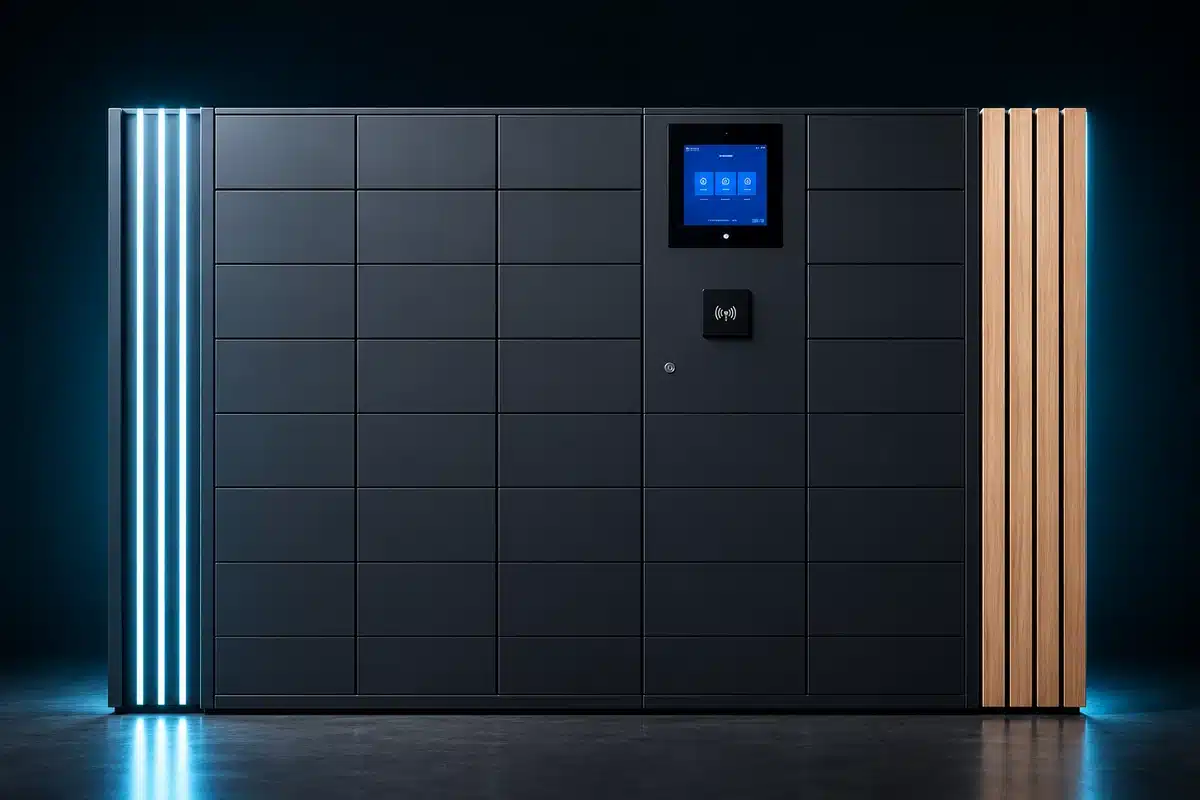
Delivery Lockers

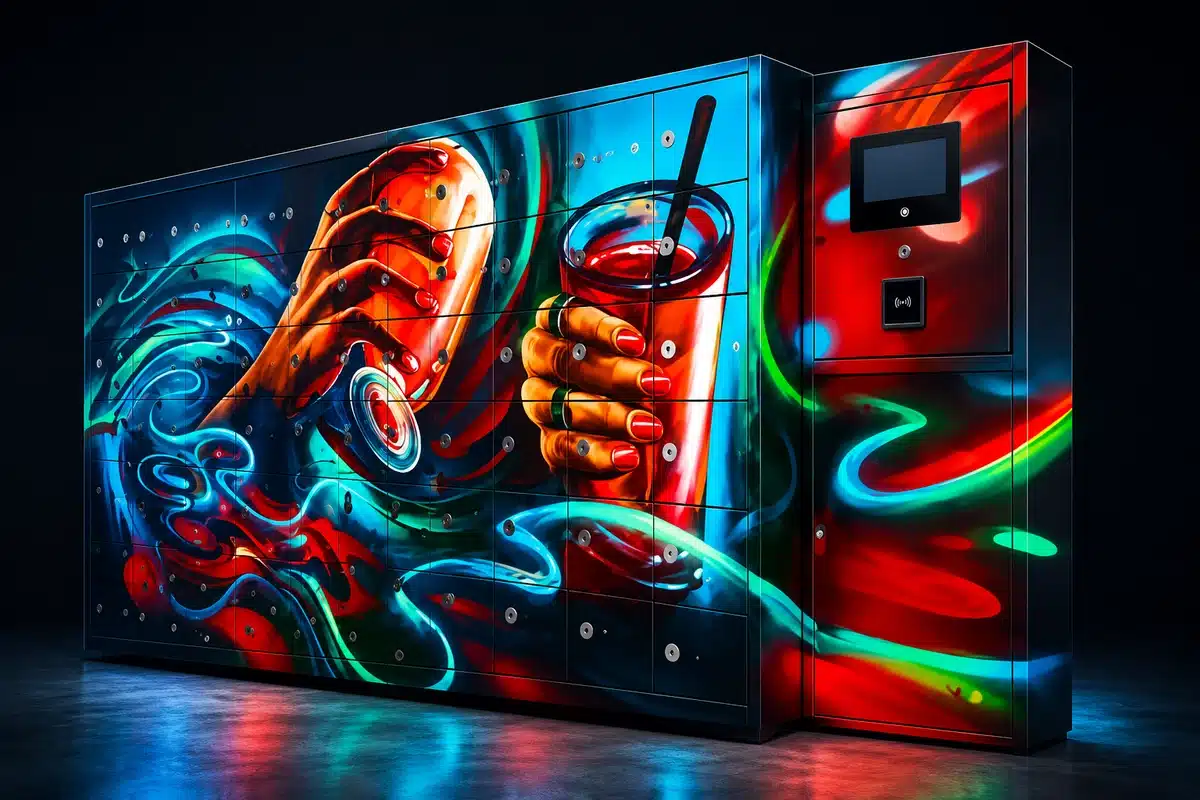
Parcel lockers

What Is Last Mile Delivery Inefficiency?

Last mile inefficiency occurs when the final stage of delivery becomes:

  • Slow
  • Costly
  • Unreliable
  • Difficult to manage

This includes:

  • Failed deliveries
  • Missed handovers
  • Re-delivery attempts
  • Congestion at delivery points
  • Delays in final collection

It impacts:

    • Logistics providers
    • Residential buildings
    • Offices and workplaces
    • Retail and click & collect environments

Related Links

Why Last Mile Logistics Inefficiency Increases at Scale

1. Delivery Density Creates Complexity

As delivery volumes grow:

  • More stops are required
  • Routes become more complex
  • Time per delivery increases

Without system optimisation, higher delivery density reduces efficiency at scale.


2. Failed Deliveries Multiply Costs

When recipients are unavailable:

  • Deliveries fail
  • Re-attempts are required
  • Routes are disrupted

This leads to higher delivery costs, reduced productivity, and poor customer experience.

Compare delivery lockers vs failed deliveries

Calculate logistics ROI


3. Manual Handover Slows the Process

Traditional last mile delivery relies on:

  • Door-to-door interaction
  • Reception handling
  • Staff acceptance

This creates delays, dependency on availability, and limited throughput.

Related Links

4. Buildings Are Not Designed for Delivery Flow

Most buildings lack:

  • Dedicated delivery infrastructure
  • Structured parcel storage
  • Efficient handover points

This creates congestion, reception delays, and inefficient delivery movement.


5. Centralised Systems Create Bottlenecks

Deliveries are often routed through:

  • Reception desks
  • Mailrooms
  • Security points

As delivery volumes increase, these centralised systems create queues, delays, and limited processing capacity.


6. Lack of Real-Time Visibility

Without real-time systems:

  • Delivery status is unclear
  • Parcel locations are unknown
  • Issues are handled reactively

This leads to delays, lost items, and increased operational friction.

Related Links

Delivery Lockers

The Hidden Impact of Last Mile Delivery Inefficiency

 Rising Delivery Costs

Last mile inefficiency increases delivery costs through failed deliveries, repeated delivery attempts, and rising operational overhead across high-volume delivery networks.

Slower Delivery Times

Poor delivery infrastructure and inefficient final mile processes extend delivery windows and reduce overall logistics reliability.

Poor Customer Experience

Customers expect fast and reliable last mile delivery, but inefficient delivery systems often result in missed deliveries, delays, and poor customer satisfaction.

Reduced Scalability

As delivery demand increases, inefficient last mile infrastructure creates scalability challenges, higher costs, and declining delivery performance.

How Real-Time Visibility Reduces Last Mile Delivery Inefficiency

1. Limited Visibility Creates Delivery Delays

Without real-time delivery tracking, parcel status, collection activity, and delivery progress become difficult to manage efficiently.

This leads to:

  • Delayed parcel collection
  • Slower issue resolution
  • Reduced operational visibility
  • Increased delivery inefficiency

Related Links

2. Poor Parcel Visibility Increases Operational Friction

When parcel tracking is unclear, organisations face a higher risk of misplaced deliveries, missed collections, and delivery disputes.

This creates:

  • Lost or delayed parcels
  • Increased operational pressure
  • Reduced delivery accountability
  • Poor customer and occupant experience

Reception Parcel Handling vs Lockers

3. Real-Time Tracking Improves Delivery Control

Smart locker systems provide live delivery visibility, automated notifications, and real-time parcel tracking across delivery operations.

This helps organisations:

  • Improve parcel tracking accuracy
  • Increase operational control
  • Reduce delivery uncertainty
  • Create more efficient last mile delivery workflows

Related Links

The Core Problem Behind Last Mile Delivery Inefficiency

1. Parcel Handover Still Depends on People

Despite advances in logistics technology, the final stage of delivery still relies heavily on manual handovers between drivers, reception teams, security staff, or recipients.

This creates:

  • Delays during parcel acceptance
  • Dependency on staff availability
  • Slower delivery processing
  • Increased operational friction

Why Delivery Staffing Costs Spiral at Scale

2. Centralised Delivery Points Create Bottlenecks

Most buildings route deliveries through reception desks, mailrooms, or security points that are not designed to manage high delivery volume efficiently.

As parcel volume increases, this leads to:

  • Reception congestion
  • Delivery queues
  • Delayed parcel collection
  • Limited delivery throughput

Why Delivery Congestion Breaks Buildings at Scale

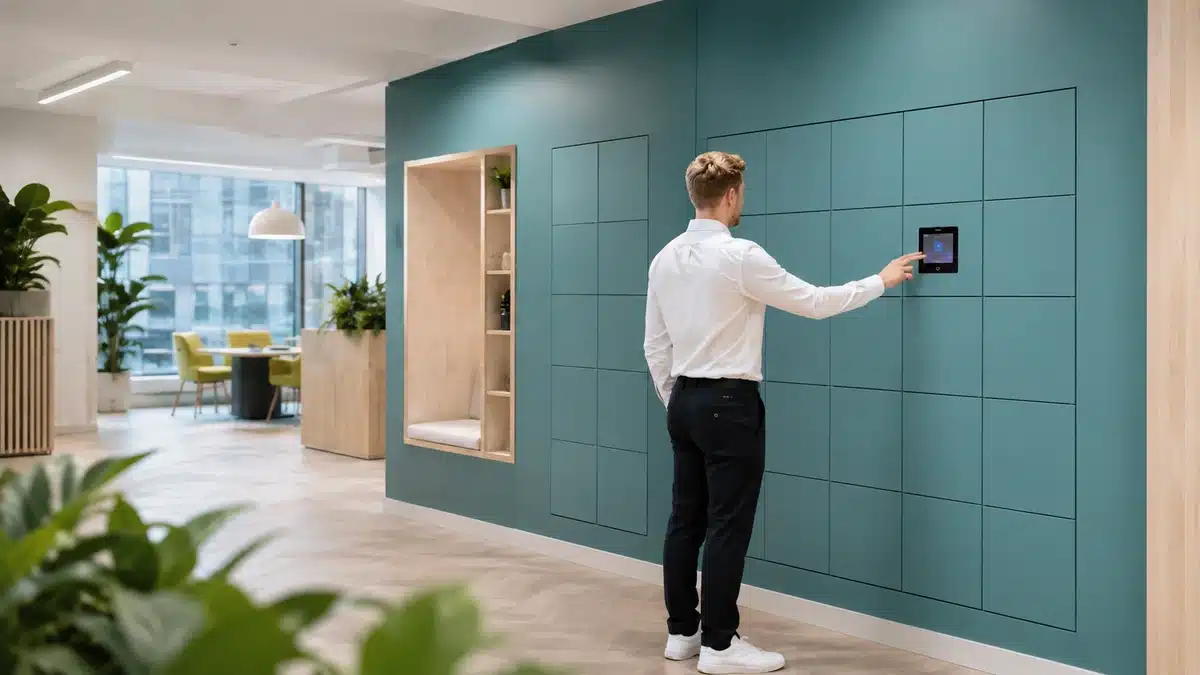
3. Smart Locker Systems for Last Mile Delivery

Smart lockers transform the final stage of delivery into a faster, more scalable, and more efficient operational process.

  • Eliminate failed deliveries and missed handovers
  • Reduce reception and mailroom congestion
  • Enable secure 24/7 parcel collection
  • Improve parcel visibility and tracking
  • Reduce manual delivery handling
  • Increase delivery efficiency at scale

Parcel Lockers (Solution)

4.The Operational Impact of Last Mile Delivery Inefficiency

With automated smart locker delivery systems:

  • Delivery workflows become faster and more organised
  • Parcel processing capacity increases
  • Operational bottlenecks are reduced
  • Delivery visibility and accountability improve
  • Staffing pressure decreases
  • Customer and occupant experience improves

Compare parcel room vs parcel lockers

Last Mile Delivery Smart Locker Parcel Process
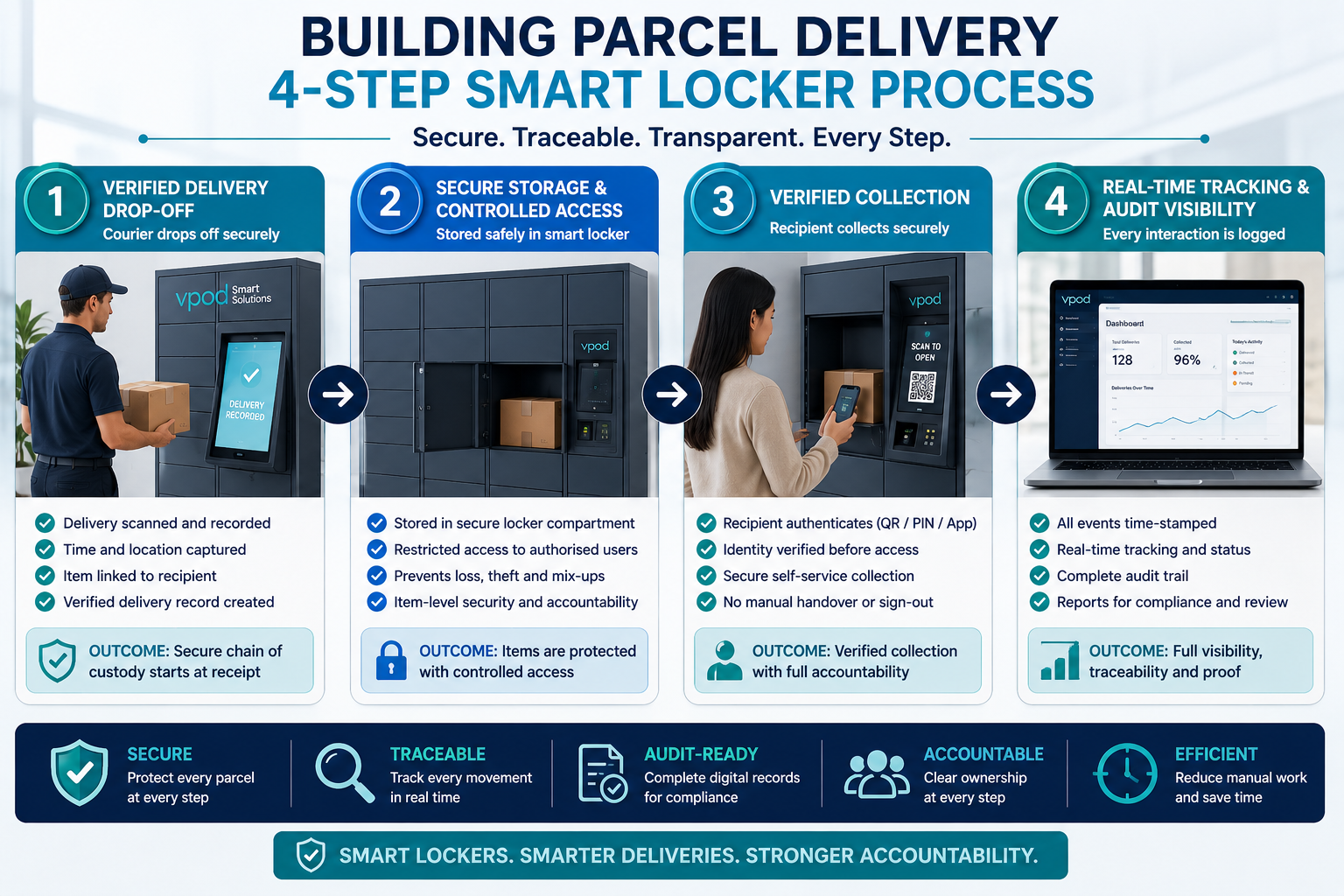
Parcel Received & Securely Stored
Customer Notified Instantly
Self-Service Parcel Collection
Parcel Retrieved & Process Completed

Building Parcel Delivery 4 Step Process

Traditional vs Automated Last Mile Delivery Systems

Traditional Last Mile Delivery Systems
Manual handovers slow delivery workflows
Reception dependency creates delivery bottlenecks
Failed deliveries increase operational cost
Limited delivery visibility reduces operational control
Smart Locker Delivery Solutions
Automated parcel delivery improves efficiency
Contactless collection eliminates failed handovers
Parallel processing increases delivery throughput
Real-time tracking improves delivery visibility and control
The ROI Opportunity in Smart Parcel Lockers
Reduced failed deliveries and manual handovers
Lower reception and mailroom operational workload
Faster parcel delivery and collection workflows
Improved delivery visibility and operational control

Case Study: ADP & VPOD Smart Lockers

Improving Last Mile Delivery Operations with Smart Lockers

ADP, a global provider of payroll and workplace solutions, implemented VPOD smart locker systems to reduce reception congestion, improve parcel visibility, and streamline high-volume delivery workflows across workplace environments.

By replacing manual parcel handovers with automated smart locker infrastructure, ADP improved delivery efficiency, reduced operational pressure, and created more scalable last mile delivery operations.

Results

  • Reduced reception and mailroom congestion
  • Improved parcel visibility and tracking
  • Faster parcel collection workflows
  • Reduced manual delivery handling
  • More scalable delivery operations

Last Mile Delivery Operational Challenges

Logistics & Operations Manager

Logistics Manager

Key Challenges

  • Failed deliveries and re-delivery attempts
  • Reception and delivery congestion
  • Rising delivery costs at scale
  • Limited parcel visibility and tracking
  • Manual handover processes slowing workflows
  • Difficulty scaling high-volume delivery operations

Operational Pain Points

  • Staff manually processing parcel deliveries
  • Delays caused by reception-based handovers
  • Queues forming during peak delivery periods
  • Missed deliveries and recipient unavailability
  • Reduced delivery throughput and operational efficiency

Operations Manager

Key Challenges

  • Increasing parcel volume across buildings
  • Lack of structured delivery infrastructure
  • Reception congestion and parcel overflow
  • Security and chain-of-custody concerns
  • Limited control over parcel collection workflows
  • Operational pressure caused by manual processes

Operational Pain Points

  • Time lost managing parcel collection manually
  • Shared delivery areas becoming overcrowded
  • Lost or misplaced parcels creating operational issues
  • Delivery delays impacting occupant experience
  • Inefficient parcel storage and collection workflows

Reduce Last Mile Delivery Inefficiency

Reduce reception congestion, streamline parcel handling, and improve delivery workflows with smart locker systems designed for high-volume delivery environments.

With automated parcel locker systems:

  • Failed deliveries and missed handovers are reduced
  • Parcel collection becomes faster and more organised
  • Reception and mailroom workload decreases
  • Delivery visibility and tracking improve
  • Delivery operations become more scalable and efficient
  • Customer and occupant experience becomes smoother

Parcel Lockers (Solution)

Frequently Asked Questions

What Is Last Mile Delivery Inefficiency?

Last mile inefficiency refers to delays, failed deliveries, and rising operational costs during the final stage of the delivery process.

Why is the last mile the most expensive part of delivery?

The last mile is the most expensive stage of logistics because it involves individual delivery stops, manual handovers, failed delivery attempts, and high labour costs.

What causes last mile inefficiency at scale?

Last mile inefficiency is caused by high delivery volumes, failed deliveries, manual processes, poor building infrastructure, and limited real-time visibility.

Can route optimisation solve last mile delivery problems?

Route optimisation improves delivery efficiency, but it does not solve issues caused by manual handovers, building access restrictions, or failed deliveries.

What is the best solution for last mile delivery?

Automated delivery systems such as smart lockers and secure parcel management solutions help reduce failed deliveries, improve delivery efficiency, and eliminate manual handovers.