







What Is Manual Parcel Handling?
Manual parcel handling refers to processes where staff:
- Receive deliveries
- Log parcels
- Store items
- Notify recipients
- Manage collection
This typically happens in:
- Office reception areas
- Residential buildings
- Mailrooms
- Universities and campuses
- Healthcare facilities
Related Links:
Compare parcel room vs parcel lockers
Why Manual Parcel Handling Fails at Scale
1. Volume Outpaces Processing Capacity
Each parcel requires:
- Acceptance
- Logging
- Sorting
- Storage
As volume increases:
- Processing slows
- Backlogs form
- Delays increase
More parcels = more work = slower system
Why Delivery Staffing Costs Spiral at Scale
2. Reception Becomes the Bottleneck
Most buildings rely on:
- A single reception desk
- A small facilities team
This creates:
- A central processing point
- Limited throughput
- Immediate congestion
Why Delivery Congestion Breaks Buildings at Scale
3. Deliveries Arrive in Waves
Couriers deliver in batches:
- Morning drop-offs
- Afternoon peaks
This creates:
- Sudden surges in volume
- Immediate system overload
Related Links:
4. Storage Becomes Unmanageable
Manual systems rely on:
- Backrooms
- Shelving
- Shared storage areas
At scale:
- Space fills quickly
- Organisation breaks down
- Retrieval becomes difficult
Why Delivery Congestion Breaks Buildings at Scale
5. Collection Adds a Second Bottleneck
When recipients collect parcels:
- Staff must retrieve items
- Verify ownership
- Manage queues
This creates:
- Additional workload
- Interruptions to workflow
- Congestion
Why Delivery Staffing Costs Spiral at Scale
6. Tracking Breaks Down
Manual systems rely on:
- Spreadsheets
- Paper logs
- Manual updates
At scale:
- Records are incomplete
- Data is outdated
- Parcels are “lost”
Related Links:
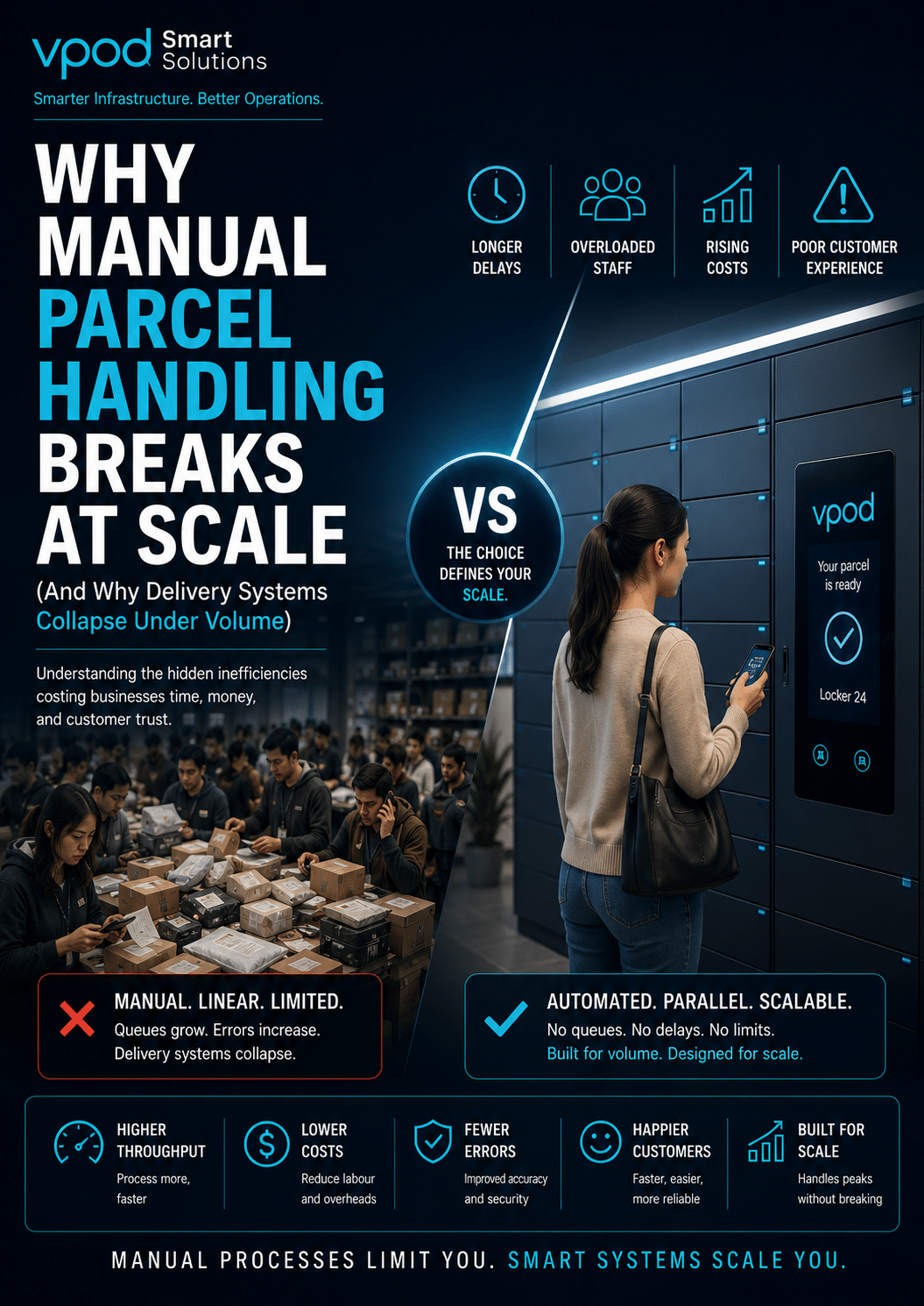
The Hidden Impact of Manual Parcel Handling
Operational Costs Increase
Operational Efficiency Declines
User Experience Suffers
Security and Compliance Risks Increase
Manual Parcel Handling: The Key Issues
The Core Problem: Delivery Processes Struggle to Scale
Parcel handling issues rarely result from a single mistake.
Instead, growing delivery volumes place increasing pressure on reception teams, mailrooms, and parcel management processes.
1. Processing Capacity Becomes Limited
Every parcel must be received, logged, sorted, and stored. As delivery volumes increase, manual processing capacity becomes constrained and parcel backlogs begin to form.
Impact: Slower parcel handling and increased delivery delays.
2. Storage Becomes Harder to Manage
Growing parcel volumes quickly overwhelm shared storage areas, making parcels harder to locate, track, and retrieve.
Impact: Reduced parcel visibility and longer collection times.
Related Links:
Compare reception parcel handling vs lockers
3. Reception Teams Become the Bottleneck
Manual parcel handling depends on reception or facilities teams to manage deliveries, notifications, and collections. During peak delivery periods, operational performance becomes limited by staff availability.
Impact: Increased workload, reduced efficiency, and slower parcel processing.
Related Links:
Why Traditional Parcel Handling Systems Fail
Manual Processing Slows Deliveries
Many organisations still rely on reception teams, mailrooms, and manual parcel handling processes. As parcel volumes increase, these workflows become harder to manage and less efficient.
Common issues include:
- Slower parcel processing
- Staff-dependent workflows
- Delivery bottlenecks
- Reduced operational efficiency
Related Links:
Parcel Storage Reduces Efficiency
Every parcel must be received, logged, stored, and retrieved. As delivery volumes grow, storage areas become more congested and parcel retrieval becomes more time-consuming.
Challenges include:
- Time spent locating parcels
- Unstructured storage areas
- Slower parcel collection
- Reduced parcel visibility
Related Links:
Compare parcel room vs parcel lockers
Delivery Volume Creates Operational Pressure
Parcel deliveries often arrive in concentrated waves throughout the day. During peak periods, reception and facilities teams must process large numbers of parcels while maintaining accuracy and service levels.
This results in:
- Growing parcel backlogs
- Increased delivery delays
- Greater pressure on operational teams
- Reduced recipient satisfaction
Related Links:
How Smart Parcel Lockers Improve Delivery Efficiency
Smart parcel lockers provide a secure, automated alternative to manual parcel handling processes.
Benefits include:
- Direct courier-to-locker delivery
- Self-service parcel collection
- Reduced reception involvement
- Real-time parcel tracking
- Secure recipient access
- Improved operational efficiency
Related Links:
Vpod parcel lockers
Automated Parcel Handling Process
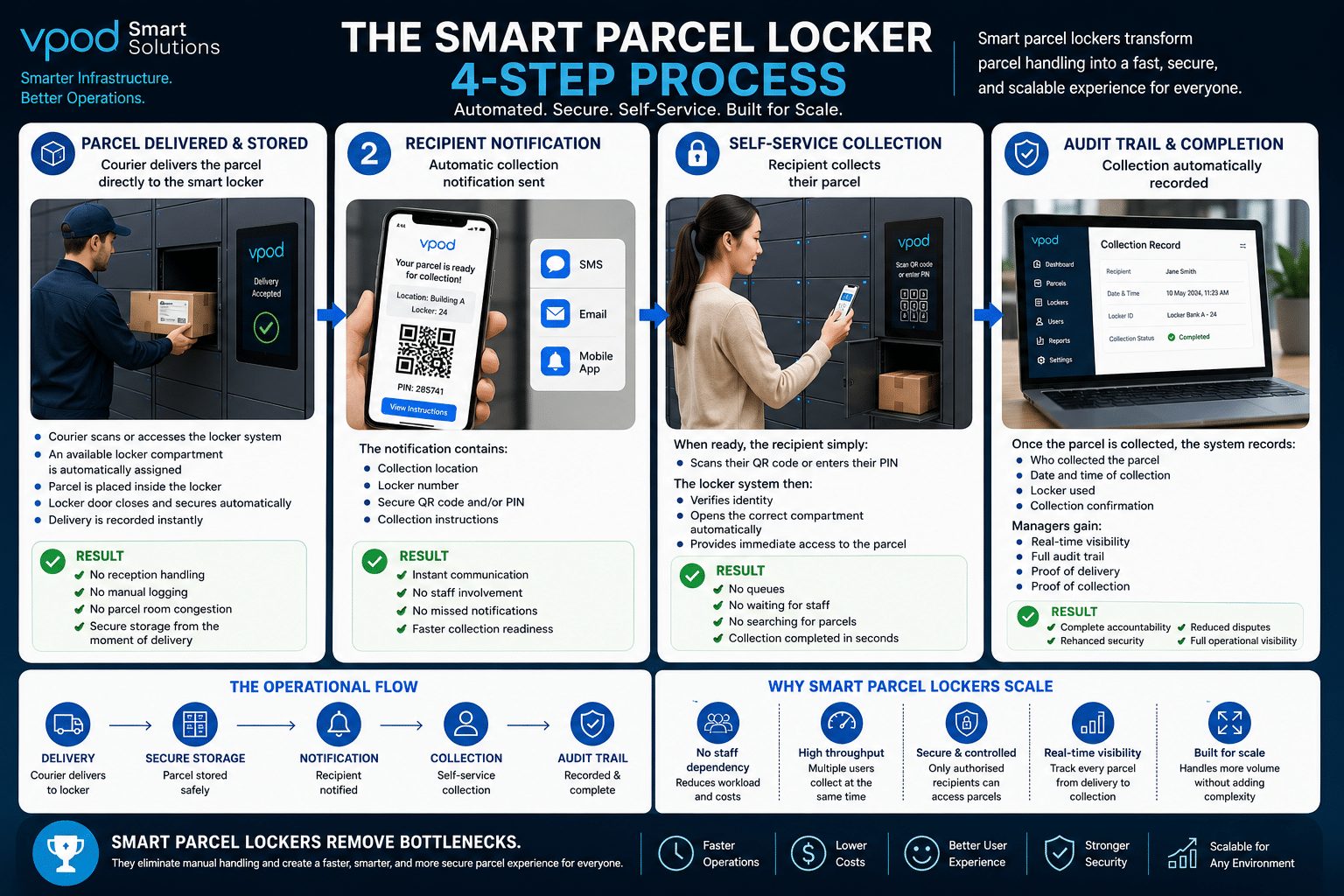
Automated Parcel Handling Process
Traditional Manual Parcel Handling vs Smart Parcel Locker Systems




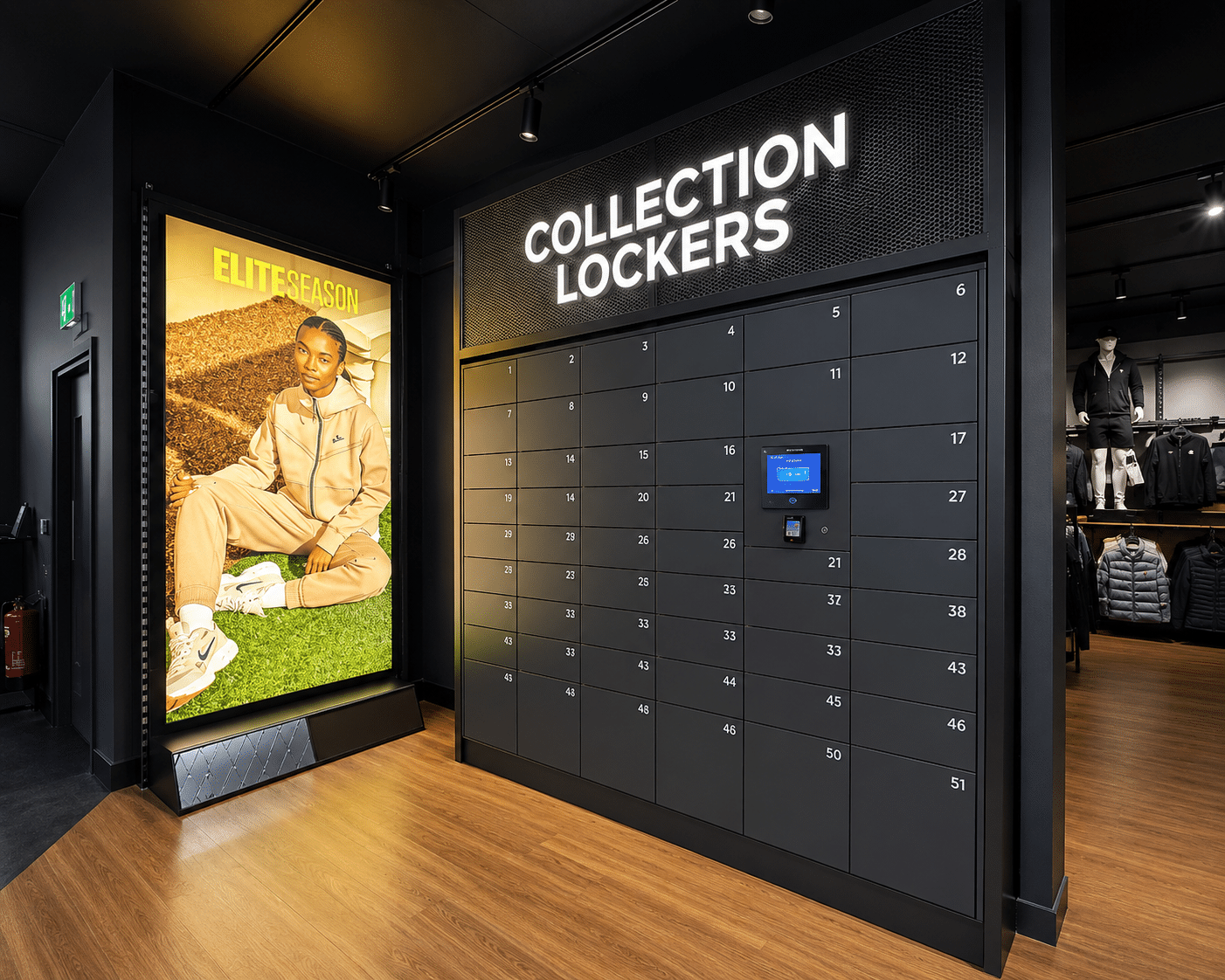
Case Study: Leading Footwear Retailer & VPOD
How Smart Lockers Reduced Manual Parcel Handling
A major UK footwear retailer implemented VPOD smart lockers to automate click-and-collect and returns, reducing reliance on staff-managed collection processes.
By introducing self-service collection, automated notifications, and secure digital access, the retailer improved operational efficiency, reduced manual handling, and created a more scalable collection system.
Results Included:
- 78% reduction in staff time spent on collections
- Reduced manual parcel handling
- Faster collection and retrieval processes
- Improved customer experience
- Increased operational efficiency
- More scalable parcel management operations
Who Is Affected by Manual Parcel Handling?
Facilities & Operations Managers / Reception & Mailroom Teams
Facilities & Operations Managers
Key Challenges
- Managing growing parcel delivery volumes
- Maintaining efficient parcel handling processes
- Reducing reception and mailroom congestion
- Controlling parcel management costs
- Maintaining parcel visibility and accountability
Operational Pain Points
- Limited parcel processing capacity
- Increased workload for facilities teams
- Delivery bottlenecks during peak periods
- Difficulty tracking parcel locations
- Reduced operational efficiency