
GainShare
Capex-Free Lockers
Workplace roles, pain points & connected locker strategy

Fix workplace storage around the people who actually own the problem.

Facilities, IT, Operations and Workplace Experience see different symptoms of the same disconnected workplace. Vpod connects identity, booking, access control, allocation and locker activity so each team gets a simpler operating model without creating another isolated system.

FacilitiesITOperationsWorkplace Experience
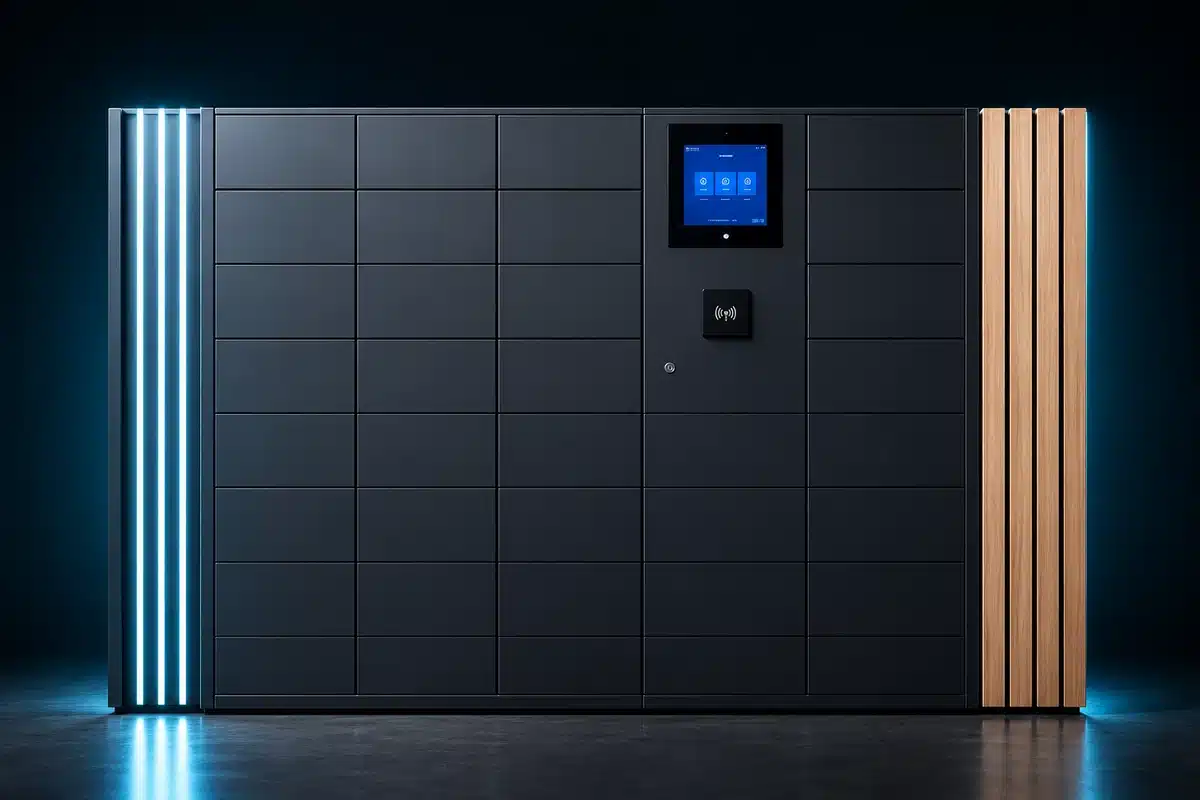
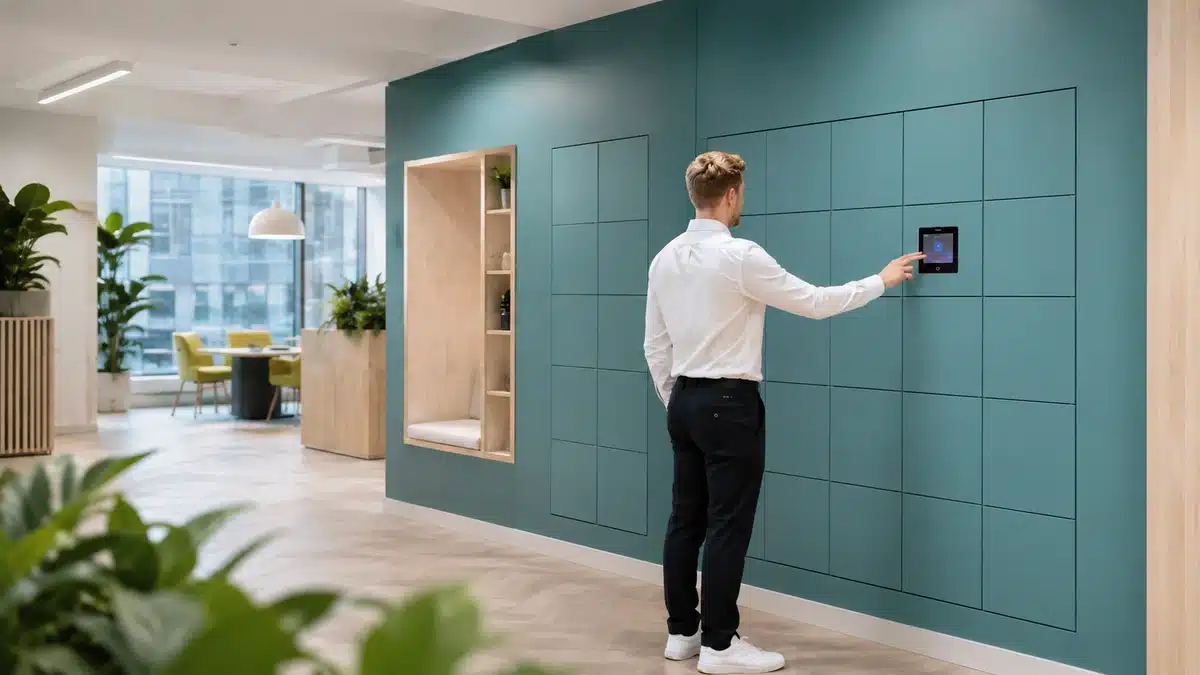
Vpod smart locker wall in a modern workplace
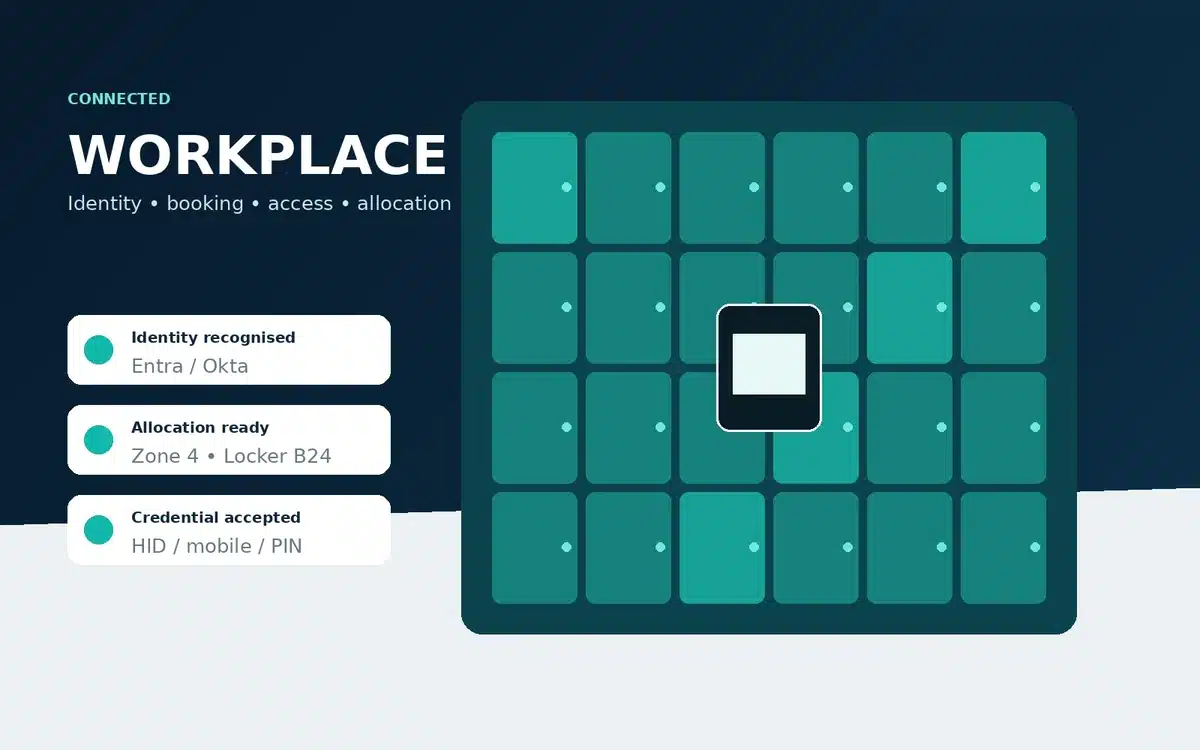
09:02Employee arrivesIdentity recognised
Locker B-24Allocated near workspaceReleased automatically at end of day
Start with responsibility

One workplace. Four different definitions of “working properly”.

The locker is only the visible endpoint. The real project crosses workplace policy, space planning, identity, access, operational support and employee experience. Vpod’s integration strategy is designed around those owners rather than forcing every team into one generic locker workflow.

FMFacilities

Facilities Manager

Keep the workplace available, fair and easy to operate.

Feels the painKeys, allocation requests, locker shortages, abandoned items, utilisation complaints.
NeedsLess admin, more capacity visibility, simpler rules and fewer local exceptions.
Explore the Facilities Manager view →
ITTechnology

IT Director

Keep workplace technology secure, governed and scalable.

Feels the painSeparate user databases, manual provisioning, weak audit trails and local access rules.
NeedsIdentity alignment, controlled credentials, APIs, logging and clear ownership.
Explore the IT Director view →
OPOperations

Operations Director

Make the service predictable across teams, buildings and sites.

Feels the painInconsistent processes, support dependency, avoidable labour and poor multi-site visibility.
NeedsRepeatable policy, measurable service performance and central operating control.
Explore the Operations Director view →
WXWorkplace experience

Workplace Experience

Make the office day feel joined-up rather than fragmented.

Feels the painHot-desk friction, separate booking and storage steps, inconsistent access and employee frustration.
NeedsStorage that follows attendance, uses familiar credentials and is ready on arrival.
See a connected workplace journey →
The Vpod integration strategy

Keep each system in charge of the decision it already makes best.

Vpod does not solve fragmentation by creating another master system. Instead, the locker workflow is shaped around agreed system ownership: identity proves who the user is; workplace platforms provide booking or attendance context; access control supplies the approved credential; Vpod applies locker rules and records the physical outcome.

Identity & lifecycle

Entra ID / Okta

Recognise the employee, group, entitlement and joiner/mover/leaver state.

Entra IDOkta
Workplace context

Booking platforms

Use office-day, desk, zone, building or attendance intent to shape storage demand.

YAROOMSEpturaGoBright
Credential

Access control

Reuse an agreed badge or mobile credential while keeping locker entitlement governed separately.

HIDAccess pathways
Physical outcome

Vpod + Vflex

Apply allocation, capacity and release rules, control the locker and record the agreed usage events.

Vflex platformLocker software
Identity→Attendance→Allocation rule→Credential→Locker ready→Release + evidence
What changes for each team

Translate integration architecture into operational outcomes.

FM
Facilities ManagerFrom manual allocator to service owner
Before

Spreadsheets, physical keys, requests, complaints, abandoned lockers and local workarounds.

→
Connected Vpod model

Dynamic allocation + workplace context + automatic release + remote visibility.

OutcomeLess admin. Higher utilisation.
IT
IT DirectorFrom peripheral hardware to governed infrastructure
Before

Separate user databases, weak lifecycle management, shared credentials and incomplete audit evidence.

→
Connected Vpod model

Entra ID / Okta context + HID credential + APIs + logged locker events.

OutcomeCleaner governance. Lower support risk.
OP
Operations DirectorFrom local variation to repeatable operating model
Before

Different policies, support methods and service levels between floors, offices and regions.

→
Connected Vpod model

Central rules + configurable local zones + common exception paths + multi-site reporting.

OutcomeConsistency. Scale. Measurable service.
WX
Workplace ExperienceFrom separate tasks to one employee journey
Before

Book a desk, find storage, obtain a key or code, then solve exceptions separately.

→
Connected Vpod model

Booking or arrival context + familiar credential + nearby locker + automatic release.

OutcomeLess friction. Better employee confidence.
Workplace evidence

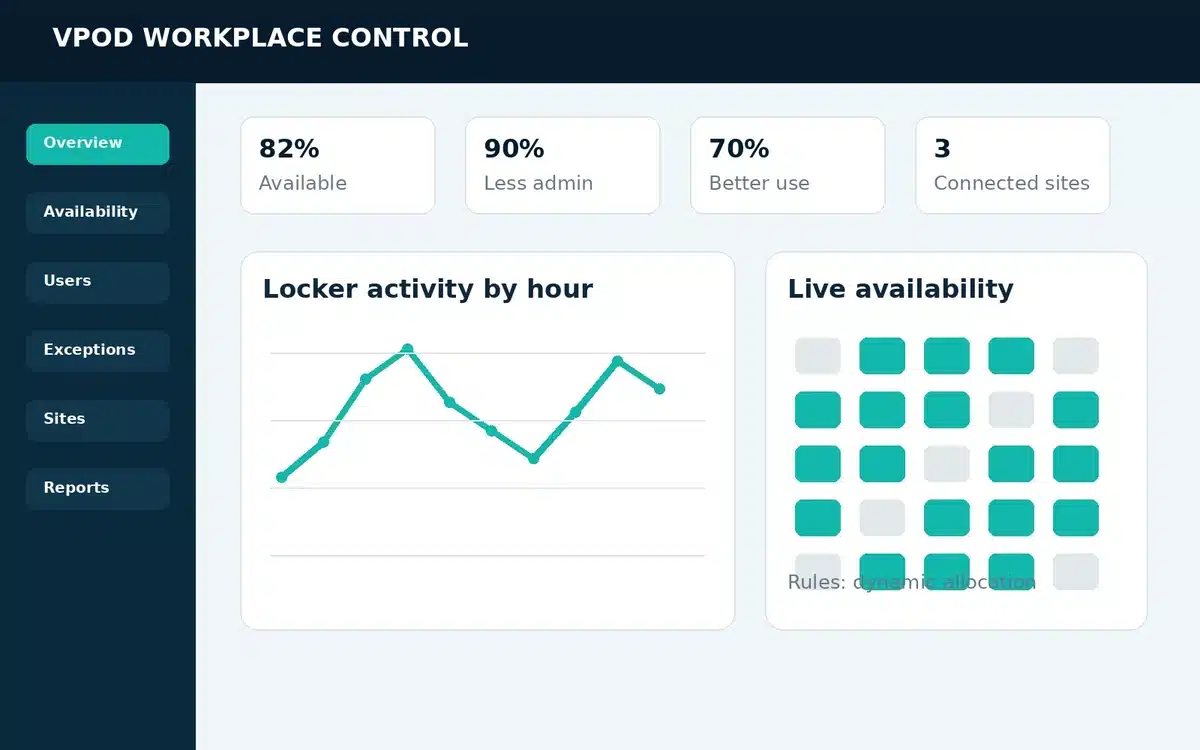
When the operating model improves, the numbers move with it.

Locker management dashboard showing workplace locker activity
Facilities + Operations

Visibility changes the capacity conversation.

Move from perceived shortages and local anecdotes to actual availability, activity and exception evidence.

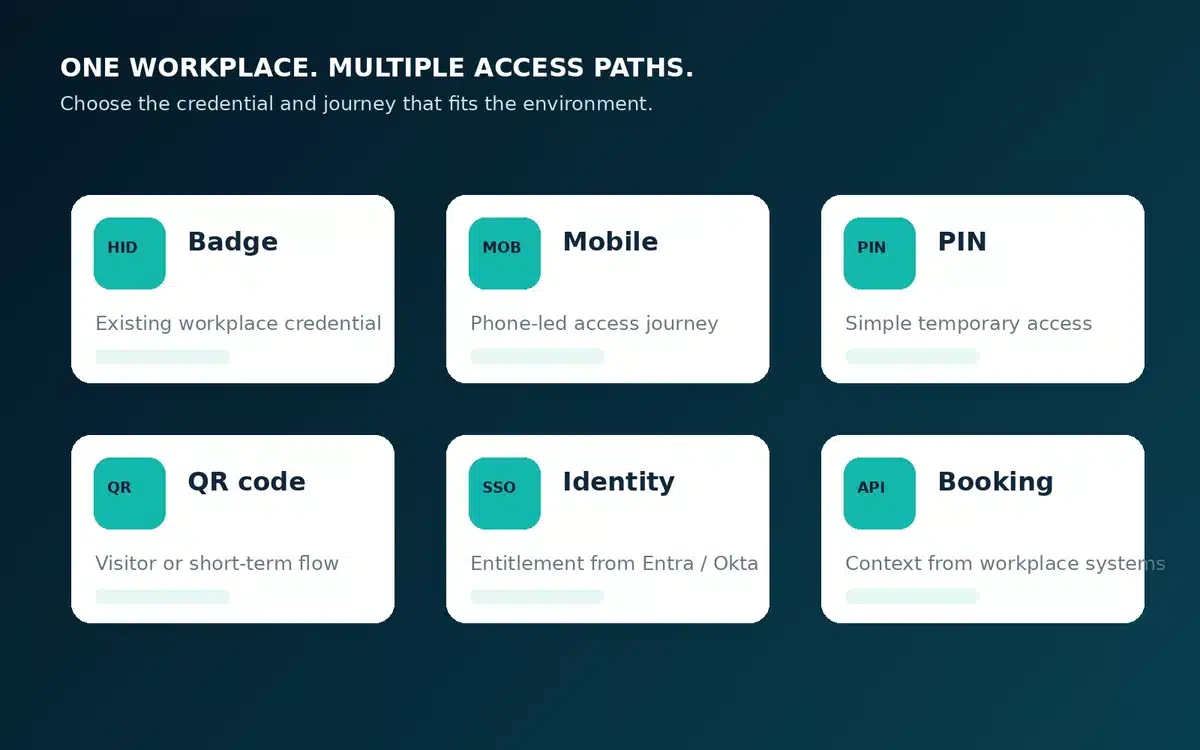
Vflex smart locker access methods
IT + Employee Experience

Use the access method that fits the workplace.

Badge, mobile, PIN, QR and other supported access paths can be selected around identity policy, user journey and environment.

See connected lockers in operation

Move from architecture diagrams to real workplace journeys.

Use Vpod’s Smart Locker Video Library and Smart Solutions YouTube channel to review locker access, workplace deployments, software and customer evidence before defining your own workflow.

Vpod workplace smart locker video preview▶Workplace · software · integrations · customer evidence
Start with your workplace problem

Tell Vpod who owns the pain. We’ll map the systems, rules and locker journey around them.

Bring your workplace policy, identity approach, booking platform, access-control method and current operational pain. Vpod can translate those inputs into a practical connected locker workflow.