



Commercial and operational planning guide · 15 minute read
How Much Can Smart Lockers Earn a Venue?
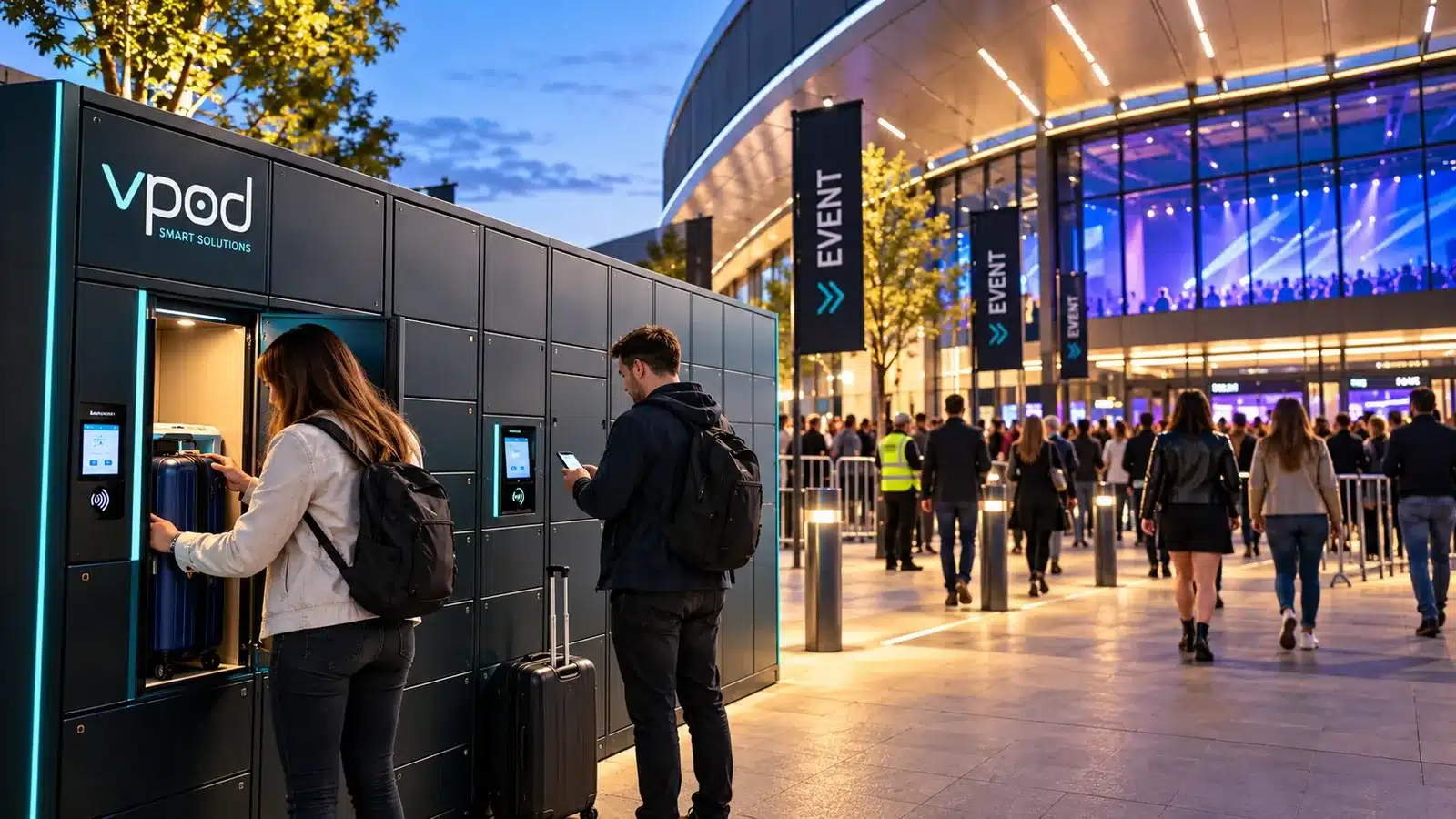
More than locker rental income: assess arrival flow, safer operational planning, faster access, potential food and merchandise spend, and stadium retail collection alongside direct revenue.
Venue locker income is driven by paid usage, not footfall alone.
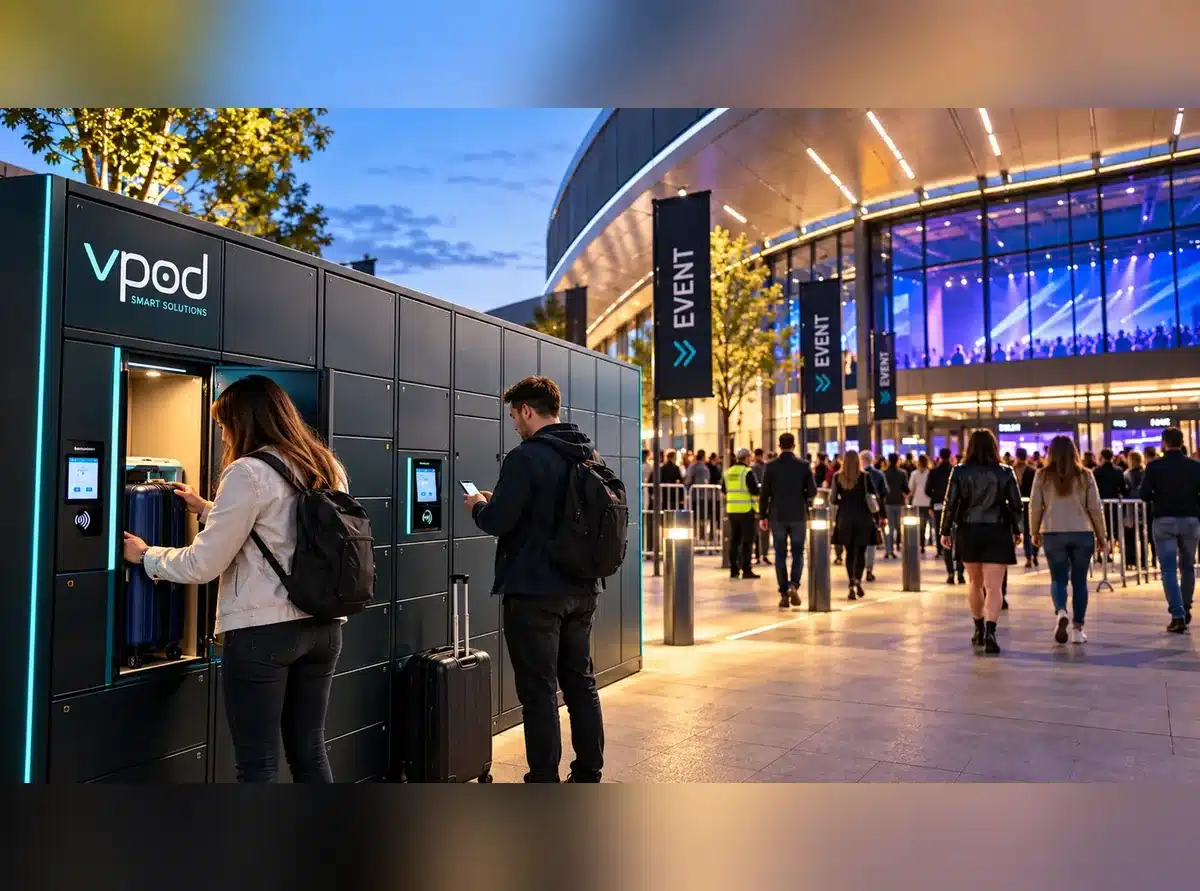
A venue can earn revenue when guests pay to store bags, coats or personal items in self-service lockers. But the amount a venue receives depends on paid sessions, price, operating days and the agreed commercial model—not simply the number of locker doors installed. A stronger venue business case should also evaluate ingress, fan experience, service capacity, retail fulfilment and operating resilience.
For example, 650 doors × 60% paid use per event × £7 × 50 events gives an illustrative £136,500 annual gross storage revenue. It is not a prediction: it assumes each door is used once per event, consistent demand and no unpaid access.
Gross revenue is different from a venue's share, and both are different from net benefit after fees and responsibilities. For a fully specified proposal, review Vpod GainShare.
The four numbers that shape locker revenue
Start with an explicit set of assumptions. Estimate paid sessions separately from available locker capacity so that optimistic utilisation does not become an unsupported revenue forecast.
Doors available
Compartment count, size mix and accessible allocation.
Paid sessions
The number of successful, paid uses per door, per operating period.
Guest price
Price per transaction, promotions and any relevant price bands.
Operating frequency
Events or trading days, adjusted for seasonal demand.
For venues with repeat use of a compartment during one event, replace simple utilisation with the measured number of paid sessions. Avoid assuming more than one use without evidence.
To improve accuracy, model low, central and high demand separately. Consider pre-booking adoption, bag policies, weather, arrival patterns, local competition, available space and signage. Read Vpod's Event Luggage Operations Knowledge Centre for operational planning.
What could different venues generate?
These examples are hypothetical illustrations, not observed site performance or guaranteed returns. Each assumes one paid session per occupied locker per event.
| Illustrative venue | Locker doors | Paid occupancy | Price | Events / year | Gross / year |
|---|---|---|---|---|---|
| Small events venue | 250 | 50% | £6 | 60 | £45,000 |
| Mid-size arena | 650 | 60% | £7 | 50 | £136,500 |
| Busy arena | 850 | 70% | £7 | 100 | £416,500 |
How would a venue share affect the result?
As a purely illustrative calculation, a 40% venue share of the mid-size arena's £136,500 annual gross would be £54,600 before any agreed deductions. This is not a standard or promised Vpod commercial split. Commercial terms, recovery phases and responsibilities must be defined for each project.
Explore the existing Vpod revenue calculator →The wider venue impact: six ways lockers can create value
Storage revenue is the most visible return. Yet a well-positioned self-service locker network can also improve the visitor journey and create opportunities elsewhere in the venue. These are potential operational benefits, not automatic or proven revenue uplifts; validate each with a pilot, footfall data and the venue's own commercial systems.
Remove avoidable ingress friction
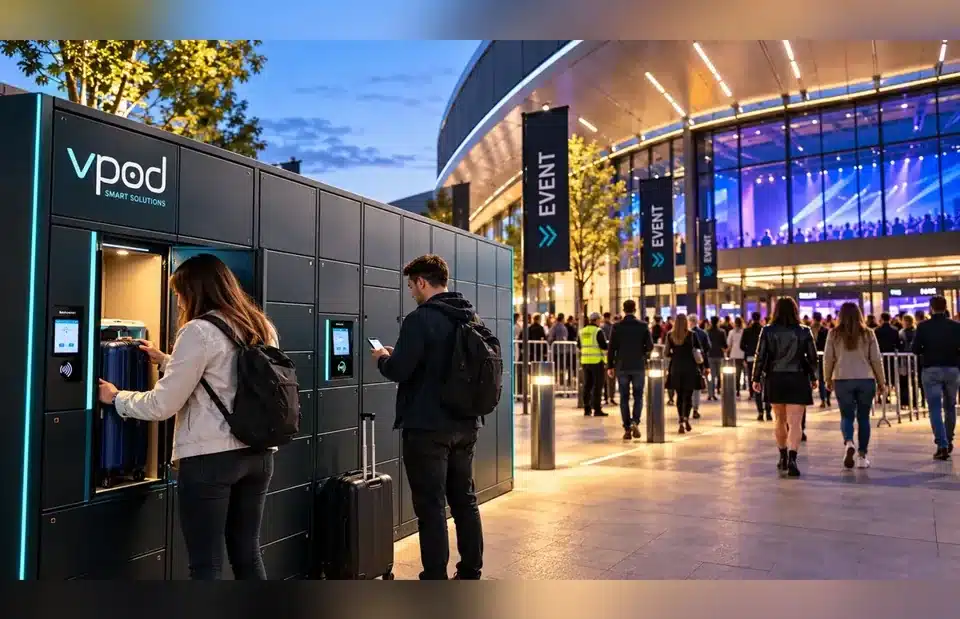
Let spectators store prohibited or awkward bags before entering the normal screening queue. Pre-booked lockers, clear external signage and separate bag-drop routes can reduce last-minute diversions. Do not replace mandatory searches or security controls.
Move away from manual queues
Self-service access can cut time spent in traditional cloakroom handovers. Measure end-to-end journeys, including payment, locker opening, retrieval and peak post-event demand—not just the door-opening time.

Free guests to enjoy the event
Guests without bags or bulky belongings can move more comfortably through concourses, hospitality zones, shops and attractions. Accessible locker locations, inclusive interfaces and support options matter as much as speed.
Create more time for spending
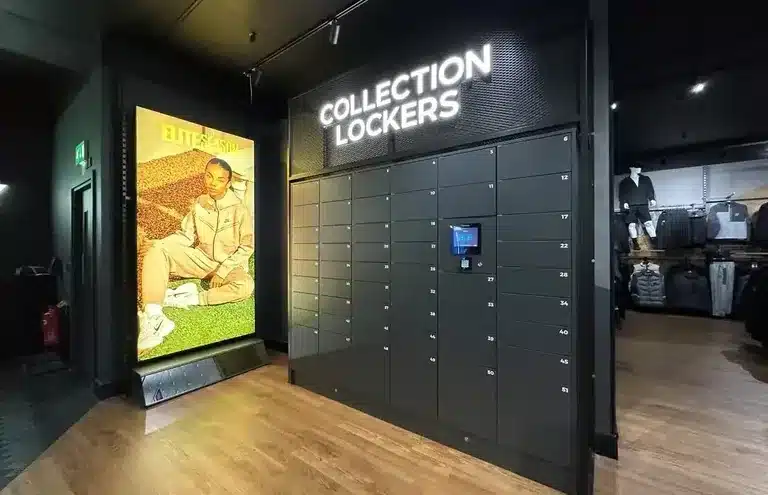
Less time diverted to luggage queues may create an opportunity for additional food, drink or merchandise purchases. This is a hypothesis to test with transaction and dwell-time data; spending is not guaranteed.

Reallocate staff and floor space
Fewer manual bag handovers may reduce staffing pressure at peak times and free space for other uses. Account for customer support, replenishment, cleaning, incident response and supervision before recognising savings.
Work beyond event hours
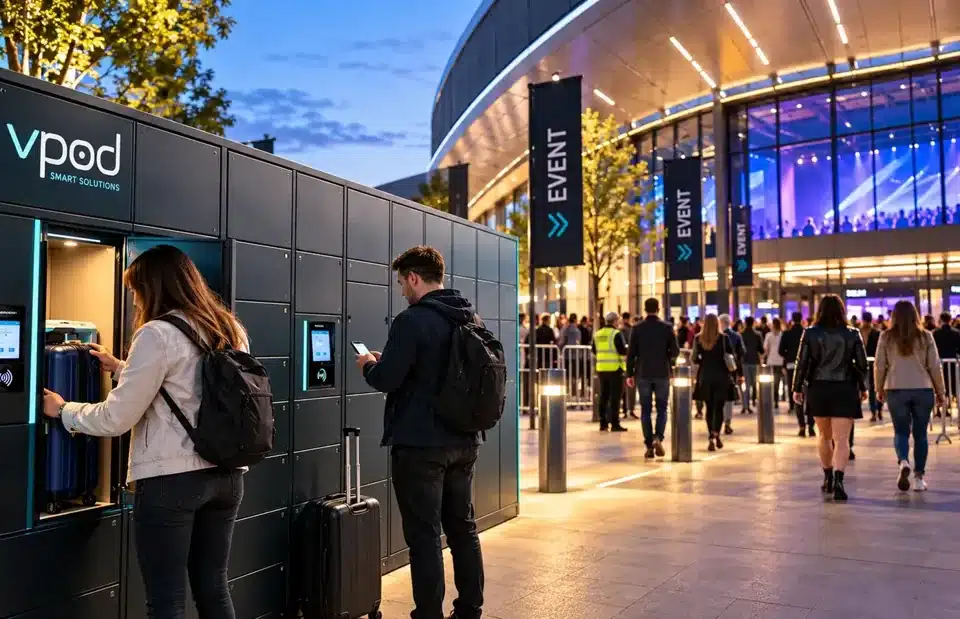
Where the venue's access rules permit, lockers can serve stadium tours, conferences, concerts, fan shops and weekday events, improving use of the installed capacity across the calendar.
Martyn’s Law, bag policies and safer venue operations
The Terrorism (Protection of Premises) Act 2025, widely known as Martyn’s Law, places qualifying premises and events into different tiers based on expected attendance and other legal criteria. The standard tier normally covers 200–799 people; the enhanced tier generally covers 800 or more. The Security Industry Authority says substantive requirements are expected to come into force in spring 2027, with the exact date to be confirmed.
For large arenas and sports stadiums, this creates a strong reason to assess baggage handling and public-space operations as part of a wider protective-security plan. A strategically located locker service may help guests comply with bag-size policies and reduce the number of visitors arriving at screening with belongings they cannot take inside.
Crucially, lockers are not a Martyn’s Law compliance solution in themselves. They do not remove the venue's legal responsibilities, substitute for screening, prove that a space is secure or justify weaker checks. Placement outside a controlled perimeter can create its own risk and must be reviewed with security professionals.
Safety-led design should consider evacuation and lockdown routes, CCTV coverage where appropriate, unattended-bag procedures, suspicious items, fire access, accessibility, crowd accumulation and communication with visitors. The required controls depend on the site-specific risk assessment.
Official guidance: Home Office statutory guidance and SIA regulatory overview.
From bag storage to fan retail collection
A football or rugby stadium is a multi-purpose destination: matchday entrance gates, concourses, club shops, hospitality facilities, tours and non-matchday events all create different opportunities for lockers. The strongest proposal treats them as a fan-service and retail fulfilment network, not simply a paid bag store.
Pre-screening bag storage
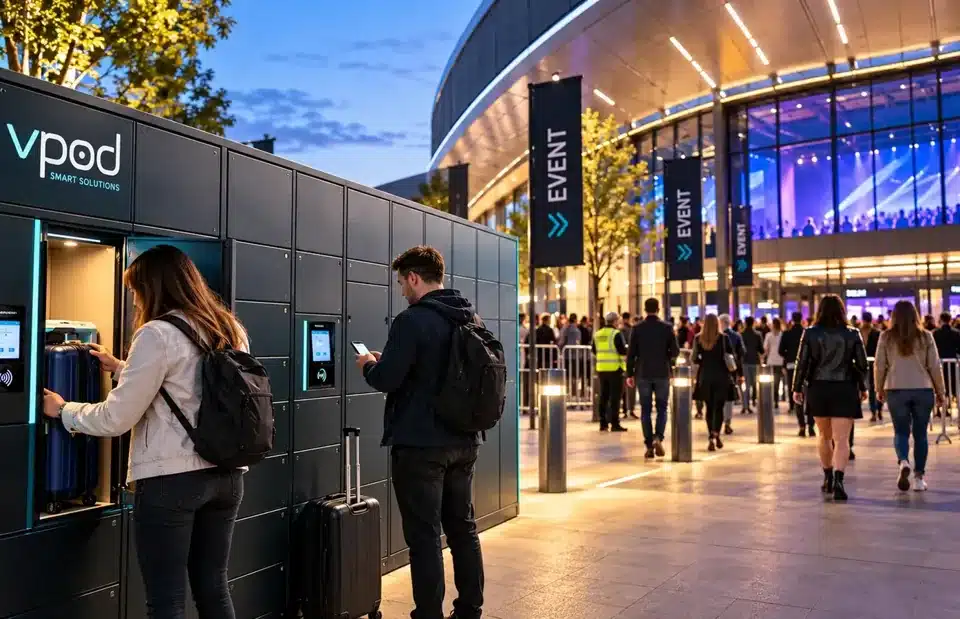
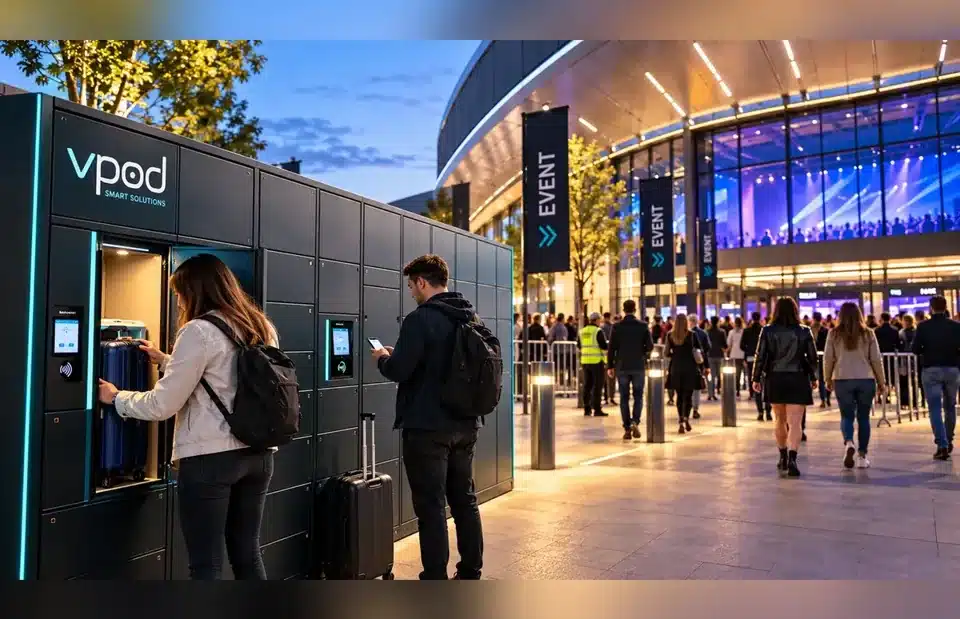
Give fans a clear choice to deposit unsuitable bags before standard entry procedures. Offer pre-booking with match tickets and wayfinding from transport hubs and main approaches.
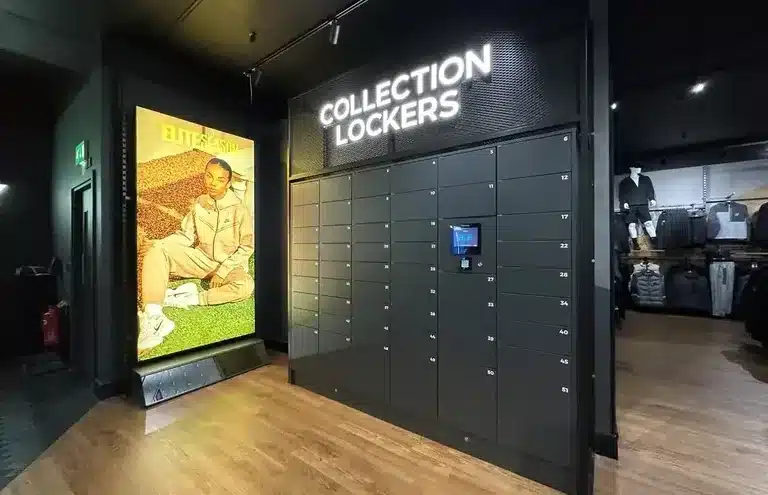
Click & collect at the stadium
Let supporters order shirts, scarves, gifts and accessories online before the match, then collect from a locker at a convenient time. Use order verification, collection windows and stock-control integration; this is a proposed workflow, not a claimed existing Vpod football deployment.
Buy now, collect later
Allow a fan to buy merchandise before kick-off but collect after the final whistle, avoiding carrying purchases around the ground. Define post-event access, retrieval time limits and queues carefully.

More uses for installed lockers
Consider locker-enabled VIP gifts, corporate event welcome packs, stadium-tour collections, staff equipment handovers and sponsor merchandise, provided there is a clear operating owner and safe access.
Creative use cases worth piloting
| Use case | Fan/venue benefit | What to validate |
|---|---|---|
| Pre-ordered replica shirts | Collection without club-shop queues | Collection rate, fulfilment errors, basket value |
| Half-time / full-time retail pickup | Flexible collection window | Queue peaks, post-match access, staff support |
| Limited-edition kit launches | Controlled pickup for pre-purchased items | Authentication, stock reconciliation, no-show rate |
| Season-ticket member gifts | Scalable, scheduled distribution | Eligible-user checks, expiry, unclaimed items |
| Hospitality or sponsor packs | Streamlined guest fulfilment | Guest permissions, access zones, service recovery |
| Tour / non-matchday storage | Higher use across the weekly calendar | Demand by day, access, additional staffing |
For retail fulfilment and integrations, see Vpod's retail locker solution, delivery locker solution and integration library. No specific football or rugby client deployment is asserted here.
How to measure total value without counting the same pound twice
Build a site-level commercial scorecard that separates observed financial results from potential indirect benefits. Direct locker receipts, sales uplift, labour savings and strategic benefits belong in different lines.
| Value stream | Suggested KPI | Accounting caution |
|---|---|---|
| Locker income | Paid sessions × net receipts per session | Deduct refunds, fees and agreed revenue-share payments |
| Food and drink | Incremental gross profit per eligible visitor | Use measured test/control difference; do not assume higher spend |
| Merchandise retail | Incremental fulfilled orders × contribution margin | Separate diverted store sales from genuinely incremental orders |
| Operational labour | Hours saved × avoidable labour cost | Do not count redeployed hours as cash savings unless costs fall |
| Entrance journey | Queue time, rejections, repeat screening attempts | Operational KPI, not automatically a cash benefit |
| Guest experience | Satisfaction, complaints, accessibility outcomes | Report independently unless linked to validated financial impact |
Run controlled pilots by event type, entrance and daypart. Compare similar fixtures or concerts, normalise for attendance and customer mix, and record whether the locker service improved arrival or retail performance relative to the existing operation.
What actual Vpod deployments tell us
Published project evidence helps ground financial assumptions. Case results describe specific deployments and should not be treated as transferable forecasts.
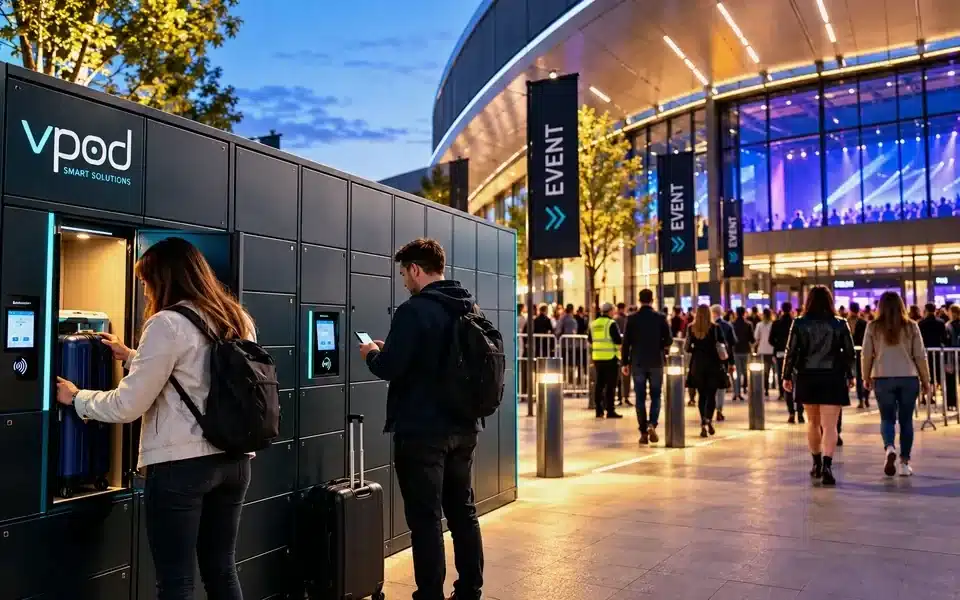
Co-op Live, Manchester
Vpod reports £38,374 of locker revenue over the first five months. The published evidence demonstrates that paid storage can become a measurable venue service, while adoption and event frequency remain venue-specific.
Read the Co-op Live case study →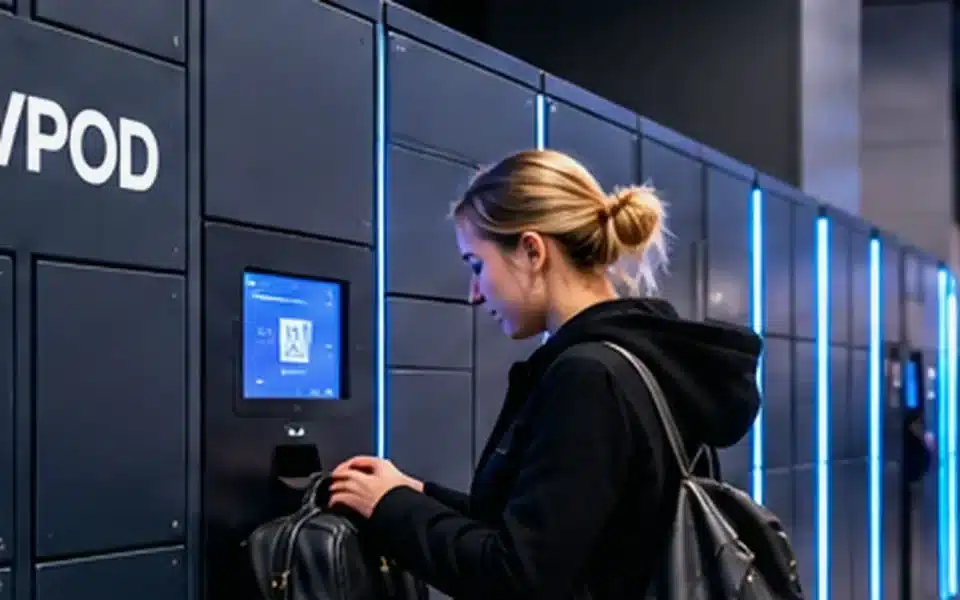
Flip Out Lakeside
A six-month proof of concept tested self-service visitor storage under a funded commercial model. This is a useful model for validating demand before longer-term assumptions are adopted.
Read the Flip Out case study →Source: Vpod's published case studies and Smart Locker Evidence Library. Results are as reported by Vpod.
Five practical ways to increase paid usage
- Promote before arrival. Include storage offers in booking confirmations, event information and ticket communications.
- Make the customer journey easy. Give visitors a clear location, price, booking route and collection instructions.
- Place lockers where demand arises. Consider external storage before security and internal convenience storage after entry.
- Get capacity right. Match compartment sizes and quantity to real visitor belongings and event peaks.
- Monitor the operation. Review demand by event, failed transactions, occupancy, dwell time, refunds and repeat use.
Model arrival flow, guest spending opportunities and staffing effects separately from locker rental income, with measured baselines to avoid double-counting. Explore event smart locker systems and venue locker solutions.
From venue opportunity to deployment-ready plan.
Explore five core planning guides, then use the supporting venue-readiness articles to address safety, systems, service and commissioning.
 01
Capacity & sizing
Right-size the locker mix for peak arrivals, dwell time, bag sizes and operational headroom.
Explore capacity planning 02
Pilot projects
Test the complete guest journey, access methods, exception handling and success measures before committing to a rollout.
Plan a locker pilot 03
Multi-site rollout
Create consistent operating standards across stadiums, arenas and other locations while allowing for local demand.
Read the rollout guide 04
Technology
Understand credentials, software, connectivity, security, reporting and the controls behind a dependable locker service.
Explore locker technology 05
Integrations
Connect ticketing, payments, identity, retail orders and operational workflows to the right locker journey.
Explore integrationsAlso essential for venue readiness
Five additional Vpod guides cover practical issues that can determine whether an otherwise attractive venue locker project succeeds.
Need a broader sizing framework? See How Many Smart Lockers Does an Organisation Need? for demand, concurrency and compartment calculations across different workflows.
See how visitors book, store and collect.
Explore Vpod's official videos for venue deployments, self-service access and real customer operations. The links open the official channel and case-study pages rather than loading a video player on the article, reducing third-party page weight.