





IT Asset Lockers for Joiners, Movers & Leavers
Turn onboarding, role changes and offboarding into controlled physical equipment workflows. Vpod smart asset lockers can give new employees a secure collection point, help movers receive the right equipment for a new role and give leavers a traceable route to return devices without waiting for a staffed IT desk.
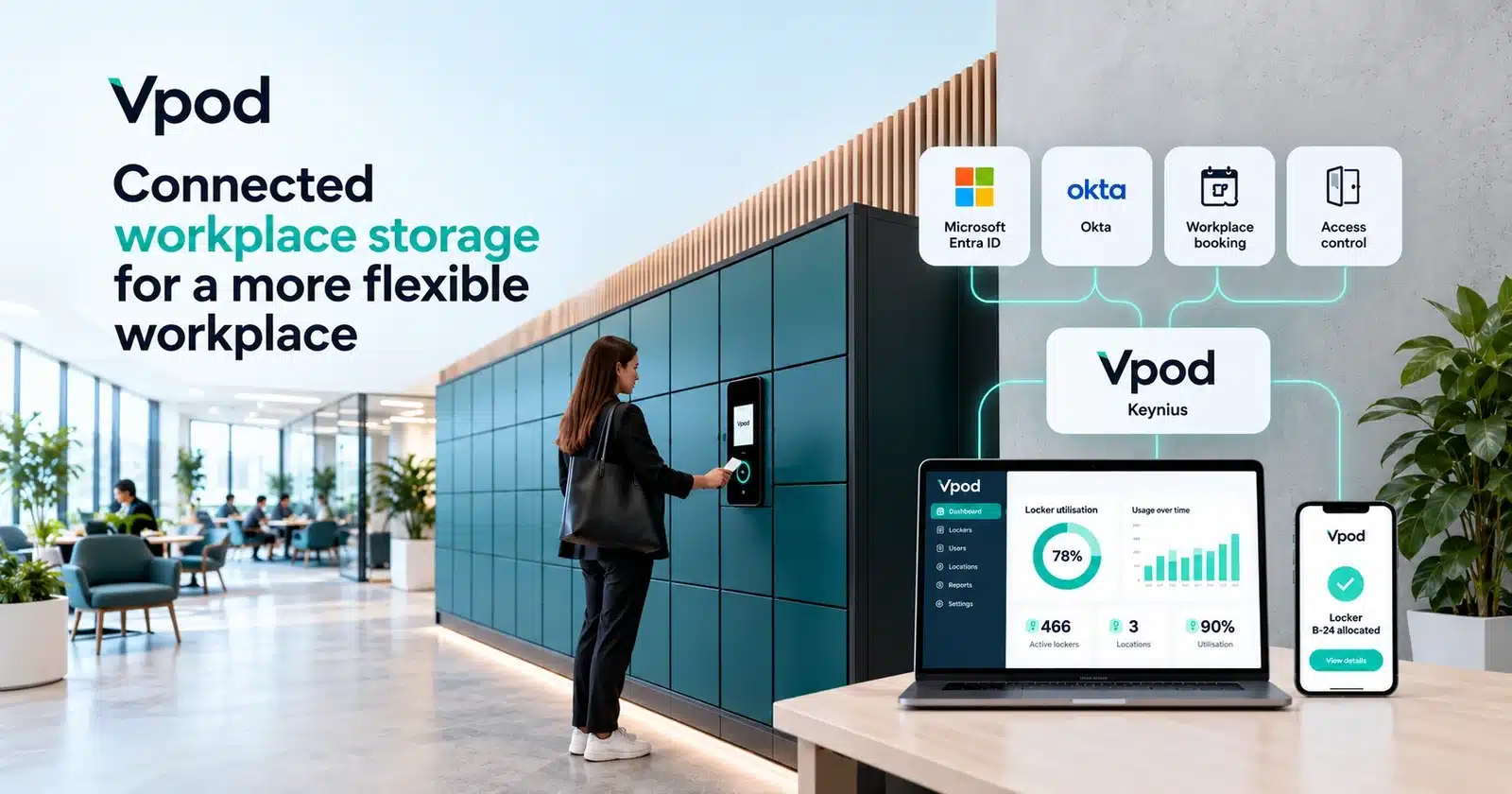
Make the equipment handover part of the employee lifecycle.
Joiners, movers and leavers already trigger identity, HR, service and access decisions. The asset locker adds a controlled physical handover point so equipment collection or return can happen at the right time without maintaining a separate manual process.
Joiner
Approved employee → equipment prepared → locker assigned → identity verified → collection recorded.
Mover
Role or site changes → entitlement reviewed → replacement or additional equipment issued where required.
Leaver
Return requirement → authorised deposit → IT notified → device inspected → asset record progressed.
The control layer behind a joiner, mover or leaver journey.
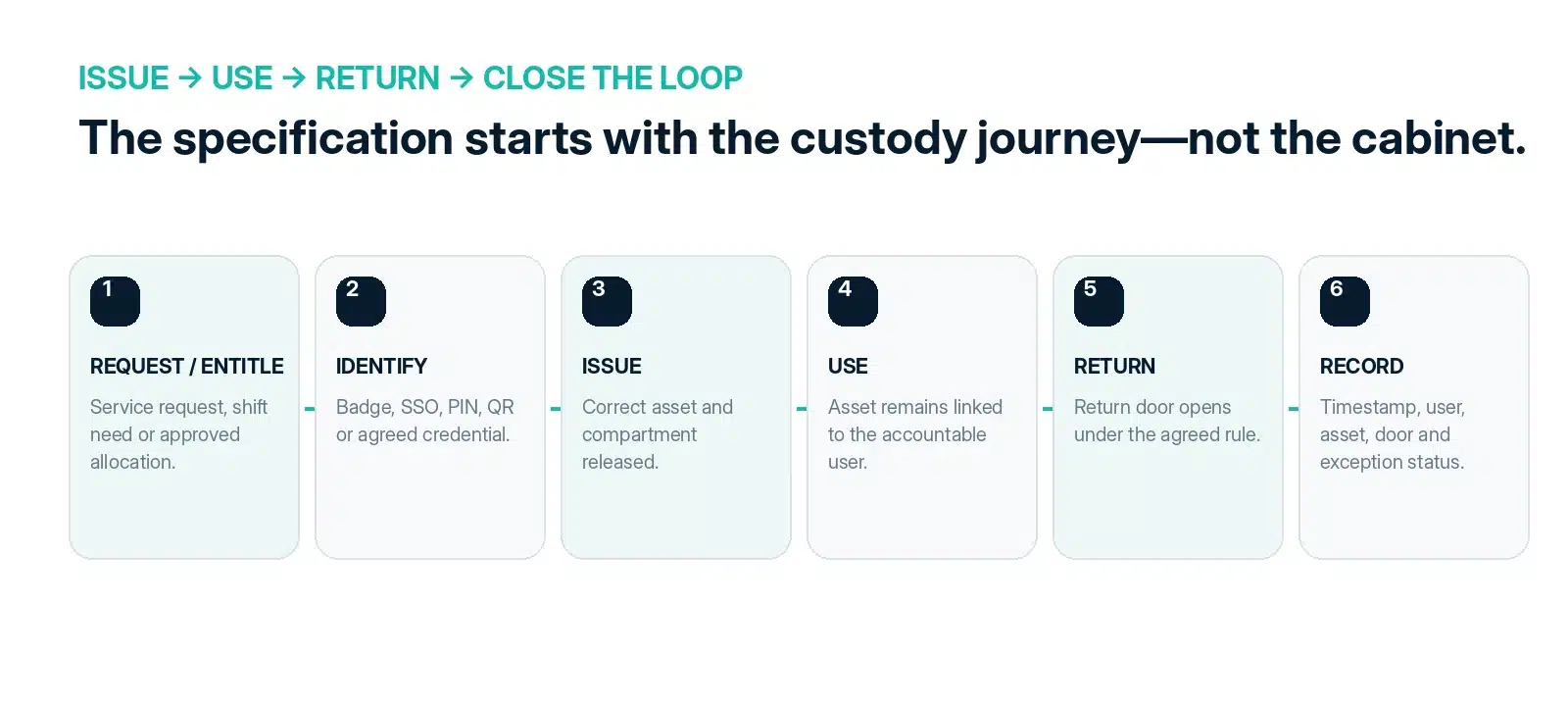
The same asset workflow can support onboarding, role changes and offboarding: a request or lifecycle event creates entitlement, the correct asset is allocated, the employee authenticates, the handover is recorded and the equipment can be inspected and redeployed.
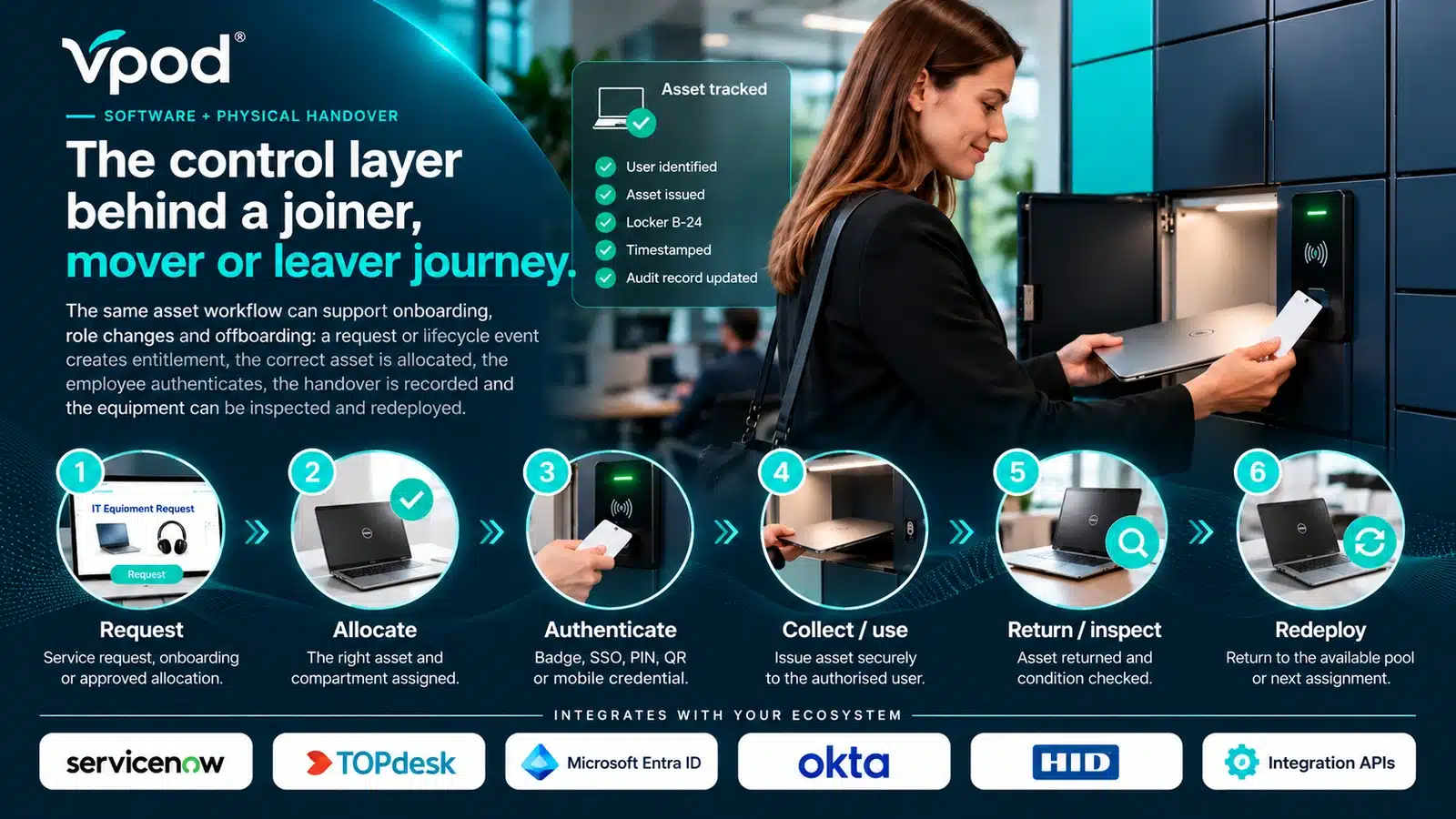
Separate the lifecycle event from the physical action—but connect the evidence.
From approved starter to collected equipment
- Starter confirmed in the authoritative HR / identity process.
- Equipment request or onboarding task is approved.
- Asset allocated and placed in a suitable locker.
- Employee authenticates using the agreed identity or credential.
- Collection recorded and the owning service / asset process can progress.
From role change to updated entitlement
- Role, team or site changes.
- Existing access reviewed against the new policy.
- Equipment requirement changes where the job needs different devices.
- Collect / return workflow is created as needed.
- Old entitlement expires when it should.
From return request to IT notification
- Leaving date triggers the agreed return process.
- Return entitlement identifies the employee and expected equipment.
- Locker deposit creates a secure self-service return event.
- IT receives status and can inspect the equipment.
- Asset is closed, repaired or redeployed under the normal process.
Do not create a second employee lifecycle inside the locker system.
The strongest model uses the organisation’s governed identity and service decisions to inform locker eligibility. The locker then controls the physical action and records the agreed event.
Who is the person?
Use an approved enterprise identity rather than another unmanaged local user list.
What may they do?
Role, site, employment state and approved workflow determine collection or return entitlement.
When does it end?
Movers, suspended identities and leavers need timely reassessment or removal of access.
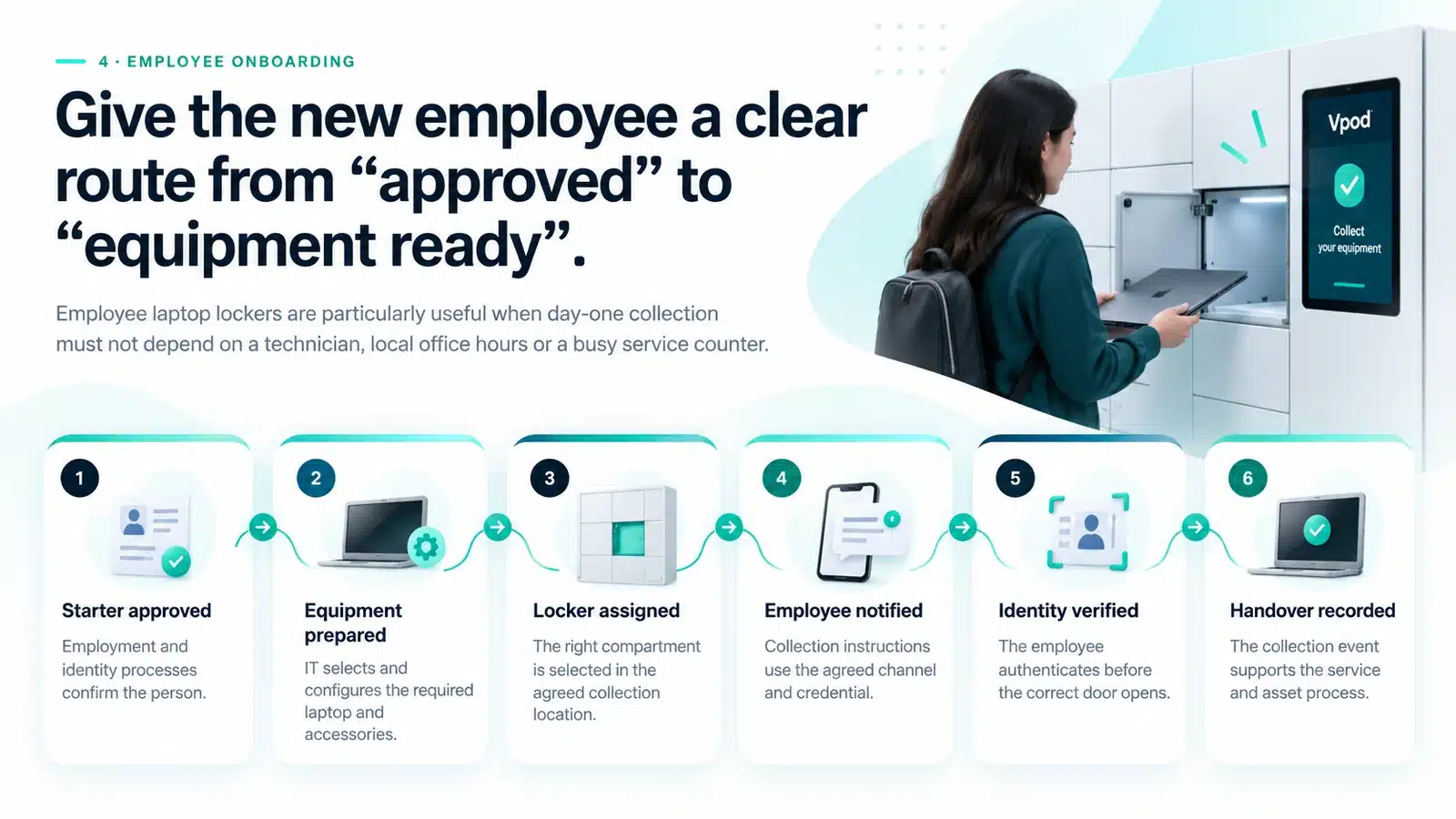
Give the new employee a clear route from “approved” to “equipment ready”.
Employee laptop lockers are particularly useful when day-one collection must not depend on a technician, local office hours or a busy service counter.
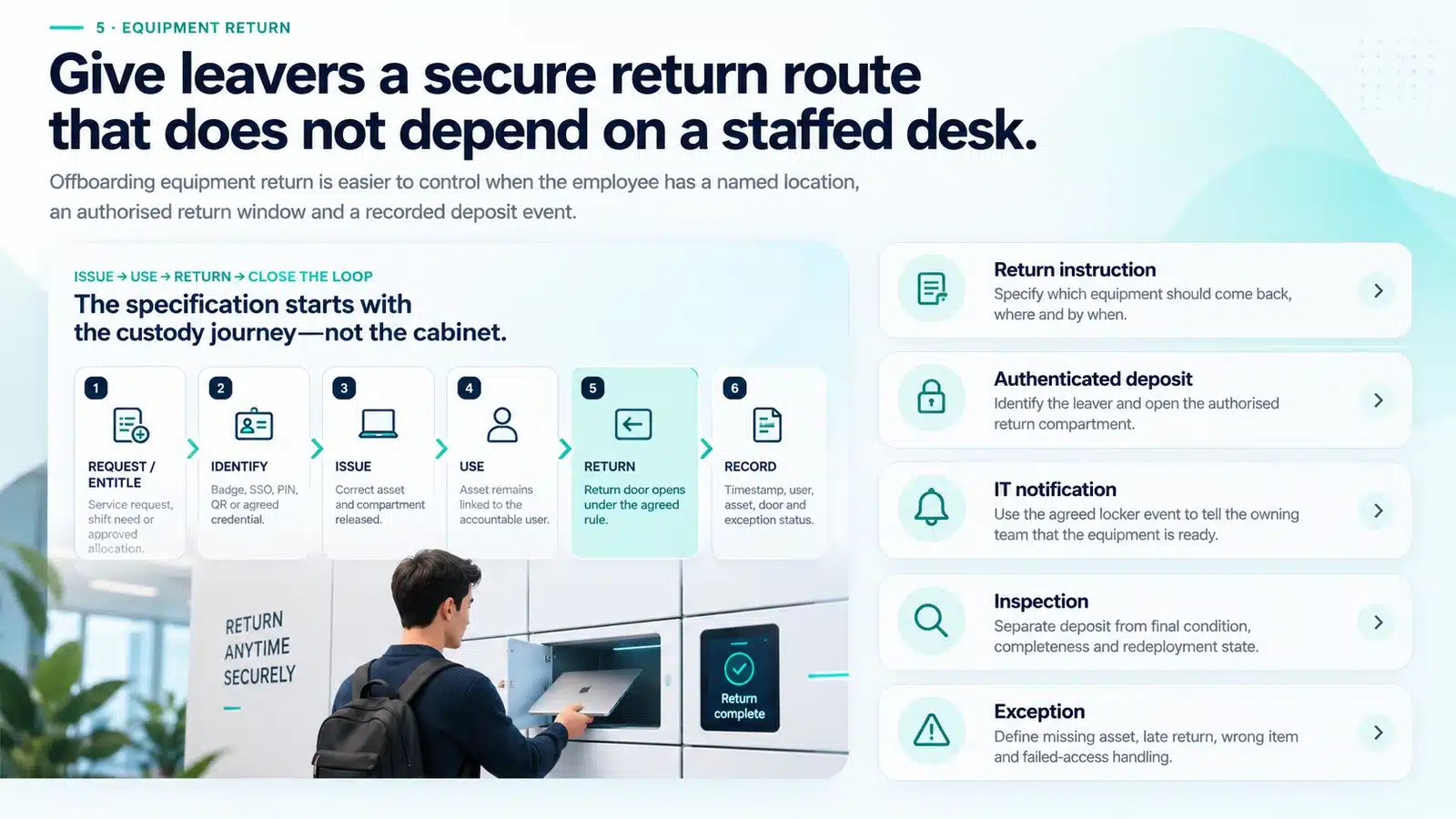
Give leavers a secure return route that does not depend on a staffed desk.
Offboarding equipment return is easier to control when the employee has a named location, an authorised return window and a recorded deposit event.
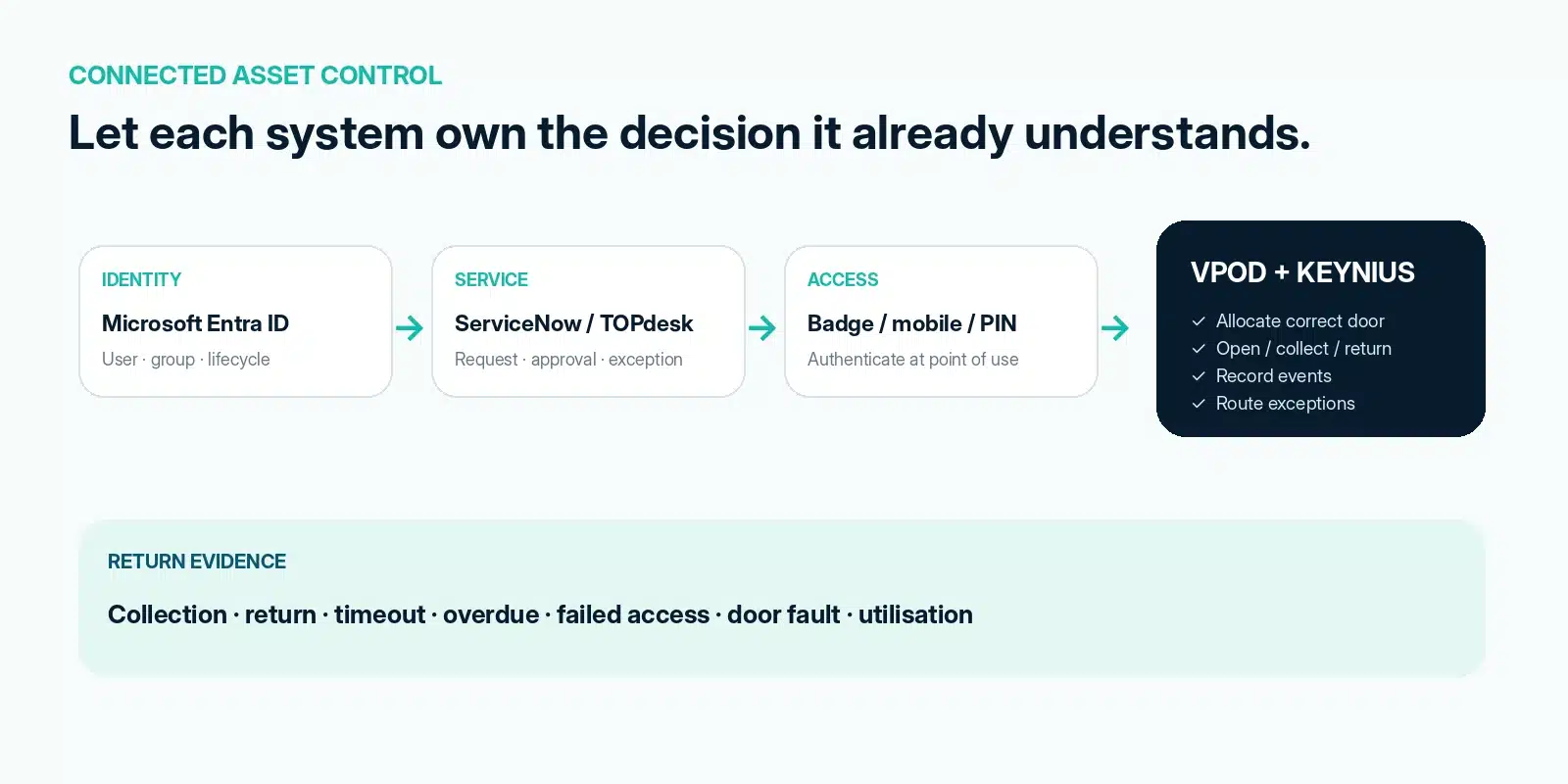
Connect identity, service and physical access without blurring ownership.
Use the system that already owns each decision: identity confirms the employee, service management owns the request or task, the credential proves the person at the point of use and Vpod controls the physical handover.
Identity + lifecycle context
Joiners, role changes, site changes and leavers can inform locker eligibility through agreed identity and group rules.
Entitlement + deprovisioning
Lifecycle and identity policy can govern entitlement and timely removal of access.
Requests + onboarding tasks
Onboarding tasks, incidents, equipment requests and returns can be connected to controlled locker handover.
Service workflow + status
Service requests and status updates can be extended to secure equipment issue and return.
Employee credential
An agreed employee credential can identify the person while locker entitlement remains a separate decision.
Events + data contracts
Define the lifecycle event, source system, identifiers, data contract, errors, monitoring and support model.
Design the cases that make onboarding and offboarding fail in real life.
Starter delayed
What happens if the start date changes after the asset is prepared?
Wrong site
How is equipment reassigned if the employee’s location changes?
Missing return
Who owns reminders and escalation when a leaver does not return equipment?
Credential failure
Define support, fallback and identity verification if the expected credential fails.
Connect employee identity to a simple physical handover.
Vpod’s smart locker video library and YouTube channel show how users authenticate, access lockers and complete self-service journeys. The Mars case study provides practical evidence of IT asset distribution and returns at enterprise scale.
Mars IT asset locker case study
Secure self-service asset distribution, emergency replacement and returns across a multi-country workplace estate.
Read the case study →Map the joiner, mover and leaver workflow around your existing systems.
Bring the identity source, onboarding tasks, device process, leaving-date controls and exception owners. Vpod can define where secure locker issue and return fits.