





Trusted by these customers




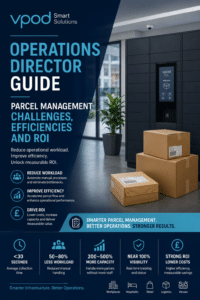
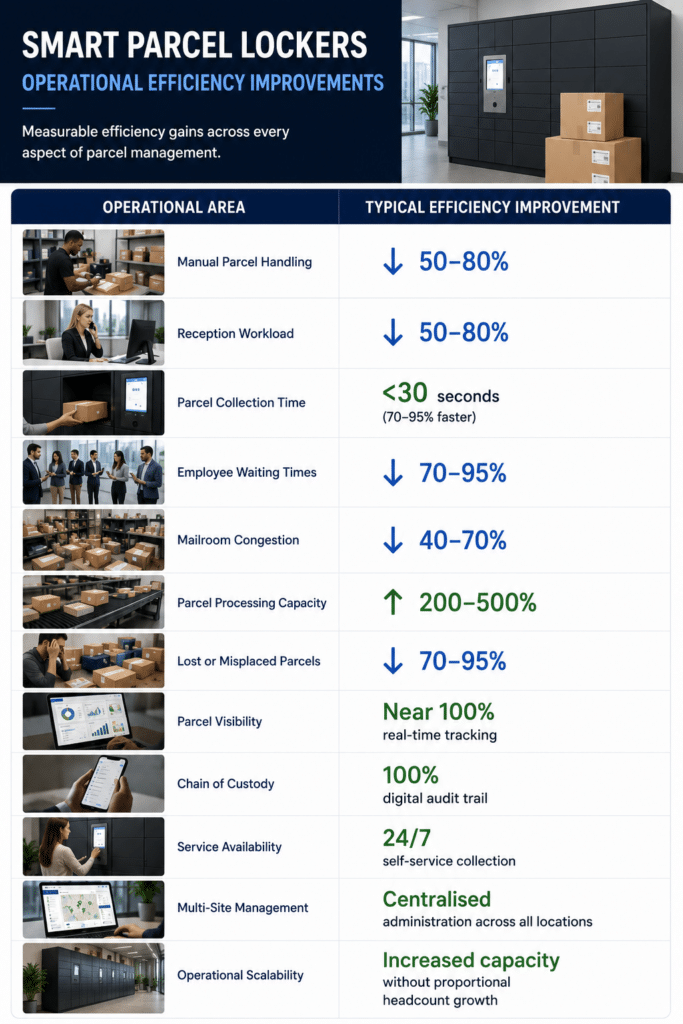
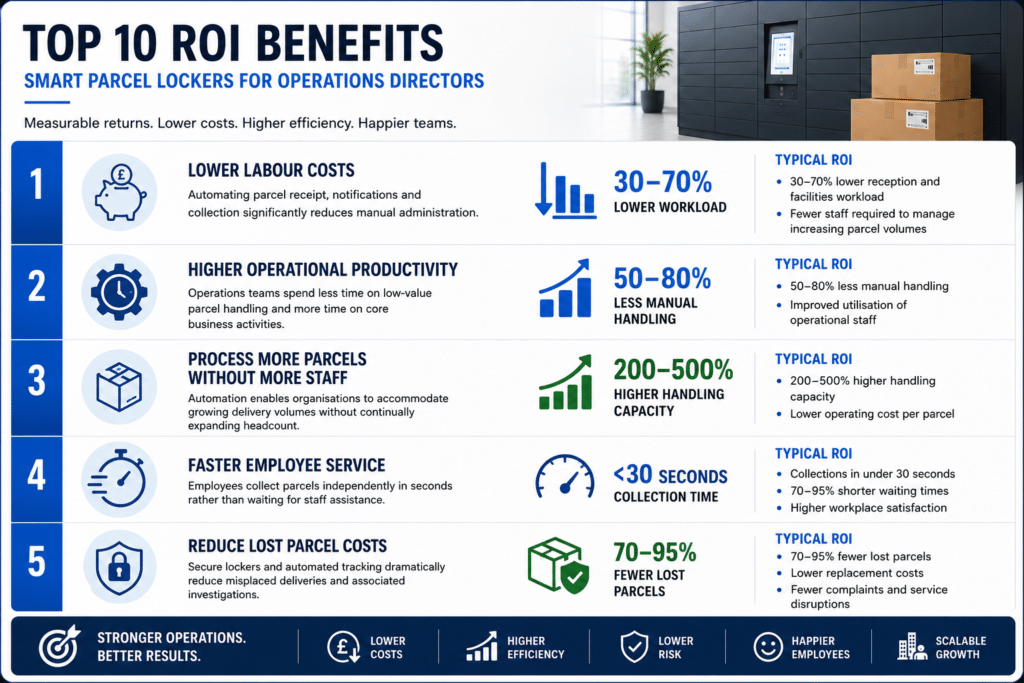
- Reduce Mailroom & Reception Workload by 50–80% . Operational Impact 50–80% less manual parcel handling Fewer reception interruptions Reduced staffing requirements during peak delivery periods
- Deliver 24/7 Self-Service Parcel Collection. Operational Impact Collection times under 30 seconds 24/7 availability Reduced queues and waiting times by 70–95%
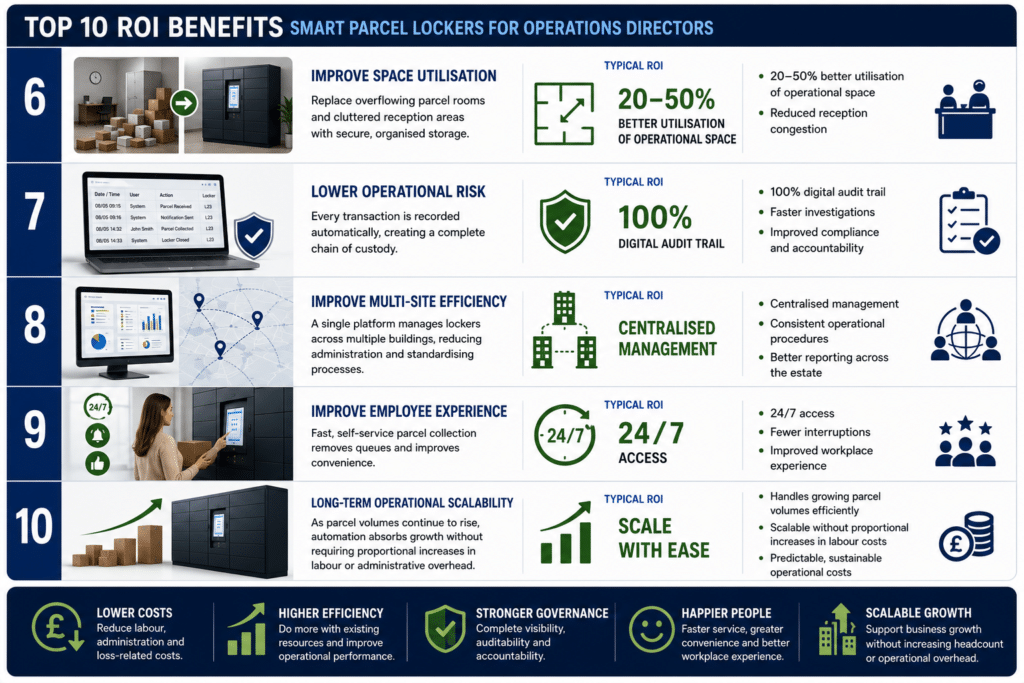
- Achieve 100% Parcel Visibility & Accountability. Operational Impact Near 100% parcel traceability Complete digital audit trail Significant reduction in misplaced or disputed deliveries
- Improve Operational Capacity Without Increasing Headcount. Operational Impact Handle 200–500% more parcels per day Lower operational cost per parcel Easily scale across multi-site estates
Common Operations Director Challenges with Parcels
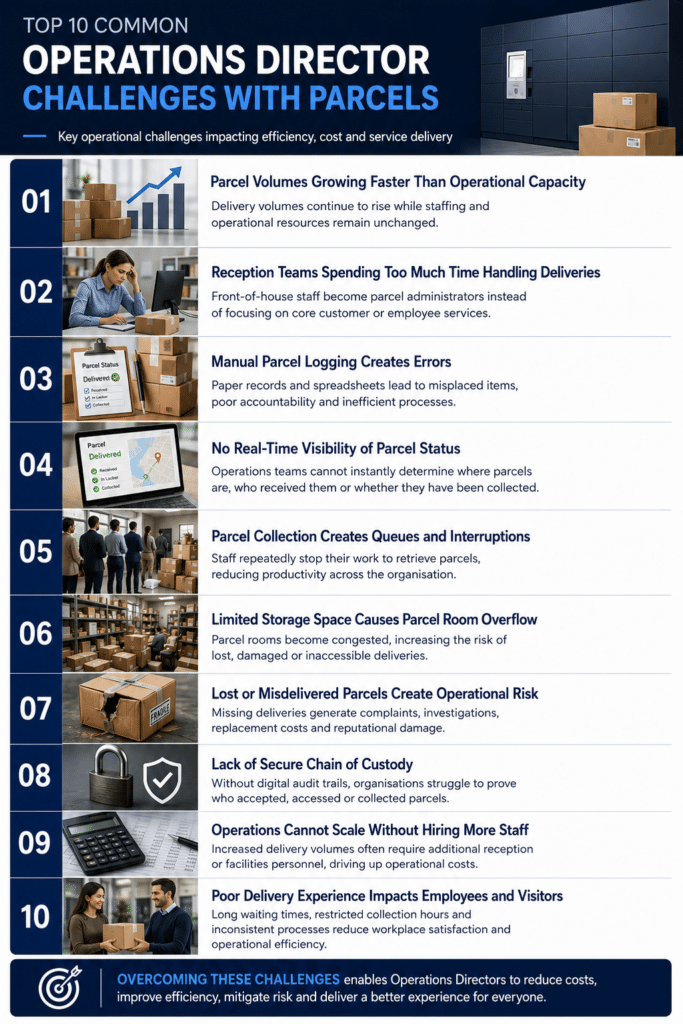
Top 10 Common Operations Director Challenges with Parcels
- Parcel Volumes Growing Faster Than Operational Capacity
Delivery volumes continue to rise while staffing and operational resources remain unchanged. - Reception Teams Spending Too Much Time Handling Deliveries
Front-of-house staff become parcel administrators instead of focusing on core customer or employee services. - Manual Parcel Logging Creates Errors
Paper records and spreadsheets lead to misplaced items, poor accountability and inefficient processes. - No Real-Time Visibility of Parcel Status
Operations teams cannot instantly determine where parcels are, who received them or whether they have been collected. - Parcel Collection Creates Queues and Interruptions
Staff repeatedly stop their work to retrieve parcels, reducing productivity across the organisation. - Limited Storage Space Causes Parcel Room Overflow
Parcel rooms become congested, increasing the risk of lost, damaged or inaccessible deliveries. - Lost or Misdelivered Parcels Create Operational Risk
Missing deliveries generate complaints, investigations, replacement costs and reputational damage. - Lack of Secure Chain of Custody
Without digital audit trails, organisations struggle to prove who accepted, accessed or collected parcels. - Operations Cannot Scale Without Hiring More Staff
Increased delivery volumes often require additional reception or facilities personnel, driving up operational costs. - Poor Delivery Experience Impacts Employees and Visitors
Long waiting times, restricted collection hours and inconsistent processes reduce workplace satisfaction and operational efficiency.
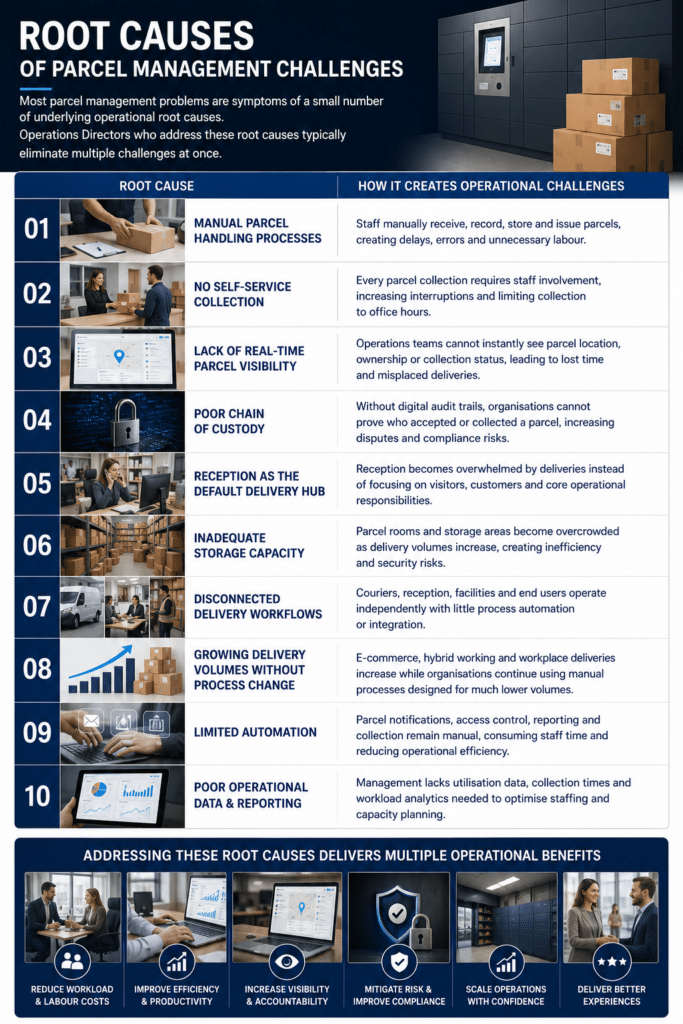
Top 10 Root Causes of Operations Directors Challenges
- Manual Parcel Handling Processes — Staff manually receive, record, store and issue parcels, creating delays, errors and unnecessary labour.
- No Self-Service Collection — Every parcel collection requires staff involvement, increasing interruptions and limiting collection to office hours.
- Lack of Real-Time Parcel Visibility — Operations teams cannot instantly see parcel location, ownership or collection status, leading to lost time and misplaced deliveries.
- Poor Chain of Custody — Without digital audit trails, organisations cannot prove who accepted or collected a parcel, increasing disputes and compliance risks.
- Reception as the Default Delivery Hub — Reception becomes overwhelmed by deliveries instead of focusing on visitors, customers and core operational responsibilities.
- Inadequate Storage Capacity — Parcel rooms become overcrowded as delivery volumes increase, creating inefficiency and security risks.
- Disconnected Delivery Workflows — Couriers, reception, facilities and end users operate independently with little automation or integration.
- Growing Delivery Volumes Without Process Change — Delivery volumes increase while organisations continue using manual processes designed for much lower volumes.
- Limited Automation — Parcel notifications, access control, reporting and collection remain manual, consuming staff time and reducing operational efficiency.
- Poor Operational Data & Reporting — Management lacks utilisation data, collection times and workload analytics needed to optimise staffing and capacity planning.
Why Parcel Handling Becomes an Operational Bottleneck
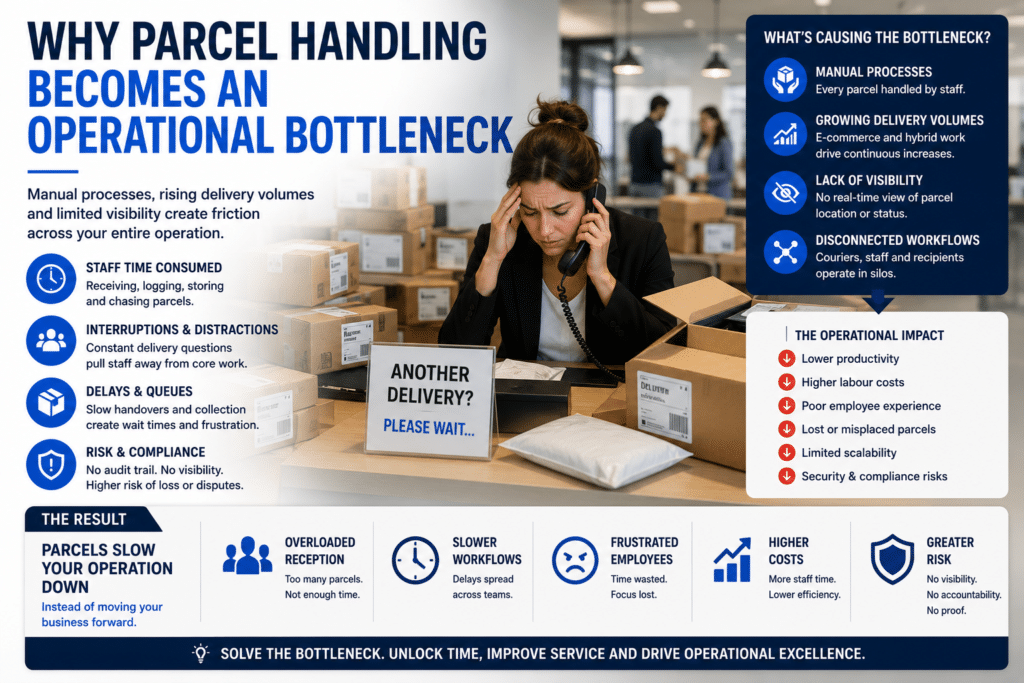
Operations teams struggle when:
- Parcel volume grows faster than processes
- Staff are interrupted by ad-hoc deliveries
- Storage areas overflow unpredictably
- Processes vary across sites
Without automation, parcel handling quietly erodes efficiency.


How Parcel Lockers Support Operational Scale
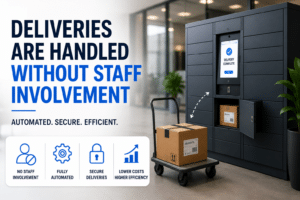
Deliveries are handled without staff involvement
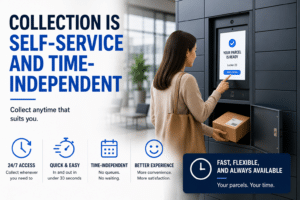
Collection is self-service and time-independent
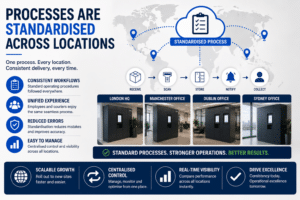
Processes are standardised across locations
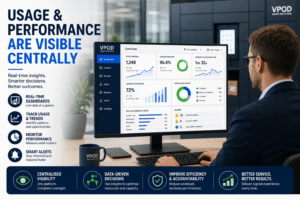
Usage and performance are visible centrally
Locker Systems as Part of Operational Parcel Management Strategy
Parcel Room V Parcel Smart Lockers
Parcel Smart Lockers
Parcels are delivered directly into lockers and collected by recipients without staff involvement.Increasing Parcel Throughput.
Secure self-service collection is available 24/7, allowing recipients to collect whenever convenient.
Real-time tracking provides near 100% visibility of every parcel from delivery to collection.Integrations Close any visibility gaps.
Every transaction is automatically recorded with a 100% digital audit trail, ensuring complete accountability.
Automation enables organisations to process 200–500% more parcels without proportional increases in headcount.
Parcel Room
Staff Involvement: Every parcel must be received, logged, stored and handed over by reception or facilities staff.
Collection Availability: Collections are limited to reception opening hours and staff availability and can be subject to queues.
Visibility & Tracking: Limited visibility using manual logs or spreadsheets. Parcel status is often unknown.
Security & Chain of Custody: Manual sign-out sheets provide limited accountability and are prone to errors.
Scalability & Operational Efficiency As parcel volumes increase, organisations require more storage space and additional staff.
Scaling Parcel Infrastructure Across Multiple Locations
Operations Directors often oversee multiple sites, buildings, or regional operations. Without standardisation, parcel handling processes vary by location — creating inefficiencies, inconsistent service levels, and hidden labour costs. Parcel lockers introduce a repeatable, structured parcel workflow that can be deployed across single or multi-site estates. Delivery rules, access permissions, and reporting can be centrally configured while allowing for site-level flexibility. This ensures parcel handling scales predictably as delivery volumes increase — without expanding staffing or storage space.
Challenges Smart Parcel Lockers can help with
PP1
Why Delivery Staff Costs Spiral at Scale
Find out more →
PP2
Why Last Mile Inefficiency Breaks at Scale
Find out more →
PP3
Why Manual Parcel Handling Breaks at Scale
Find out more →
PP4
Why Courier Wait Times Break Buildings at Scale
Find out more →

PP6
Why Missed Deliveries Break Offices at Scale
Find out more →
PP7
Why Manual Package Handling Breaks at Scale
Find out more →
PP8
Why Parcel Room Overflow Breaks Buildings at Scale
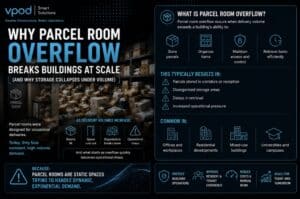
Why parcel Overflow breaks buildings at scale
Find out more →
PP9
Why Delivery Chain of Custody Breaks at Scale
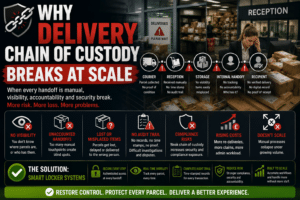
Find out more →
Outcomes Operations Directors Care About
Reduced operational noise
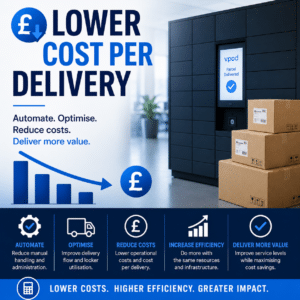
Lower cost per delivery
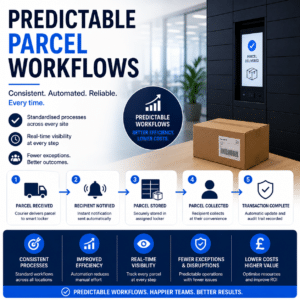
Predictable parcel workflows
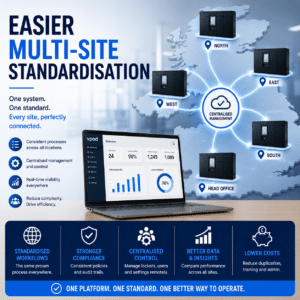
Easier multi-site standardisation
Operational Governance & Performance Visibility
Every delivery and collection is logged automatically, creating a full audit trail of parcel movement and access activity. Time-bound collection rules reduce unclaimed items, while centralised dashboards provide visibility into usage trends, dwell time, and throughput across locations. For Operations Directors, this transforms parcel handling from an unmanaged cost centre into a controlled, measurable workflow.
Smart Parcel Locker Efficiencies & ROI
See How It Works in Practice
Explore Operational Challenges
-
 Automate parcel handling
 -
Scale parcel operations across sites
-
Reduce manual process overhead
-
Improve operational visibility