FACILITIES
Facilities Manager
Reduce reception pressure, parcel-room clutter, manual handling and building disruption.
Explore facilities guidance

We design and deliver integrated systems for streamlined check-ins, secure storage, and enhanced visitor management. Our trusted partner network and focus on sustainability, data security, and customer success drives us to provide the most effective and user-friendly solutions.


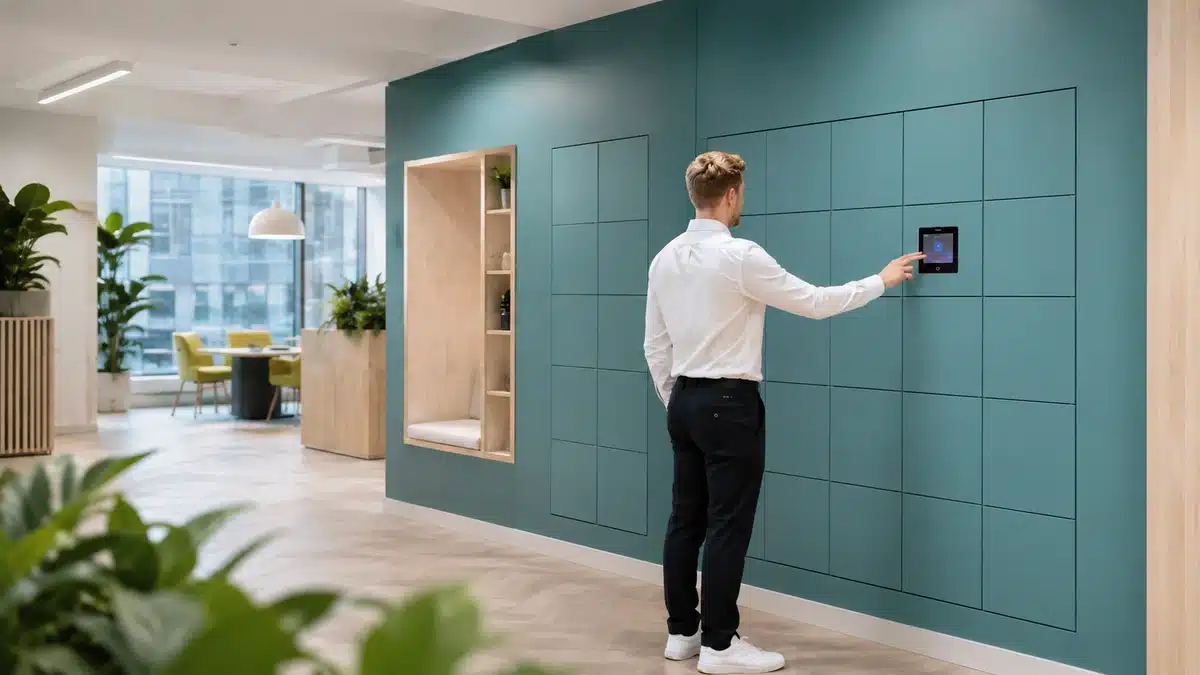

We design and deliver integrated systems for streamlined check-ins, secure storage, and enhanced visitor management. Our trusted partner network and focus on sustainability, data security, and customer success drives us to provide the most effective and user-friendly solutions.
We design and deliver integrated systems for streamlined check-ins, secure storage, and enhanced visitor management. Our trusted partner network and focus on sustainability, data security, and customer success drives us to provide the most effective and user-friendly solutions.
Practical guidance for teams redesigning parcel receipt and last-mile handovers: reduce reception workload, improve first-time delivery, secure chain of custody, plan capacity and connect delivery workflows across sites.
Growing delivery volumes turn reception desks, mailrooms and shared parcel rooms into operational bottlenecks. The strongest model is a defined workflow: identify the recipient, secure the item, notify automatically, authenticate collection and retain a searchable record.
This centre brings Vpod’s parcel and delivery guidance together by role, problem, comparison, buying decision, integration and published evidence.
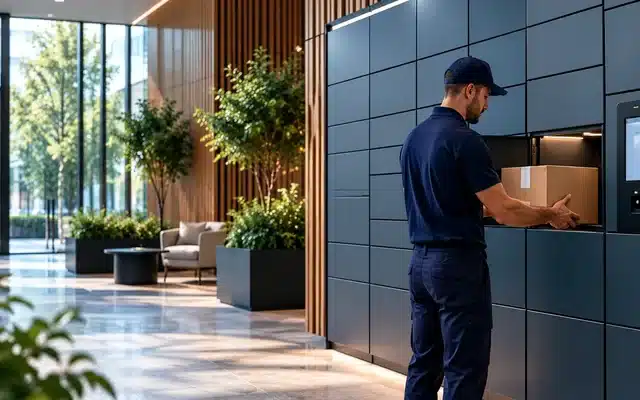
Facilities, property, operations, logistics and IT teams evaluate the same workflow through different measures of success.
Reduce reception pressure, parcel-room clutter, manual handling and building disruption.
Explore facilities guidance
Standardise parcel handling, lower cost-to-serve and scale without adding headcount.
Explore operations guidance
Improve first-time delivery, reduce driver dwell time and create predictable handovers.
Explore logistics guidance
Connect identity, access, notifications, audit data and multi-site management.
Explore IT guidanceFollow the issue closest to your current process, then move into the relevant solution or comparison.
High parcel volumes overwhelm reception and shared building areas.
Understand congestion
Manual receiving, logging, storage and handover consume staff capacity.
Review staffing pressure
Multiple touchpoints create delays, errors and repeated interruptions.
Review the workflow
Shared rooms and back-office storage fail as demand grows.
Plan for peak demand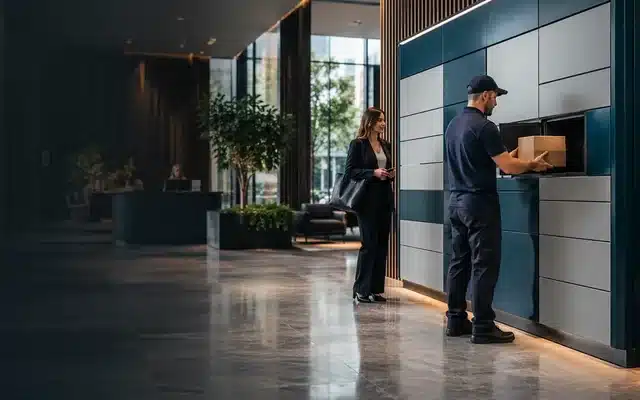
Recipient dependency and restricted handover windows create repeat attempts.
Reduce failed deliveries
Unrecorded handoffs weaken traceability, security and dispute resolution.
Strengthen custody
Access delays and staff dependency increase dwell time at each stop.
Reduce courier delay
Variable handovers reduce route reliability and increase cost per delivery.
Improve last-mile flowUse Vpod’s comparison pages to separate familiar manual processes from scalable, trackable locker workflows.
Compare shared storage with individually controlled, trackable compartments.
Read the comparisonCompare staff-led receiving with secure courier deposit and self-service collection.
Read the comparison
Assess labour, visibility, security, throughput and scalability.
Read the comparisonCompare repeat attempts with secure unattended first-time completion.
Read the comparisonMove from requirement definition and capacity through software, security, integrations, pilot planning and whole-life economics.
Compare workflow, capacity, access, software, integration, installation, support and whole-life cost.
Open the buyer’s guideUnderstand hardware, software, installation, support and configuration cost drivers.
Review cost driversModel labour, reattempts, service cost, maintenance and multi-year ownership.
Build the business caseUnderstand administration, transactions, notifications, reporting and remote management.
Explore locker softwareDefine receipt, matching, allocation, notification, collection and exception requirements.
Explore parcel APIsReview access methods, controllers, networks, software and integration architecture.
Open technology guideAssess authentication, access control, event records and operational accountability.
Review security guidanceValidate demand, workflow, capacity, access, integration and support before wider rollout.
Plan a pilotMove from theory to evidence. These examples show how connected parcel workflows improve visibility, service levels and operational control across workplaces, estates and partner-led environments.
See how connected parcel records, recipient matching, locker allocation, notification and collection combine into a more accountable chain of custody.
Read the integration case studyExplore how consolidated estate deliveries, real-time tracking and secure self-service collection support a more efficient, scalable delivery operation.
Explore the customer story hubUse the ADP evidence to show how smart lockers can improve visibility, reduce reception friction and support a stronger employee parcel experience at scale.
Explore workplace evidenceShow how Vpod lockers fit a premium workplace hospitality model by reducing reception handling while maintaining secure parcel receipt and self-service collection.
Explore the Sodexo deploymentUse these stories to support business cases, stakeholder buy-in and deployment planning alongside the main Vpod customer stories hub ↗.
A locker deployment should not create another isolated endpoint. Define how recipient data, parcel records, allocation, notifications, credentials, exceptions and audit events move through the process.
Bring the operating facts that determine capacity, configuration and integration.
Average and peak parcels per day, dwell time, size mix and growth.
Courier arrival, recipient matching, storage, notification and collection.
Identity, access, audit, exceptions, security and service ownership.
Door mix, peak loading, footprint, indoor/outdoor conditions and expansion.
Parcel platforms, directories, access, notifications and reporting.
Pilot representative demand, measure outcomes and standardise rollout.
Bring Vpod the delivery volumes, users, sites, access rules and current failure points. The team can help map the right parcel or delivery locker route.