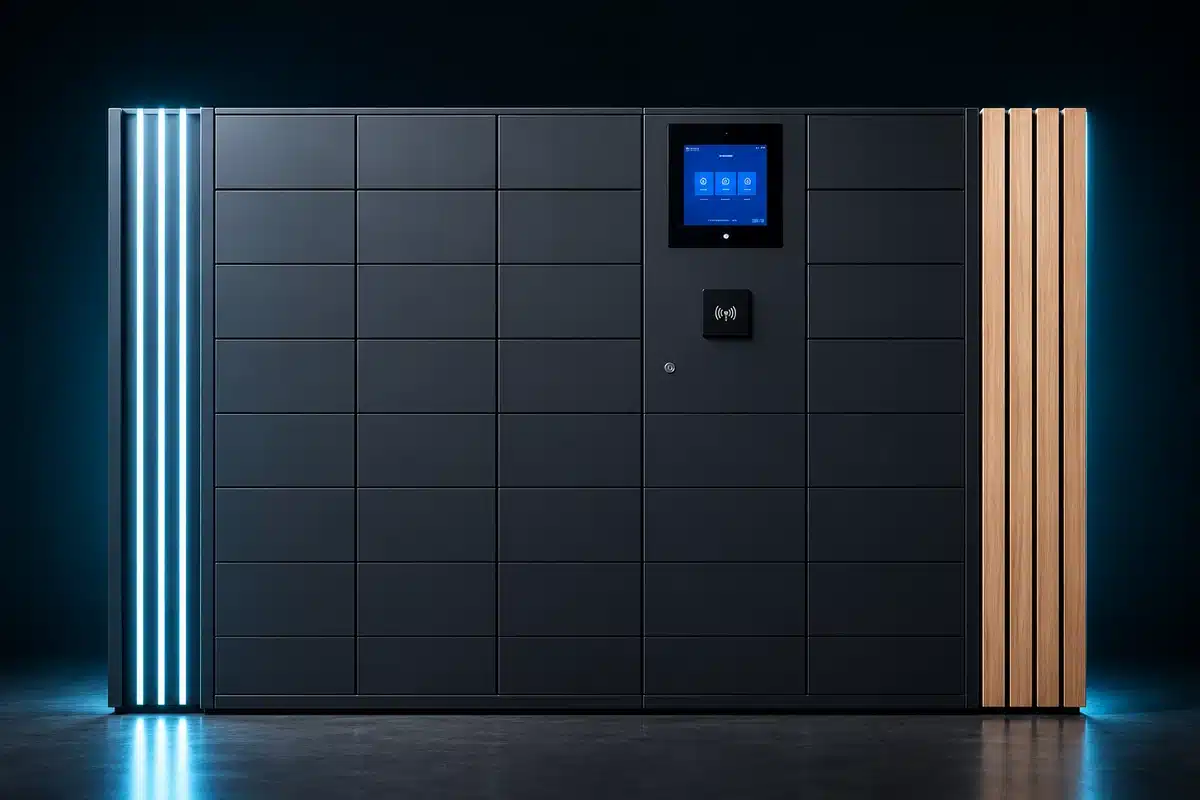
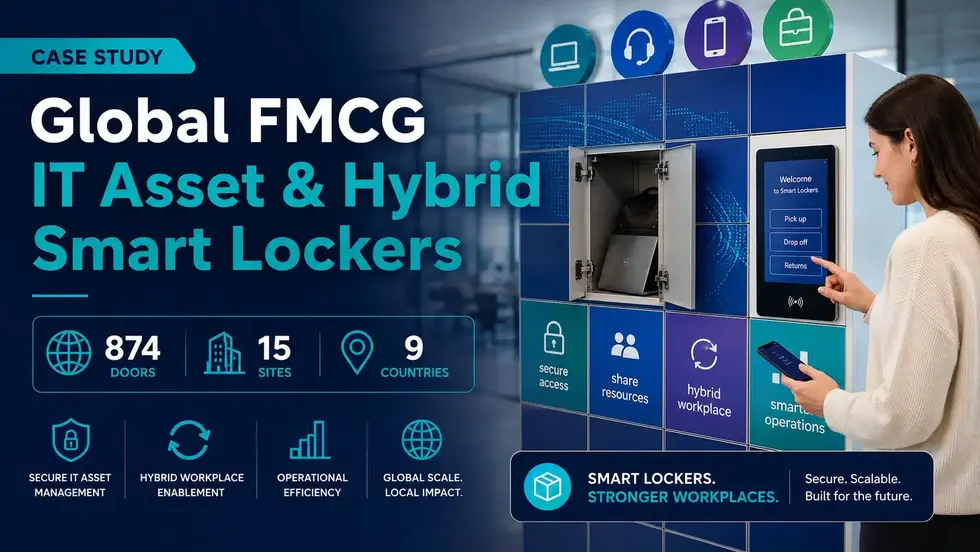
Vflex Smart Rental Locker Brochure

Vflex Smart Locker Brochure

Vgreet Visitor Experience Brochure

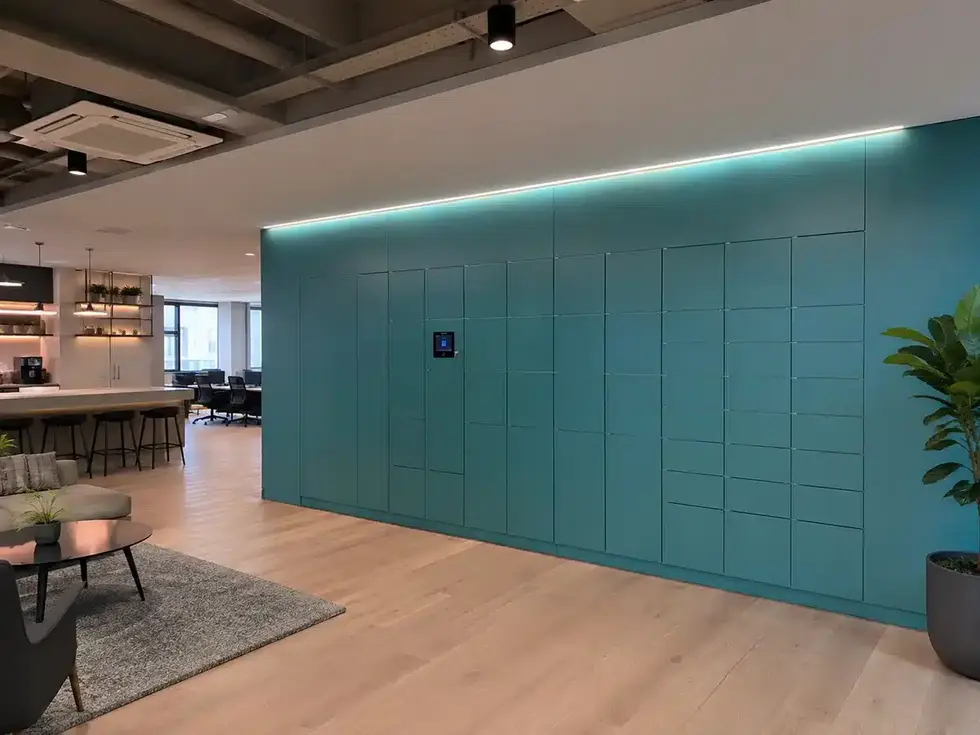
Workplace Lockers - Solutions for Hybrid Offices & Asset Management

Workplace Lockers for Hybrid Offices & Smart Office Storage

Workplace locker solutions for hybrid offices

Supports Flexible & Hybrid Working

  • No need for assigned desks or permanent storage
  • Employees can book lockers when they’re in the office
  • Enables true hot-desking and activity-based working

Without workplace lockers, hybrid setups feel temporary and disorganised.

Modern workplaces require more than storage. They need secure, scalable systems that support hybrid working, control shared equipment, and reduce operational workload.

Smart workplace locker solutions replace manual processes with automated, self-service infrastructure that improves efficiency, visibility, and control across your organisation.

Workplace locker solutions for hybrid offices provide a scalable way to manage storage, equipment, and access without increasing operational complexity.

  • Reduce IT ticket volume and manual handovers
  • Secure and track shared equipment with full audit trails
  • Enable flexible working without increasing operational complexity

Workspace lockers provide flexible, on-demand storage for hybrid and hot-desking environments

  • They eliminate fixed locker allocation, improving space utilisation and reducing clutter
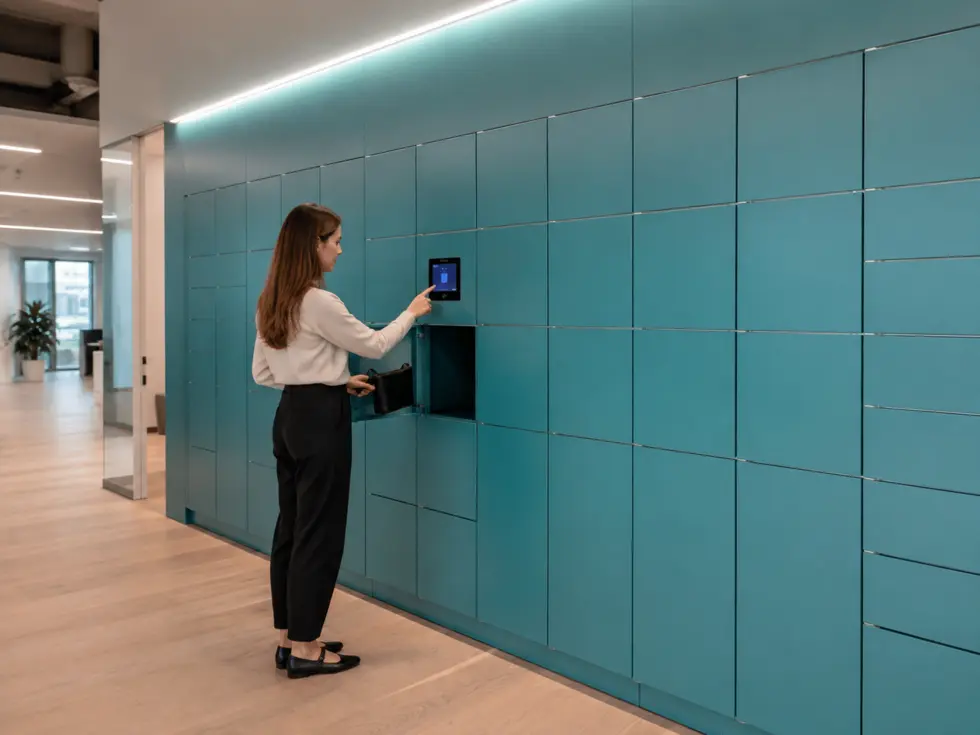
  • Employees access lockers easily via app, PIN, or badge with no staff involvement
  • Smart systems create full visibility and control over storage and shared equipment
  • Workspace lockers enable scalable, self-service operations across modern offices

Trusted by these customers

afas live logo
afas logo
colorado charlie logo
excel logo
flipout logo
health club jordaan logo
heineken logo
jassie logo
ldlc logo
nextvenue logo
patronaat logo

Smart Lockers for Hybrid Workplace Efficiency

See how offices manage employee storage, parcel delivery, and flexible working with fully automated locker systems.

Common Workplace Storage Problems

Modern workplaces operate with hybrid schedules, shared resources, and distributed teams — making storage a constant operational pressure point. When systems are manual, unstructured, or designed for fixed office environments, they create friction across asset visibility, space utilisation, and day-to-day operations.

→ Compare staff cost vs locker automation ROI

Workplace Storage Fails at Scale

Traditional workplace storage — including desks, cabinets, and fixed locker allocations — was built for predictable, full-time office attendance. In hybrid environments, where usage fluctuates daily, these systems quickly become inefficient.

This leads to inconsistent availability, cluttered workspaces, and increased administrative overhead as facilities teams attempt to manually manage demand — reducing overall workplace efficiency.

→ Workplace storage problems in hybrid offices
Explore workplace locker solutions

→ Compare smart lockers vs mobile storage

Shared Equipment Tracking Issues

Managing shared devices such as laptops, monitors, and access equipment becomes increasingly difficult without structured systems. Ownership is unclear, items are misplaced, and availability cannot be reliably tracked.

Without real-time visibility, IT teams rely on manual processes that introduce delays, reduce accountability, and create ongoing operational friction.

→ Equipment tracking issues in workplaces
Track assets with smart lockers

→ Compare staff cost vs locker automation ROI

Equipment Loss in Hybrid Workplaces

As employees move between locations, teams, and roles, equipment is more frequently shared or transferred without clear tracking. Items are not always returned, and informal handovers create gaps in accountability.

Over time, this leads to increased loss, duplicated assets, and unnecessary replacement costs — impacting both operational efficiency and budget control.

→ Workplace equipment loss issues
Improve accountability with asset lockers

Manual Asset Management Inefficiency

Many organisations still rely on spreadsheets, service desk coordination, and physical handovers to manage equipment and storage. These processes are slow, error-prone, and difficult to scale.

As demand increases, teams become bottlenecks, response times slow, and consistency breaks down across locations.

→ Compare equipment rental desk vs locker-based systems

→ Compare staff cost vs locker automation ROI

→ Manual asset management problems
Automate asset handling with lockers

Workplace Storage Space Constraints

Hybrid offices prioritise flexible workspaces and collaboration areas, but storage often remains fragmented and inefficient. Personal items, equipment, and deliveries compete for limited space, creating clutter and reducing usable capacity.

Without structured storage, valuable office space is underutilised and difficult to manage effectively.

→ Workplace storage space problems
Optimise space with smart lockers

→ Compare reception parcel handling vs lockers

From Workplace Storage Problems to Scalable Solutions

These challenges are not isolated — they are the result of storage systems that cannot scale with modern workplace demands. As organisations grow and workplace complexity increases, manual processes become unsustainable.

These challenges highlight the need for workplace locker solutions for hybrid offices that can adapt to changing workplace demands.

Smart locker systems provide a structured, self-service solution — improving asset visibility, reducing reliance on staff, optimising space, and enabling consistent, scalable workplace operations across locations.

→ Compare manual parcel handling vs smart parcel lockers

Workplace Lockers vs Traditional Office Storage

Traditional Office Storage
Fixed desks and cabinets
Manual locker allocation
Informal equipment handovers
Poor asset visibility
High staff dependency
Workplace Locker Solutions
Flexible self-service storage
Automated locker assignment
Secure digital access
Full audit trails and tracking
Low-touch, self-service system

Where Workplace Locker Solutions Are Used

Modern workplace storage challenges appear across multiple operational scenarios, particularly in hybrid, multi-site, and high-traffic office environments. Each use case below reflects a specific workplace challenge, with direct pathways to deeper problem pages, role-based guidance, and relevant locker solutions.

Hybrid Workplace Storage Problems

Hybrid working creates unpredictable demand for storage, with employees attending the office on different days and requiring flexible access to personal items and equipment. Without structured systems, organisations experience inconsistent storage availability, cluttered workspaces, and growing administrative workload for facilities and workplace teams.

Explore:

Hot Desking Storage Problems in Offices

Hot desking removes assigned desks, but without secure, on-demand storage it creates friction for employees and operational teams. Personal belongings, laptops, and day-use equipment often end up spread across shared spaces, reducing desk usability and making offices harder to manage efficiently.

Explore:

Workplace Equipment Management and Tracking Issues

Managing laptops, monitors, peripherals, and shared devices becomes difficult when equipment handovers rely on manual processes. Without structured tracking, organisations face poor visibility over assets, increased IT workload, and limited accountability for who has accessed or returned equipment.

Explore:

Equipment Handover Delays in Workplace Operations

Onboarding, offboarding, and internal role changes create frequent demand for device allocation, returns, and access management. When these handovers are managed manually, delays increase, service desk involvement grows, and employees often wait longer than necessary for the equipment they need.

Explore:

Cross-Site Workplace Storage and Asset Visibility

Organisations operating across multiple offices often struggle to maintain consistent storage and equipment workflows between sites. This creates poor visibility, inconsistent processes, and greater compliance risk when assets, users, and access rules are managed differently across locations.

Explore:

Visitor Equipment and Access Management Challenges

Visitors, contractors, and temporary staff often require short-term access to devices, storage, or controlled workplace resources. When this is handled manually, it creates operational disruption, increases the risk of unauthorised access, and places added pressure on facilities and front-of-house teams.

Explore:

How Workplace Locker Solutions Improve Operations at Scale

Enable Hybrid Working Without Adding Operational Complexity

Hybrid workplaces require storage systems that adapt to fluctuating attendance without increasing administrative burden. Traditional approaches rely on manual locker allocation and ad hoc storage management, creating inefficiencies and inconsistent user experiences.

  • Eliminate manual locker allocation and administration
  • Reduce workplace admin time by 20–30%
  • Improve employee experience with consistent, self-service access
Remove IT Bottlenecks from Device Distribution

IT teams often spend significant time managing device collection, returns, and handovers. These manual processes increase ticket volume and create unnecessary delays.

  • Reduce IT ticket volume by up to 40%
  • Cut equipment handover time to 10–15 seconds
  • Reduce reliance on service desks for routine requests
Remove Routine Tasks from Daily Operations

Manual storage and asset handling introduce constant interruptions for IT and facilities teams, reducing productivity and increasing operational friction.

  • Reduce IT and facilities workload by 30–50%
  • Eliminate manual logging and tracking
  • Free teams to focus on higher-value work
Standardise Workplace Operations at Scale

Inconsistent processes across locations create inefficiencies and compliance risks. Standardisation is critical for scaling hybrid workplace operations.

  • Standardise processes across locations
  • Improve auditability and compliance
  • Enable centralised reporting and visibility
Create Full Visibility Over Equipment Usage

Without structured systems, organisations lack visibility over assets, leading to loss, duplication, and poor accountability.

  • Achieve 100% tracked asset interactions
  • Reduce equipment loss and shrinkage
  • Improve compliance with full audit trails

Workplace Storage Workflow: Manual vs Smart Lockers

This comparison shows how workplace storage shifts from slow, staff-dependent processes to fast, self-service systems that support hybrid working and scalable operations.

Traditional Workplace Storage Workflow
Employee arrives at office
Searches for storage or desk space
Requests access to equipment or locker
Staff manually allocate or hand over items
Delays and inconsistency occur

Operational Challenges
Inconsistent availability across teams
Manual processes slow access
High reliance on IT and facilities
Limited asset visibility
Difficult to scale across locations

→ Compare manual parcel handling vs smart parcel lockers

Smart Locker Workflow
Employee arrives at office
Accesses locker via PIN, app, or QR
Stores or collects items instantly
System logs all activity automatically
Proceeds without delay

Operational Advantages
Instant, self-service access
No staff dependency or manual allocation
Full visibility with audit trails
Consistent cross-site experience
Scales for hybrid workplaces

Explore:
→ Reduce workplace storage inefficiency
→ Improve asset tracking and control
→ Deploy workplace locker solutions

smart lockers for offices

Workplace Locker Case Studies & Real-World Outcomes

Sodexo — Enterprise Workplace Transformation

Reduced Front-of-House Workload by 30% with Workplace Lockers

Challenge
High visitor volumes and hybrid working created fragmented workflows, manual handling, and pressure on front-of-house teams in a complex workplace environment.

Solution
Implemented smart workplace lockers to automate storage, streamline access, and remove reliance on reception-based processes.

Outcomes

  • Reduced front-of-house workload by 30%
  • Improved consistency across workplace operations
  • Enabled scalable workplace processes without additional staff

Relevant For

  • Facilities Managers
  • Operations Directors
Mars — Multi-Site Workplace Operations

Improved Cross-Site Consistency with Workplace Locker Solutions

Challenge
Multi-site workplace operations lacked consistency, creating high administrative workload, limited visibility, and difficulty scaling processes across locations.

Solution
Deployed workplace locker solutions and asset lockers to standardise storage, access, and equipment management across sites.

Outcomes

  • Reduced manual administration across locations
  • Improved operational consistency and control
  • Created scalable multi-site workplace infrastructure

Relevant For

  • Operations Directors
  • IT Directors
Skyscanner — Hybrid Workplace Storage

Improved Locker Utilisation and Reduced Admin in Hybrid Workplaces

Challenge
Hybrid workplace storage relied on static lockers and manual allocation, creating inefficiencies, inconsistent experience, and administrative overhead.

Solution
Introduced centrally managed smart workplace lockers with dynamic allocation to support flexible, hybrid working environments.

Outcomes

  • Improved locker utilisation across hybrid workplaces
  • Reduced administrative workload
  • Created scalable hybrid workplace storage systems

Relevant For

  • Facilities Managers
  • Operations Teams

Explore more real world examples of our smart lockers transforming spaces and workflows across a variety of industries

Workplace Lockers - Solutions for Hybrid Offices

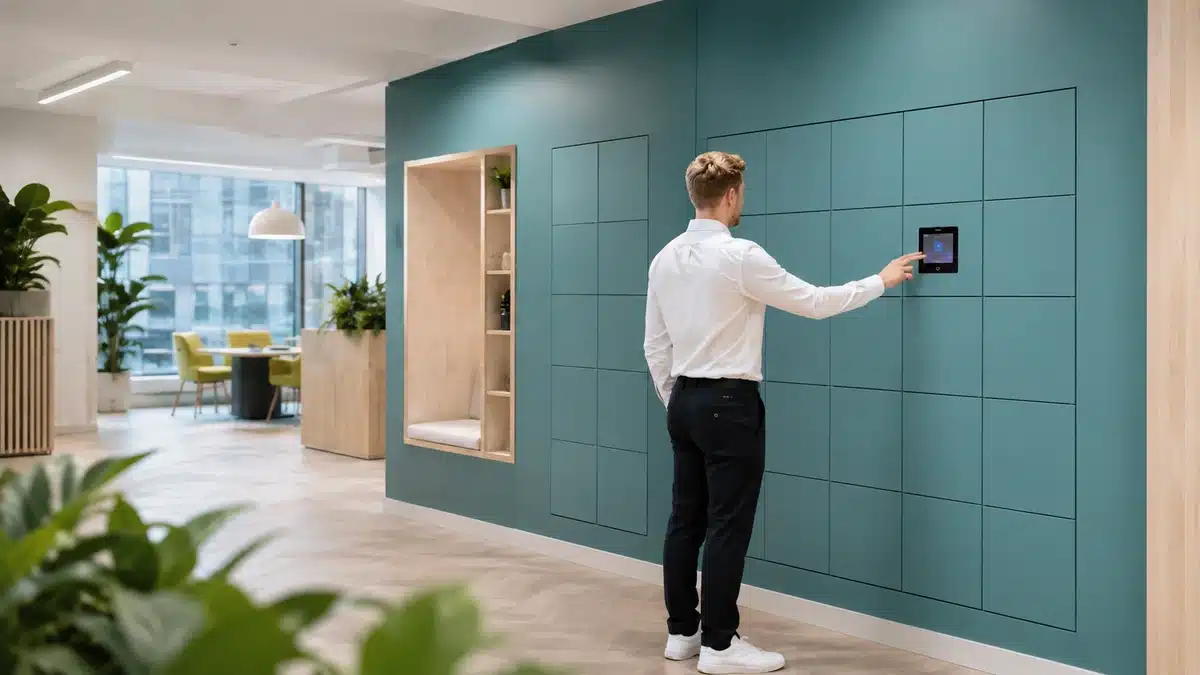
a man using a vpod vflex smart locker

Workplace environments vary from corporate headquarters and hybrid offices to multi-site enterprise operations — but the challenge is consistent: how to manage storage, equipment, and deliveries without increasing manual workload.

Smart workplace locker solutions provide a scalable, automated system that supports hybrid working, improves asset control, and reduces operational overhead across teams and locations.

Workplace Lockers for Hybrid Offices and Hot-Desking

Outcome:
Enable flexible working while reclaiming space and eliminating manual storage administration.

  • Support hybrid working with self-service personal storage
  • Reduce clutter and improve workspace organisation
  • Eliminate manual locker allocation and administration
Asset Lockers for IT Equipment Management

Outcome:
Create full visibility and control over shared equipment while reducing IT workload.

  • Real-time audit trails for all asset interactions
  • Reduced IT workload through self-service access
  • Improved security and accountability for shared devices
Parcel Lockers for Workplace Deliveries

Outcome:
Eliminate manual parcel handling and create predictable, secure delivery workflows.

  • Remove manual handling from reception teams
  • Reduce delivery congestion in offices and lobbies
  • Enable secure, self-service parcel collection
Which Workplace Locker Solution Is Right for You?

Different workplace challenges require different solutions:

→ Compare capex vs opex locker model

a man using a vpod vflex smart locker

Workplace Locker Solutions by Role

Workplace Lockers for Facilities Managers

Facilities teams are responsible for space utilisation, workplace experience, and keeping shared environments organised in hybrid offices.

Without structured storage systems, they face cluttered workspaces, inefficient use of space, and increasing operational complexity.

Smart workplace lockers provide centralised, self-service storage that supports flexible working while reducing administrative burden.

Find Out More

Workplace Locker Solutions for Operations Directors

Operations leaders focus on efficiency, scalability, and consistency across teams and locations.

In hybrid workplaces, manual storage processes create operational friction, inconsistent workflows, and increased reliance on staff.

Smart workplace locker solutions enable standardised, scalable processes that support hybrid working at scale.

Find Out More

Asset Lockers for IT Directors

IT teams manage device distribution, asset tracking, and equipment security across the organisation.

Manual processes lead to lost or untracked devices, high ticket volumes, and lack of visibility over shared equipment.

Asset lockers provide secure, trackable, self-service equipment management with full audit trails and reduced IT workload.

Find Out More

Outcomes Workplaces Care About

Across modern workplace environments, organisations prioritise outcomes that improve efficiency, control, and scalability without increasing operational overhead:
  • Reduced IT help desk interruptions and ticket volume
  • Better utilisation of shared desks and office space

  • Improved employee experience in hybrid environments

  • Clearer asset accountability without manual audits

  • Lower administrative workload across IT and facilities teams → Compare staff cost vs locker automation ROI

When these priorities are met, organisations improve control, efficiency, and employee experience without increasing operational complexity.

Explore Locker Solutions for Your Workplace

See how locker solutions can support hybrid working, asset control, and flexible office operations in your organisation.

24/7

Support