


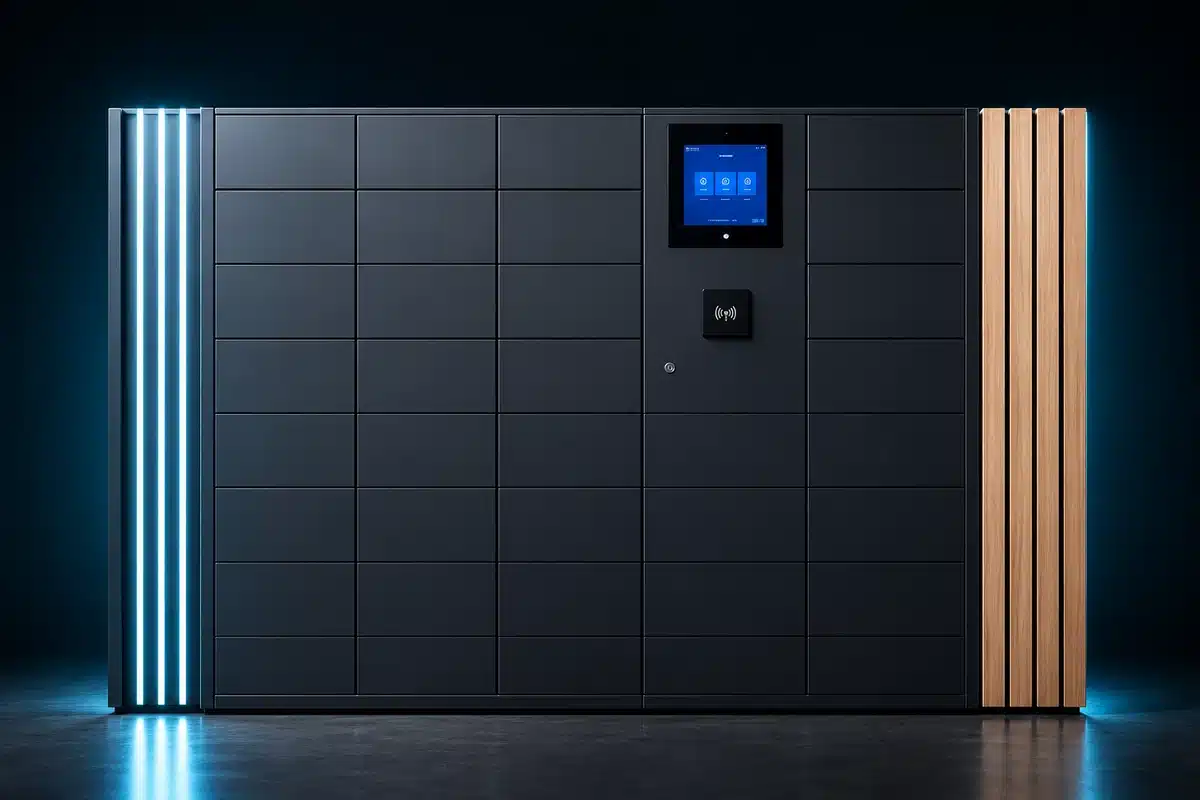


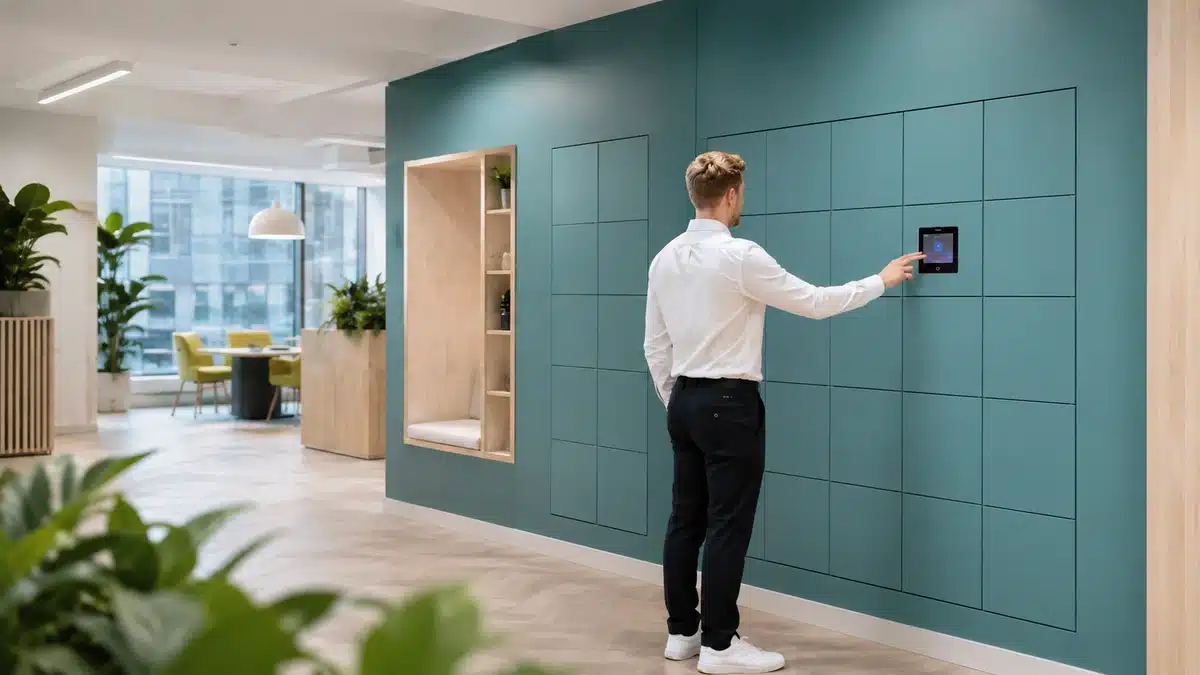

 Workplace lockersFlexible storage and hybrid operationsExplore workplace solutions →
VPOD / UK BUYER’S GUIDE
Smart Locker Systems:
The Complete UK Buyer’s Guide
Specify, compare and buy with confidence. Your complete eight-step guide to intelligent lockers, automation, software, security, integrations and whole-life costs.
08 buying steps04 technical assessment areas01 comparable supplier brief
EXECUTIVE SUMMARY
What should a UK buyer look for in a smart locker system?
A strong smart locker system must fit the process it automates. Assess the user journey, peak demand, access credentials, hardware, management software, integrations, security, support and whole-life cost as a connected system.
Procurement principle
Start with the operational outcome—then select the hardware, software and services needed to deliver it. For Vpod’s commercial range, explore Vpod smart locker systems.
Workplace lockersFlexible storage and hybrid operationsExplore workplace solutions → IT asset lockersControlled handovers and returnsExplore IT asset lockers →
 Venue lockersVisitor storage and paid servicesExplore venue lockers →
STEP 01
Define the workflow before selecting the locker
Begin with the operational outcome—not the number of doors. Document normal operation and exceptions.

Start with the user journeyUse this guide to define the outcome, test the system and verify supplier claims against real workflows.
TriggerRequest or booking
AllocateApply rules
AccessAuthenticate
CompleteIssue or return
ReportReconcile activity
Capture exceptions: unavailable doors, failed credentials, late collections, abandoned items and administrator override.
Intelligent lockers vs automated locker systems vs smart lockers
These terms overlap but are not identical. The distinction is between an electronic lock, connected intelligence and an automated operational process. Buyers should insist that supplier claims are demonstrated against their own workflow.
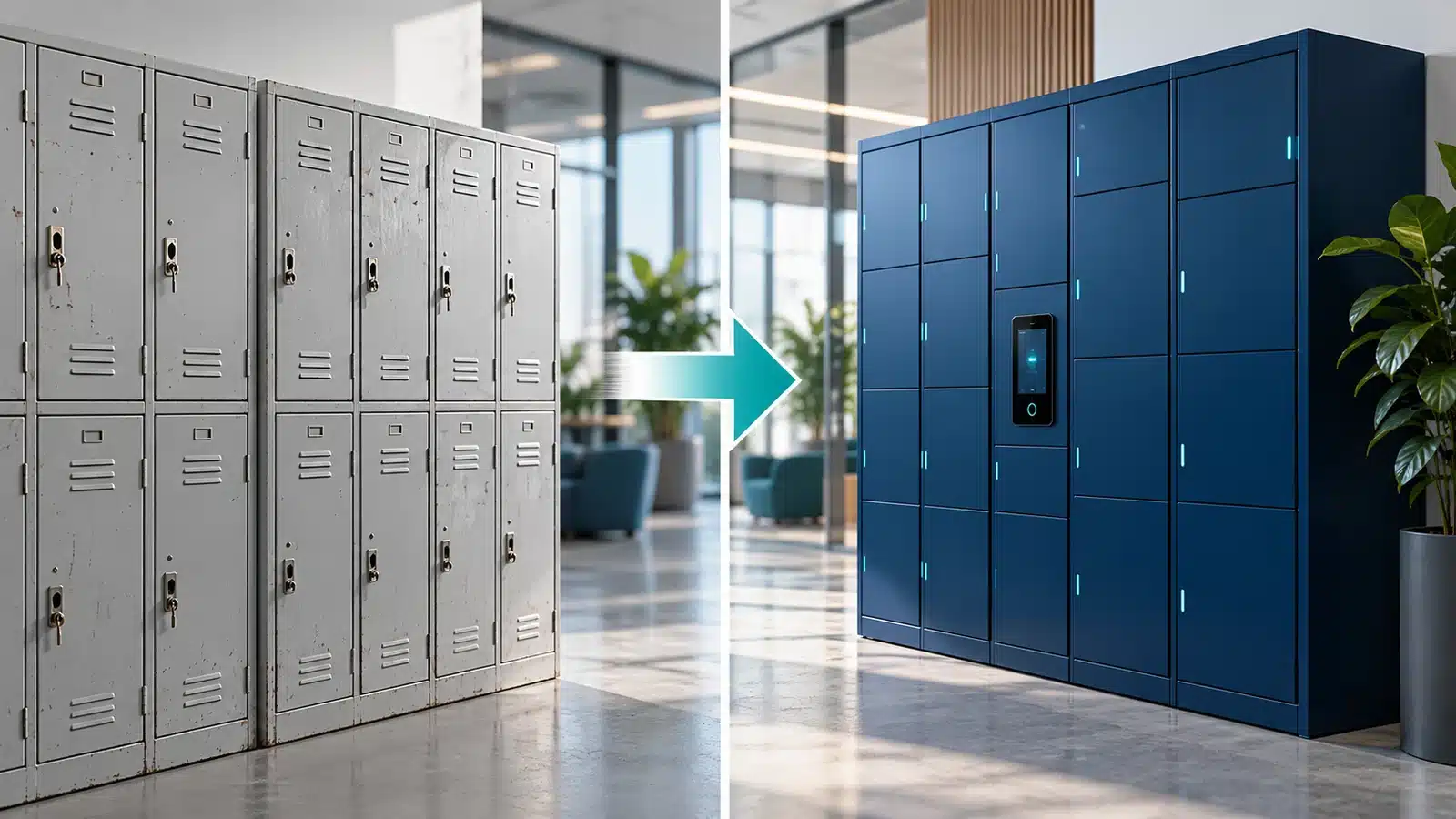
Traditional lockers
Mechanical access and manual operation

Electronic lockers
Electronic locking and credential controls
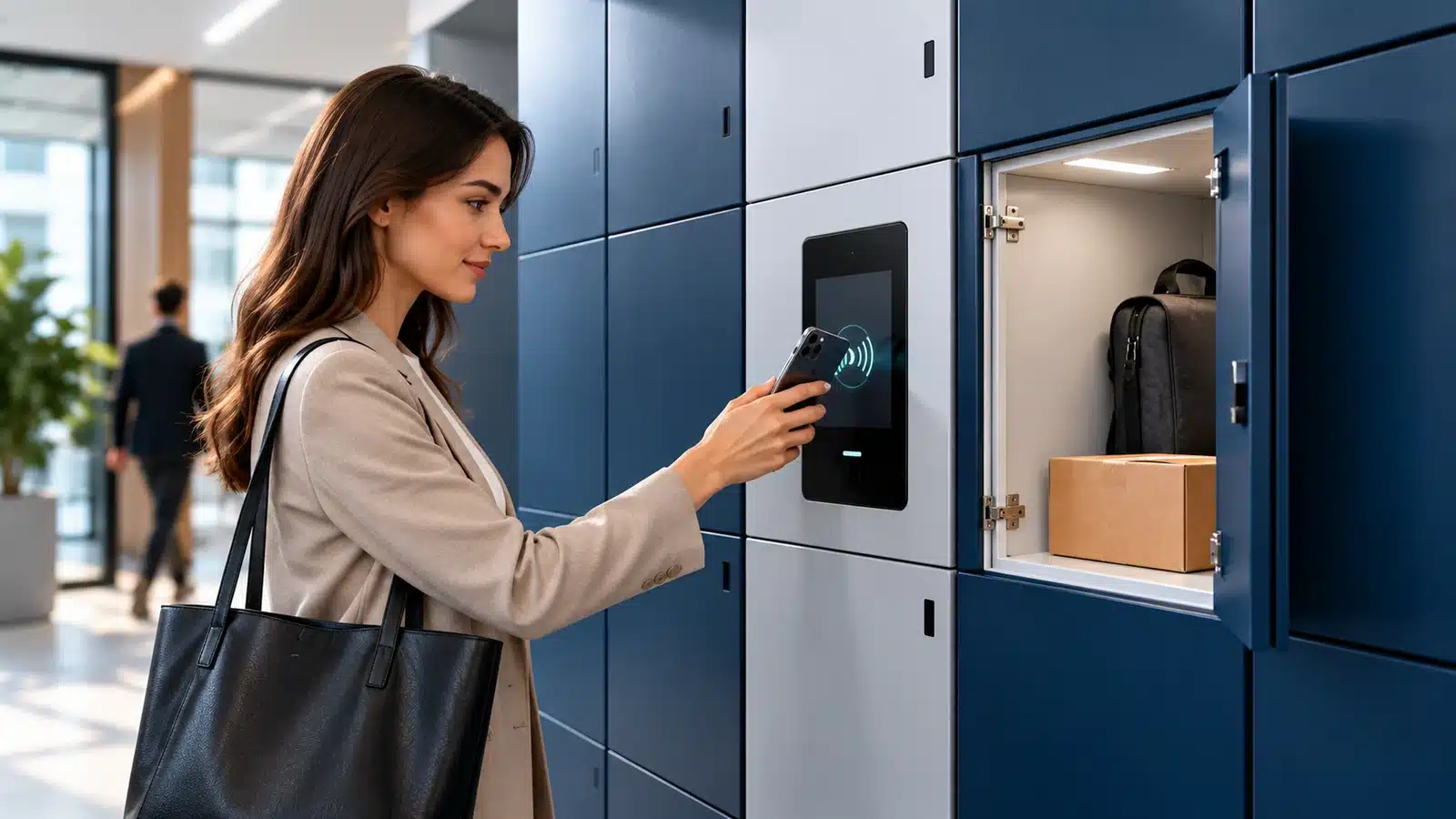
Intelligent lockers
Connected identity, rules and reporting

Automated lockers
Workflow-triggered allocation and handovers
| System type | Core capability | Procurement test |
|---|---|---|
| Traditional lockers | Mechanical access and manual allocation | Key policy, loss and replacement processes |
| Electronic lockers | Electronic locks, possibly standalone | Whether access is centrally managed |
| Intelligent lockers | Software rules, identity, reporting and connected controls | Real administrator and user workflow |
| Automated locker systems | System-triggered issue, collection or return | Event-to-completion demonstration including failures |
| Smart locker systems | Connected hardware, software and operational service | End-to-end functionality, support and ownership |
For commercial applications and platform options, explore Vpod’s intelligent and automated smart locker systems and the smart locker solutions hub.
STEP 02
Calculate capacity from peak demand
Employee headcount is rarely the same as the required number of lockers. Model demand against dwell time and allocation rules.
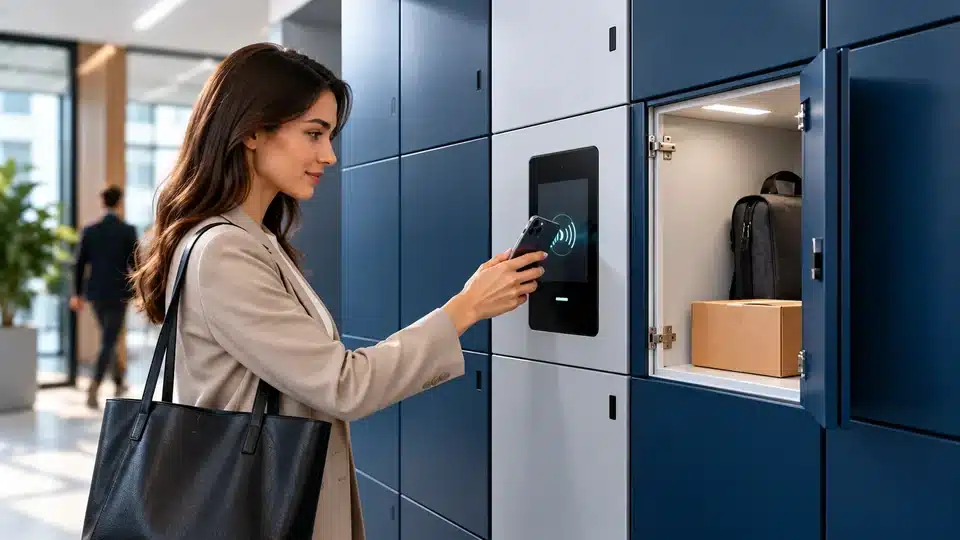
Peak concurrent users, seasonality, visitor flows and storage duration.
Fixed, flexible or dynamic allocation; compartment sizes; accessibility.
Growth allowance, spare capacity and out-of-service contingencies.
Document assumptions and validate them with a pilot before estate-wide deployment. Plan a representative smart locker pilot.
STEP 03
Choose an access method that fits each user
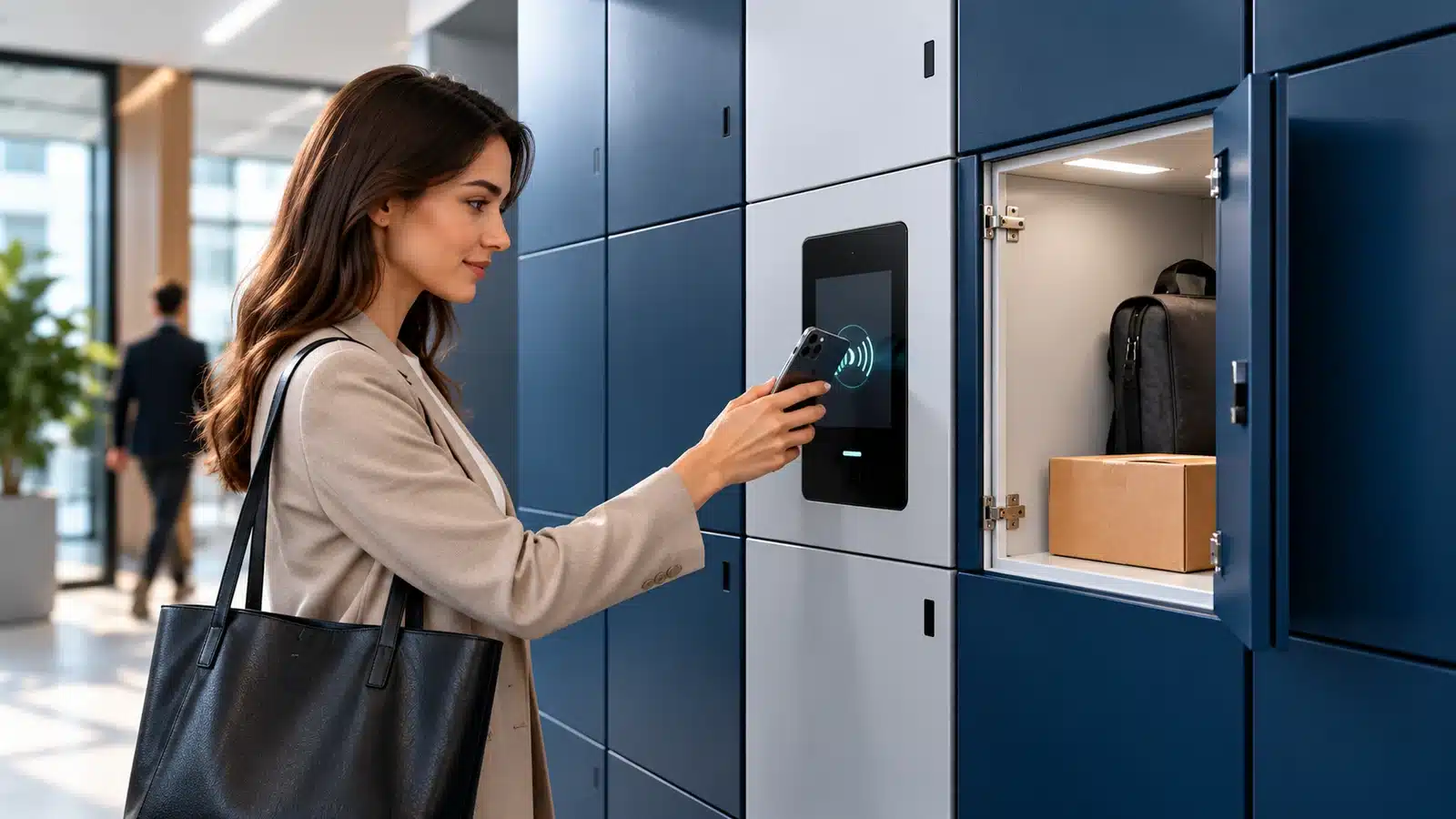
Select authentication for the actual user population and accessibility requirements—not the supplier’s preferred interface.
| Credential | Best suited to | Buyer verification |
|---|---|---|
| RFID / badge | Employees and regular users | Existing credential and revocation compatibility |
| QR / barcode | Visitors and temporary collections | Expiry rules and delivery channel |
| PIN | Guest and short-term use | One-time vs reusable access |
| Mobile credential | Regular users and reservations | App requirement and accessibility |
| SSO / identity | Enterprise environments | Lifecycle synchronisation and rights |
| Payment-linked access | Paid storage and leisure | Payment reconciliation and exceptions |
Check every credential type with the smart locker technology guide and confirm supported integration behaviour.
STEP 04
Assess the management software—not only the doors
The software determines how everyday administration, availability, exceptions and reporting actually work.

Users, roles and permissions.
Availability, alerts and exceptions.
Utilisation, transactions and audit.
Rules, language and workflows.
Smart locker software and management: supplier evaluation matrix
Ask every shortlisted supplier to demonstrate the same operating scenario, including an exception and a recovery. Software capability should be judged on evidence, not an attractive dashboard.
| Capability | Minimum assessment | Evidence to request |
|---|---|---|
| User administration | Role-based access; permissions; joiners/leavers | Live administrator demonstration |
| Locker allocation | Assign, release and reassign compartments | End-to-end workflow demo |
| Remote operations | Availability, status and exception management | Management dashboard demonstration |
| Reporting | Occupancy, use and audit history | Sample reports and exports |
| Multi-site management | Central policies with site controls | Cross-site demonstration |
| Identity and credentials | Issue, expire and revoke rights | Credential lifecycle test |
| Integrations | Supported APIs and business events | API documentation and event trace |
| Continuity | Documented connectivity and recovery | Offline/failure recovery evidence |
For deeper selection criteria, see smart locker software and management.
STEP 05
Map integrations and data ownership
Clarify which system starts the workflow, who owns identity, and where completion and error events must be recorded.

Identity & credentials→Management software→Electronic lockers↔Enterprise platforms
Identity and accessRFID · QR · PIN · Mobile · SSO
Management softwarePermissions · Allocation · Monitoring · Events
Controllers and locker hardwareElectronic locks · Compartments · Sensors
Enterprise workflow systemsITSM · Workplace · Access control · Payments
Technology architecture: evidence to request
- Architecture diagram identifying each system and owner
- Authentication and API specifications
- Identity synchronisation and credential-expiry rules
- Network, firewall and power requirements
- Failed-event retry and reconciliation process
- Vendor support and upgrade responsibility
Explore the smart locker technology guide, smart locker integration requirements and power, connectivity and network requirements.
STEP 06
Evaluate physical, digital and operational security together
Physical construction, digital credentials and incident handling must be assessed as one security system.
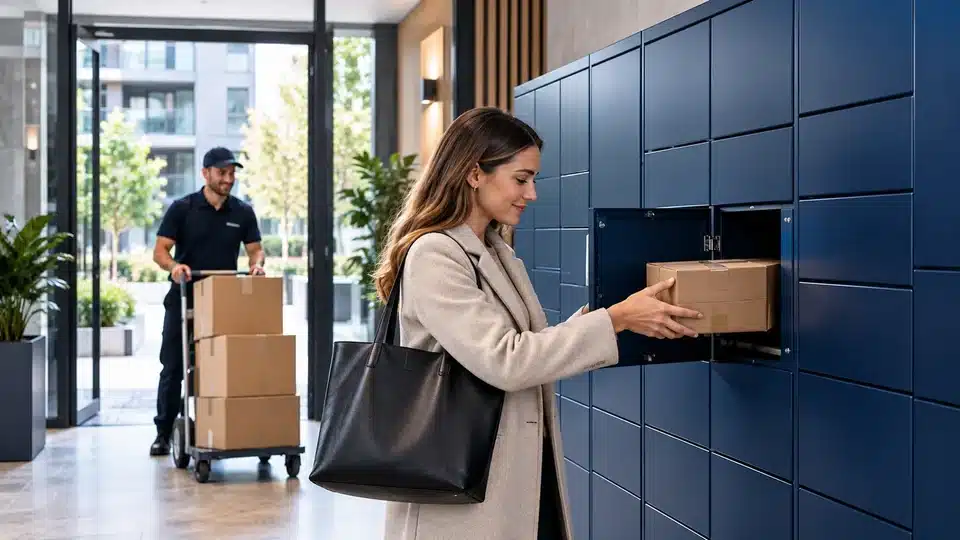
Cabinet construction, locks, hinges, installation and emergency access.
Authentication, permissions, encryption, patching and retention.
Overrides, recovery, lost credentials, incident ownership and support.
Locker security system verification matrix
| Risk area | Buyer question | Supplier evidence |
|---|---|---|
| Physical locking | How are doors protected against unauthorised opening? | Lock specification and test evidence |
| Authentication | How are credentials verified and expired? | Access-control demonstration |
| Privileges | Who can override or reassign compartments? | Administrator role matrix |
| Audit trail | Which user and door events are recorded? | Sample audit export |
| Data security | How are logs and personal data protected? | Security and data handling documents |
| Network outage | What happens when the connection fails? | Recovery demonstration |
| Power loss | How is authorised access restored? | Continuity procedure |
| Incident response | Who resolves failures and investigates incidents? | Escalation and support plan |
See smart locker security and access controls for the deeper risk assessment.
STEP 07
Compare whole-life cost and measurable return
Compare upfront expenditure and running costs, then model the measurable value of the proposed workflow.
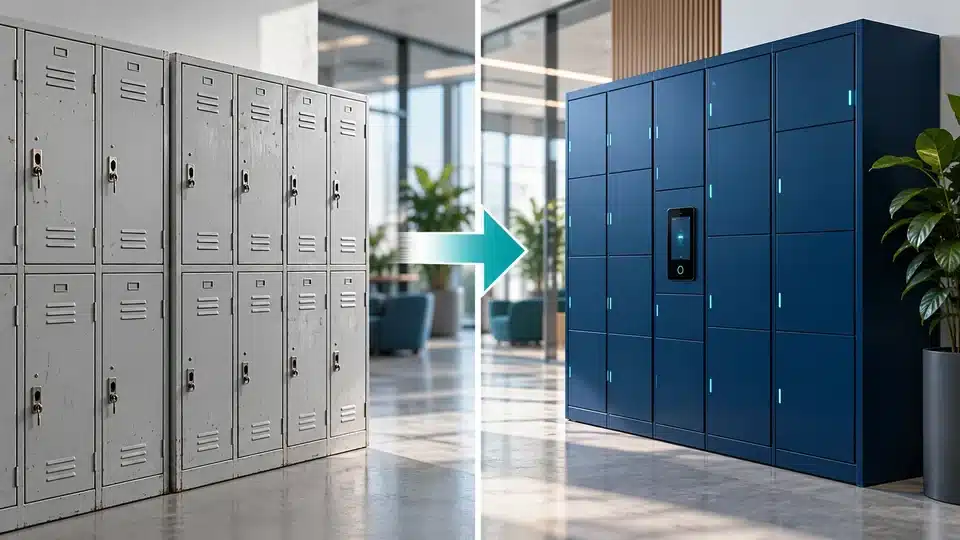
Cabinetry, locks, controllers, installation, design and configuration.
Software, connectivity, support, payment fees and changes.
Labour savings, space utilisation, faster handling and paid storage revenue.
Use the smart locker pricing guide and ROI and total cost of ownership guide for detailed models.
STEP 08
Compare suppliers on evidence, not claims
Issue a consistent requirements brief to all shortlisted suppliers and score each submission against objective evidence.

| Assessment | Evidence to request |
|---|---|
| Relevant experience | Comparable deployments, references and measured outcomes |
| System fit | Live demonstration of the specified workflow |
| Integration | Architecture, responsibilities and testing approach |
| Security | Documentation and a working recovery demonstration |
| Delivery | Survey, manufacture, commissioning and training plan |
| Support | Coverage, response targets, escalation and spares |
| Commercials | Five-year assumptions, inclusions and exclusions |
Practical acceptance test: laptop replacement
- Employee raises a service request.
- Locker software assigns a suitable available door.
- A time-limited credential reaches the authorised employee.
- The item is collected and the event is recorded.
- The source service platform receives the completion status.
- The supplier demonstrates recovery from an offline or failed-collection event.
Use Vpod’s customer case studies, enterprise specification guide and 15 questions to ask before choosing a system to complete your shortlist.
WATCH BEFORE YOU BUY
Watch Smart Locker Systems Before You Buy
See four practical Vpod product and workflow demonstrations before building your supplier shortlist. Each video opens on YouTube.
What Are Smart Lockers and How Do They Work?
Understand connected compartments, credentials and user workflows.
Watch on YouTube ↗
Smart Locker Management Software Explained
See how locker allocation and administration work in practice.
Watch on YouTube ↗Smart Lockers vs Traditional Lockers
Compare mechanical access with connected, managed locker systems.
Watch on YouTube ↗
Vflex Day Lockers User Journey
Follow an everyday user journey from access to collection.
Watch on YouTube ↗Prefer to browse the full collection? Explore the Vpod Smart Locker Video Library.
DEEPER BUYER RESOURCES
Explore supporting smart locker buying guides
For detailed advice on procurement, technical requirements, installation and lifetime costs, follow the specialist guides matched to your use case.
PROCUREMENT CHECKLIST
Smart locker buyer’s checklist
A practical checklist for a specification workshop and supplier scoring session.
READY TO PLAN YOUR DEPLOYMENT?
Bring us your workflow, users, site and integration requirements.
Vpod can help translate them into a practical smart locker configuration and implementation plan.
Talk to Vpod →